This photo is worth at least 1,000 words: The first and only time Bill Danielson witnessed a ‘parasitic’ cowbird being fed by its ‘adoptive parent’ | Home-garden

[ad_1]

We’ve all heard the phrase, “A picture is worth a thousand words.” This suggests that if you can simply see something, then you can understand the situation perfectly. In my line of work, however, this is often a gross underestimate of the power of a photo.
Where can you find the gray hairstreak? Look for this beautiful, little butterfly among the clover

In many cases, one of my photos might be worth several thousand words because the photo needs to be explained in several different ways. So I am going to attempt to explain the significance of this week’s photo in 1,000 words or less. Here goes.

It was Aug. 22 and I was returning to my house after another successful visit to my Thinking Chair. During an epic 3-hour session that started at 5:55 a.m., I had managed to accomplish a feat that I had initially thought to be impossible. I had tied the seemingly unbreakable record of observing 64 species in my yard in the month of August. I was absolutely giddy with self-satisfaction.

It was no accident that I had tied the “unbreakable” record. I had certainly put in the time by making 13 visits to the Thinking Chair in 22 days. But time alone is not always going to produce results. You also need a lot of luck and possibly even a smidgen of divine intervention. For this, I rely upon Nikonus and Iso, the photo gods.

Nikonus is the god of timing and he is rather brutal. He will present you with a species, but you have to be quick enough to see it. Iso is the goddess of color and light. Far more compassionate, she dictates the conditions necessary for good photography. Together, they determine if I can take a photograph or not.

So there I was, walking out onto my deck after reaching an amazing milestone when all of a sudden I caught sight of a bird that simply didn’t fit the setting. From the far railing, this bird flies up and I am struck with the simple impression of a gray bird with long wings and a relatively short tail. I would have dismissed it as a mourning dove, but the tail was wrong.

My birder’s brain sent back a reactionary identification after this split second and imperfect view, but I needed to see the bird again to confirm. Nikonus had offered up a challenge, I had been in the right place at the right time and he was so pleased that he gave me an extra moment.

The bird was up in my cottonwood tree and I was able to find it and confirm my initial identification. It was a brown-headed cowbird (Molothrus ater) and it was the species that set a new record. I was elated, but there was also a note of disappointment because of the nature of the species in question. The brown-headed cowbird is a species that is described as a “nest parasite.” This means that female cowbirds will find the nests of other birds and then lay one of their own eggs into the nest of the unfortunate host. If things work out, then the host birds will raise the baby cowbirds as their own. At no point will cowbirds raise their own offspring.

This is often devastating to the host species for two reasons. First, the host loses an egg when the cowbird makes a deposit because the female will physically remove it. Second, the cowbird chick is so much larger than the host species that it crowds out the remaining chicks (causing their deaths) and occupies all of the feeding efforts of the adults. The eastern phoebes that nest by my front door are plagued by cowbirds and sometimes there are very few phoebe chicks to show for months of effort by the parent birds.

So, while delighted that I had broken the unbreakable record, I was also a little disappointed by the identity of the species involved. I went into the house, put down some of my gear and then made the decision to go back out onto the deck to get a photo that would prove that I had seen this particular species at this particular time. This is when the photo gods decided to reward me for my dedication. The cowbird flew down into a large bush just behind my house and perched on an exposed branch. I focused, snapped a few photos and grumbled slightly while doing it. Then I saw the cowbird’s wings begin to flutter in a manner that has a distinct and unmistakable meaning, “Feed me.”

This could only mean that the cowbird’s host parent was nearby and the cowbird expected an imminent delivery of food. Stunned, I kept my eyes peeled on the young bird in anticipation of the arrival of the parent, and I was rewarded for my dedication when a female Common Yellowthroat (Geothlypis trichas) appeared with a green insect in her beak. She quickly shoved the food into the gaping mouth of the young cowbird and then zipped off to find yet another morsel for “her” baby.

In all of my years of wildlife observation, this was the first (and only) time that I had ever witnessed a parasitized species feeding the offspring of a nest parasite. I had not seen a cowbird in my yard in weeks and the only reason that I saw this particular bird in it that particular moment was the female yellowthroat had wandered up out of the meadow into the tall grasses and forbs of my backyard in search of food for the behemoth that she was trying to feed. The cowbird was following its mother and disappeared soon after. Had I not been in that particular place at that particular time, I would have been totally unaware of the entire event.


As summer comes to a close, our backyard birds are quiet as they prepare for migration or hunker down for winter

Well, that was 870 words and I have only managed to scratch the surface of this story. Unanswered questions are: How did it come to pass that cowbirds developed this breeding strategy? Why do other birds fall for this trick? Are there any species that are not as easily fooled? When did I first detect the presence of Nikonus and Iso? These are all questions that would require other columns to answer, but I am out of space for this week.

I end with the same message that I try to deliver every week. Keep your eyes open and make sure you look out a window from time to time. Amazing things are happening out in nature every day and sometimes they are happening in your very own backyard. If you tear your eyes away from the myriad screens that surround you every day and take a peek outside, then perhaps Nikonus and Iso with reward you with something amazing to see.

Bill Danielson has been a professional writer and nature photographer for 26 years.  He has worked for the National Park Service, the U.S. Forest Service, the Nature Conservancy and the Massachusetts State Parks and has taught biology and physics at Pittsfield High School for 20 years. For more information, visit his website at speakingofnature.com. 


[ad_2]
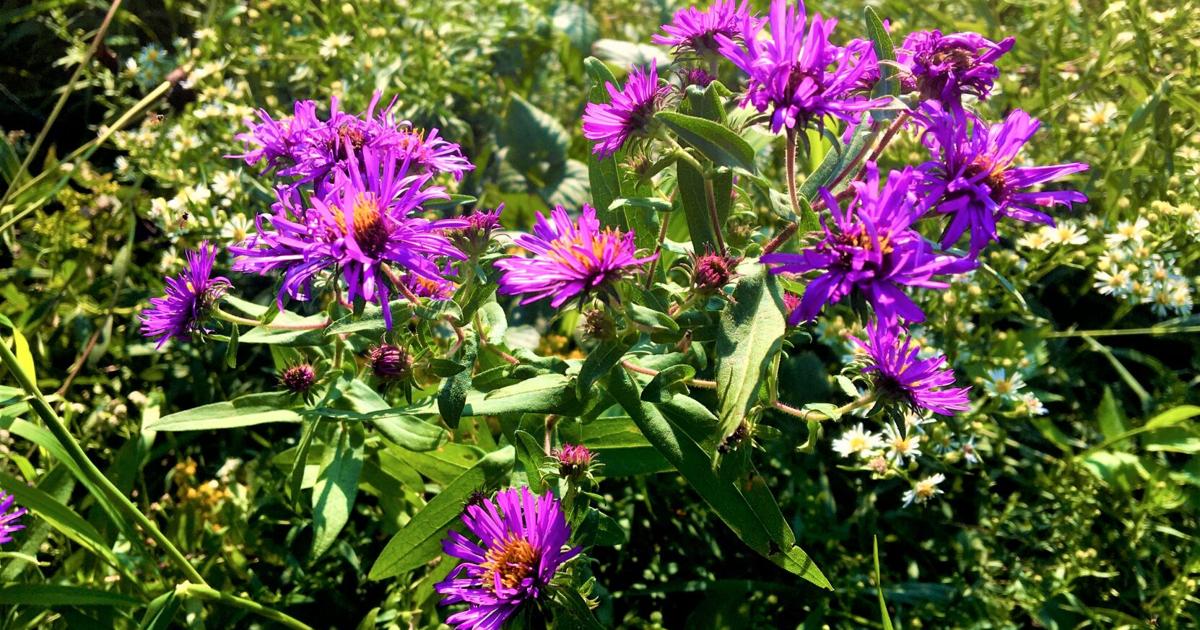
Geneva Lake Conservancy Small Nature Photo Contest

[ad_1]


Geneva Lake Conservancy/Helen Rohner Children's Fishing Park, 159 Elkhorn Rd. (State Hwy. 67), Williams Bay

The Geneva Lake Conservancy’s Helen Rohner Children’s Fishing Park nature preserve, 159 Elkhorn Rd. (State Hwy. 67) in Williams Bay, adjoins 231-acre Kishwauketoe Nature Conservancy, 251 Elkhorn Rd. Children can enjoy angling for brown trout in Southwick Creek or explore the preserve’s many amenities, including a boardwalk wetland area and amphibian pond, butterfly garden and native plant garden. The Geneva Lake Conservancy is a 501©(3) nonprofit organization dedicated to the preservation of environmentally-sensitive lands, open space and the unique character and quality of life in Walworth County.


Eric Johnson


The Fontana-based Geneva Lake Conservancy is currently hosting its annual Small Nature Photo Contest.

Photos must be unedited and taken in Williams Bay at either Helen Rohner Children’s Fishing Park, 159 Elkhorn Rd. (State Hwy. 67), or the adjacent 251-acre Kishwauketoe Nature Conservancy preserve, 251 Elkhorn Rd. (State Hwy. 67). The deadline for contest photo submissions is Thursday, Aug 10 at [email protected]. Entrants can submit up to five photos.

Winners will be announced for each of the following age categories: 4-12, 13-21 and 22-plus. Cash prizes in each age category are $150 for first place, $100 for second and $50 for third.

A reception to honor all contest participants will be held Thursday, Aug. 24 at 5 p.m. at Green Grocer & Deli, 24 W. Geneva St. (State Hwy. 67), Williams Bay.

“The Small Nature Photo Contest is a fantastic way to get all age groups involved with getting outside and appreciating the small species that make up our beautiful ecosystem,” said Geneva Lake Conservancy Community Outreach and Fundraising Manager Tai Thompson. “I love seeing families at Helen Rohner Park exploring and showing each other what they have found before snapping a picture. It’s a great family activity.”

People are also reading…

For more information about Geneva Lake Conservancy and Helen Rohner Children’s Fishing Park, visit genevalakeconservancy.org or call 262-275-5700.

[ad_2]
How to take great photos of outdoor scenery and landscapes

[ad_1]

Landscape photography is a captivating art form that captures the beauty and essence of outdoor scenery.

Through careful composition and skilled use of lighting, colours and textures, landscape photographers aim to convey the natural world’s vastness, serenity and emotional impact.

Whether breathtaking majestic mountain ranges, beautiful seascapes, green forests, or cityscapes, these photographers strive to freeze moments in time that evoke a sense of wonder and appreciation for the world around us.

By emphasising landscapes’ grandeur and unique features, they create images that transport viewers to distant places and inspire a deeper connection with nature.

The bracketing technique capturing multiple exposures at varying values, preserving the highlights and shadows of the diverse colours during sunset at Bali Barat while gazing at Mount Ijen on Java Island.The bracketing technique capturing multiple exposures at varying values, preserving the highlights and shadows of the diverse colours during sunset at Bali Barat while gazing at Mount Ijen on Java Island.

Landscape photography can be done in many locations, from exotic destinations to your backyard.

Seek natural wonders like national parks for breathtaking vistas.

Explore coastal areas for stunning seascapes, or even venture into mountainous regions for dramatic peaks.

This genre can also embrace the charm of the countryside and rural places, where we can feature their uniqueness by showing off the beauty of waterfalls, rivers, or even the houses found there.

One of the best times to capture the landscape is at sunrise. This image was taken at Thale Noi, a protected freshwater wetland in Phatthalung, Thailand.One of the best times to capture the landscape is at sunrise. This image was taken at Thale Noi, a protected freshwater wetland in Phatthalung, Thailand.

Landscape photography encompasses various technical and artistic aspects to create compelling images.

The type of lens used for this genre is important.

Generally, 10–24mm or 15–35mm wide-angle lenses come in handy to capture a wide range of landscapes.

Telephoto lenses, like 70–200mm or 100–400mm, can also help isolate specific elements or compress perspectives, adding a unique touch to compositions.

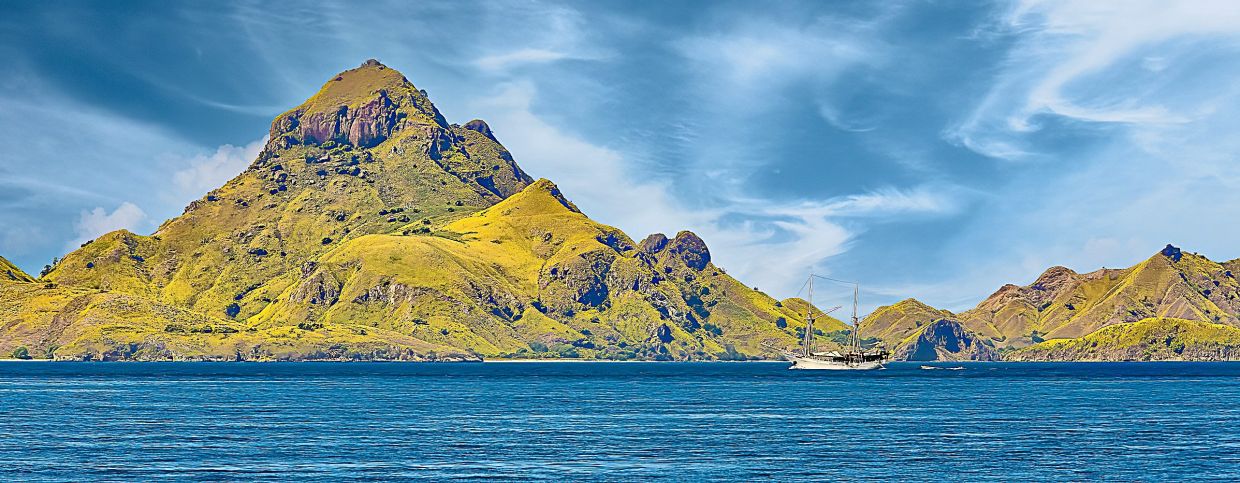
Photographers can effectively balance the exposure between bright skies and darker landscapes by employing Graduated Neutral Density (GND) filters during sunrise on Natuna Island in the middle of the South China Sea.Photographers can effectively balance the exposure between bright skies and darker landscapes by employing Graduated Neutral Density (GND) filters during sunrise on Natuna Island in the middle of the South China Sea.

Selecting the appropriate aperture is crucial.

For most landscape shots, a narrower aperture (higher f-number) is preferred to achieve a larger field depth, ensuring that foreground and background elements remain focused.

Well-composed pictures, such as this one captured in Tana Toraja, Sulawesi, can transport viewers to distant places and inspire a profound connection with nature.Well-composed pictures, such as this one captured in Tana Toraja, Sulawesi, can transport viewers to distant places and inspire a profound connection with nature.Aperture values like f/8 to f/16 are mainly used.

Use the rule of thirds and leading lines to create focus and appeal to draw viewers into the picture when composing the visual.

Placing key subjects off-centre and aligning them along imaginary lines helps to add a sense of balance and interest to the photos.

One can also consider using trees or archways to frame the main subject. This gives depth and brings the viewer’s attention to the focal point, engaging them in the composition.

The moment and desired effect will determine the shutter speed choice. A faster shutter speed would capture sharper images. For motion blur in scenes like waterfalls or clouds, longer exposures (slower shutter speeds) are needed to create such images.

A sturdy tripod is needed to stabilise the camera during longer exposures.

Keep the ISO low in landscape photography, like ISO 100 or 200. This is to maintain image quality and minimise digital noise in landscape photos.

Weather plays a crucial role in landscape photography, as seen in this image of the sunken Arqam Babu Rahman Mosque at Palu Bay.Weather plays a crucial role in landscape photography, as seen in this image of the sunken Arqam Babu Rahman Mosque at Palu Bay.

Bracketing is another technique used to capture multiple exposures at different exposure values, retaining the highlight and shadow when there is a vast difference between the two exposures, to recreate the scene’s dynamic range in post-processing.

Filters like neutral density (ND) can also control the light or achieve longer exposures for smoother water effects.

Graduated neutral density (GND) filters can also help balance the exposure between bright skies and darker landscapes.

Of course, in adjusting the colours, contrast, and sharpness to make the photos pop, post-processing is another essential part of the techniques for bringing the best out of the images.

While understanding landscape photography techniques is important, cultivating artistic pictures and highlighting the natural world contribute significantly to creating beautiful pictures using the available lights and colours when taking photos.

To find a voice or “trademark” in this genre, one has to experiment and create their own style in composing and capturing the scene in their presentation.


[ad_2]

With land buys, Nebraskan has added on-the-ground conservation to Photo Ark’s visual focus

[ad_1]

Joel Sartore celebrated two very visible milestones last month.


magpie

Joel Sartore reached a new milestone in the National Geographic Photo Ark last month, adding his 14,000th species. The Indochinese green magpie, named Jolie, is at the Los Angeles Zoo. She survived being smuggled in a suitcase, with little ability to move, during a flight from Vietnam.


The Lincoln-based National Geographic photographer added his 14,000th species to the National Geographic Photo Ark, a project he founded in 2005 to document Earth’s biodiversity. The stunning Indochinese green magpie named Jolie, now at the Los Angeles Zoo and Botanical Gardens, was one of only eight birds — out of 93 — to survive a flight from Vietnam in a wildlife trafficker’s suitcases in 2017.

Twenty of Sartore’s photos of endangered species from the Photo Ark were featured on a panel of U.S. postage stamps released to commemorate the 50th anniversary of the Endangered Species Act. One, a piping plover, was photographed near Fremont, Nebraska.

People are also reading…

But Sartore and his wife, Kathy, also have been quietly working on a less visible conservation project.

Over about the past dozen years, the couple have purchased about 5,700 acres of what Joel Sartore called “conservation land” — pastureland dotted with marshes, lakes and native grasses that are home to thousands of birds in warm months — in southern Sheridan County in Nebraska’s Sandhills.

They partner with a local ranch family with a similar conservation ethos. Jaclyn and Blaine Wilson, the daughter-father pair who operate the nearby Wilson Flying Diamond Ranch, and another family member lease and run cattle on the grazeable acres. The Wilson ranch was awarded Nebraska’s first-ever Leopold Conservation Award by the Sand County Foundation in 2006.


stamps

Twenty of Joel Sartore’s photos of endangered species for the National Geographic Photo Ark were featured in a panel of stamps that the U.S. Postal Service issued last month to mark the 50th anniversary of the Endangered Species Act.


“It’s a lovely place, and it’s something I feel like I can do for conservation in a way that Photo Ark doesn’t do,” Sartore said. “This is real on-the-ground stuff.”

He and his wife, he said, have financed the purchases themselves by working hard and saving their money over the years. Sartore is known for his frugality and hard work; as a youth in Ralston, he worked at gas stations and a record store, mowed lawns and cleaned aquariums. Early in their marriage, he said, the couple bought, fixed up and sold two small farms in the Lincoln area, doing much of the work themselves.

The couple plan to put the land in trust so it’s maintained at its current level of use by people who have been there for generations, Sartore said. They also want to protect its abundant water from people who might come calling from drier regions.

“It’s a lifetime of work, and this is what we ended up with,” he said. “If we can afford it, we’d love to do it again.”

They also have purchased a couple of smaller conservation properties in eastern Nebraska — two small farms, one near Bennet and the other near Ceresco, as well as a pasture near Valparaiso. They’ve implemented conservation measures on all three, instituting rotational grazing on the pasture, as well as restoring ponds and planting native grasses and wildflowers for birds and pollinating insects.

But the bulk of their conservation purchases, he said, have been in Sheridan County. They bought their first pasture in the area in about 2011. They added larger parcels in 2019 and 2022, according to Sheridan County Assessor’s Office records, purchasing a total of about 4,400 acres for approximately $3.56 million.

Sartore said the couple focuses on wet ground — land a rancher can’t make much of a living on but that yields big conservation returns, land that provides habitat for waterfowl and upland ground for long-billed curlews, a species in decline. It’s also less costly acre-for-acre than farmland.

“These are not places you buy if you really want to invest your money,” he said.

Jaclyn Wilson recalls getting an email from Sartore in March 2020, about the time COVID-19 was taking off. Wilson, a fifth-generation rancher, knew who he was. Her grandparents gave her family a National Geographic subscription for Christmas each year. Its arrival in the mail was a monthly highlight.

In his email, Sartore counted himself among Wilson’s biggest fans. She has been writing opinion columns for the Midwest Messenger, an ag-focused publication, for more than a decade.

Wilson invited him to visit the ranch, and Sartore spent several days there in August 2020. He brought a biologist, and they collected insects, identifying 100-some species, including some new to the Photo Ark and a beetle that previously hadn’t been found that far north.

“It was really cool stuff,” Wilson said.

She took him to the property he’d previously purchased, and he asked if there were similar properties available in the area. Sartore’s more recent purchases include Thompson Lake, which is known for waterfowl, and Snow Lake, which features waterfowl and curlews and also is known for salamanders.

Sartore recalled that he’d read a real estate listing about the salamanders, which mentioned them as a commodity that could be seined and sold for fishing bait.

He said Dan Fogell, a herpetologist and life sciences instructor at Southeast Community College in Lincoln, has identified them as a subspecies of the Western tiger salamander called the Gray tiger salamander. They’re usually found a bit farther north, Fogell told him, but they’ve been found in multiple places in the Sandhills as well.


sartore sandhills

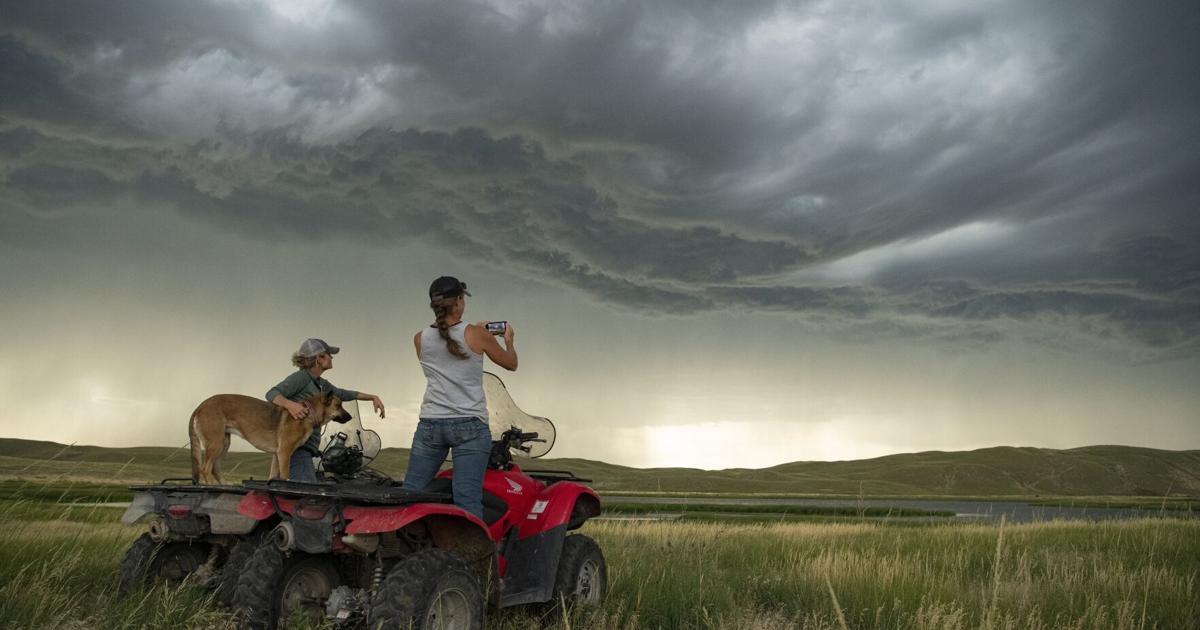
Jaclyn Wilson, left, and friend Amy Sandeen watch a thunderstorm roll in from the first pasture that Joel and Kathy Sartore purchased in the Sandhills for conservation more than a decade ago. Wilson, a fifth-generation rancher, operates the nearby Wilson Ranch near Lakeside, Nebraska, with her father, Blaine Wilson. Wilson family members run cattle on the Sartores’ pastures.


Wilson said her grandparents emphasized conservation and passed down those lessons to later generations. They planted thousands of trees and adopted management practices that are now widely recommended. They raised game birds for release to enhance local populations and only cut hay at certain times of the year. The family also has worked to restore a wetland on its property. In recent years, the ranch has begun selling beef direct to consumers through its website.

Both the family and Sartore encourage scientists to study wildlife on their properties. One project, Wilson said, involved collecting sonar data on bat populations. Another researcher studied dung beetles. Sartore noted that the Nebraska Game and Parks Commission bands geese in the area each spring.

“It’s been really neat that we’ve been able to bridge that gap with some of the conservationists he works with,” Wilson said.

Sartore said he likes the Sandhills because it polices itself. Run too many cattle for too long, and it creates bare spots, or blowouts.

He said he doesn’t have to worry about the condition of the land where he has made his purchases. It was, and continues to be, managed by people who care.

But the family’s purchases offer a chance to keep the most beautiful places from being developed after they’re gone, he said. Many of natural areas where he collected tadpoles and crayfish as a kid in Ralston now are under concrete.

Sartore takes other conservation measures, too, including maintaining a pollinator garden at his Lincoln office, complete with signs explaining what it is and how to do it at home. The FAQ section on his website — joelsartore.com — includes tips on how anyone can help save species, from properly insulating their homes to conserve energy to cutting back on single-use plastic items like grocery bags.

“We just think nature needs a break, and it has to be intentional,” he said.

Meanwhile, Sartore, who’s nearing 61, continues what he calls his “day job” with Photo Ark, a job he wants to continue as long as he can. For many species, the photographs are the only vetted and accurate record of their existence. His son, Cole, now accompanies him on overseas shoots.

He said he may hit 15,000 species by the end of the year. Initially, he estimated that the project would come in around 12,000 species, based on the number in the world’s accredited zoos and aquariums at the time. But those have grown in number, and he’ll go anyplace animals are in human care, from fish markets to wildlife rehabilitation facilities. He could see the Ark possibly reaching 20,000 species.

“It’s meant to inspire (people to) want to save nature and save themselves at the same time,” he said.

[ad_2]

Tucson teen takes top honors in statewide nature photo contest

[ad_1]

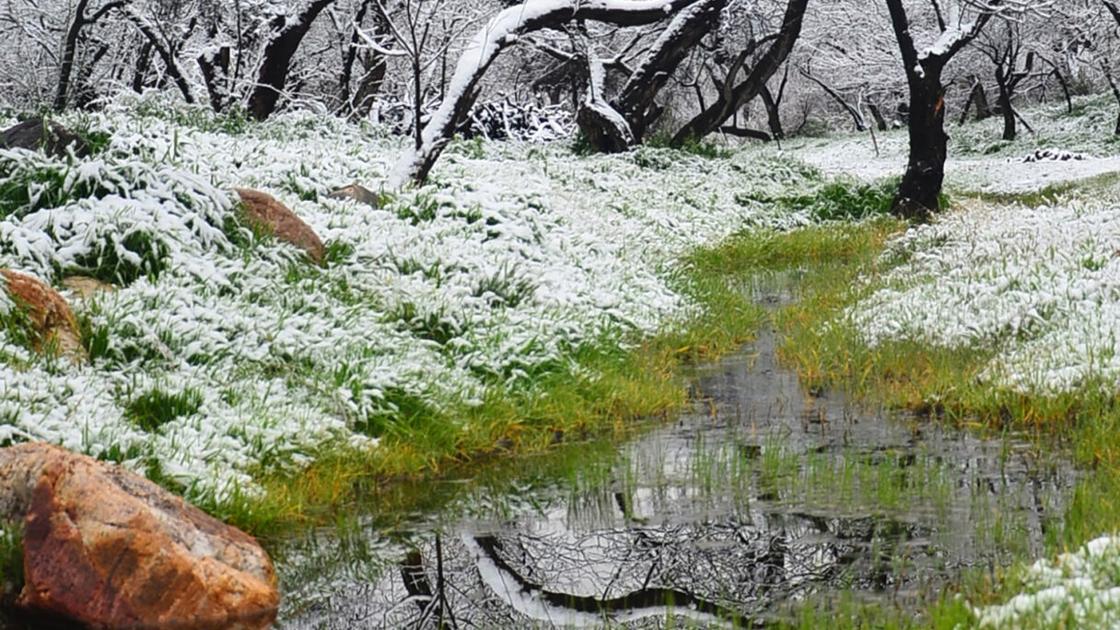
A 15-year-old Tucson girl has won the statewide “Adventures in Nature” Photo Contest with her shot of a snowy scene in the Catalina Mountains.

Arianna DuPont took home the $5,000 top prize for capturing the tranquil beauty of a “Rare March snow in Sabino Creek,” which was selected over more than 300 other photos from almost 200 teenage photographers.

“I’ve always been so drawn to capturing the beauty of our surroundings, and I’m so fortunate to live in such a beautiful city (and an) amazing state, where we have all these beautiful things to capture,” DuPont said in a written statement, after celebrating the award with her family and her photography teacher, Amy Haskell, at the Gregory School.

People are also reading…

Malia Means, 16, of Phoenix, took second place — and $2,000 — for a photo of the Superstition Mountains called “Towering Rocks Peeking Through Low Clouds.”

Corbin Rouette, 18, of Tucson, captured third place — and $1,000 — for a striking black-and-white image of “Saguaros Watching the Clouds.”


Corbin Rouette, 18, of Tucson won third prize in the statewide “Adventures in Nature” Photo Contest with this picture called “Saguaros Watching the Clouds.”


The 10th annual contest was put on by Arizona Highways magazine, The Nature Conservancy and Cox Communications.

“Our mission at Arizona Highways is to get people off the couch,” said Robert Stieve, the magazine’s editor. “We’ve been a proud co-sponsor of this photo contest for many years because it goes to the heart of what we’re trying to do.”

The judges for this year’s contest were Arizona Highways photo editor Jeff Kida, Phoenix-based professional photographers Suzanne Mathia and Mark Skalny, former Arizona Daily Star photo editor Rick Wiley and acclaimed photographer John Schaefer, who previously served as president of the University of Arizona.

Seven participants earned honorable mentions and $250 each. They are: Gibson Gallares for “Golden Hour with Bird Taking Flight,” Grace Shepard for “Fog Floating Through the Valley Alongside the Peak of Mt. Lemmon,” Faiza Tasnim for “Horseshoe Bend During a Semi-Cloudy Day,” last year’s first-place winner Kaden VanDuyne for “Sycamore Falls Evening,” Tobey Yamashita for “Portrait of a Red Fox,” and Aidan Yu for two entries, “Natural Elements of the Salt River” and “The Great Roadrunner.”

“Photography provides a purpose for these kids — it makes them think about what they’re seeing and experiencing,” Stieve said. “And even if their photos don’t finish in the Top 10, they’re already winners for having had the experience of being outside.”

Winning photographs from this year’s contest are expected to be featured in Arizona Highways and in promotional materials for future contests.

The water is running high in Sabino Creek in the Sabino Canyon Recreation Area. Snowmelt from the upper reaches of the Santa Catalinas has the creek flowing over the bridges along Sabino Canyon Road. Video Kelly Presnell / Arizona Daily Star

Kelly Presnell


Contact reporter Henry Brean at [email protected] or 573-4283. On Twitter: @RefriedBrean


[ad_2]

Crazy photo shows snake eating fish at Landa Park in New Braunfels

[ad_1]

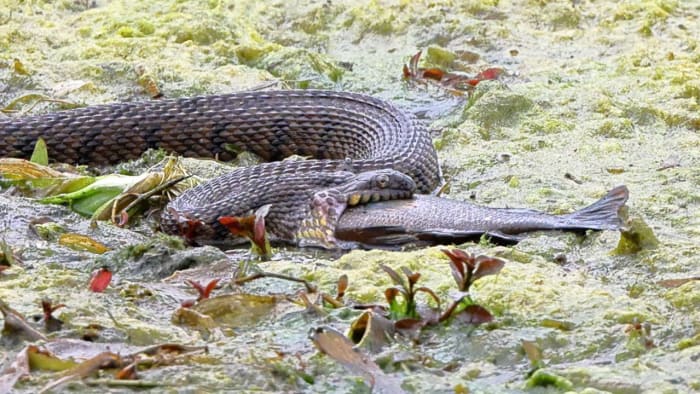
NEW BRAUNFELS, Texas – A hobbyist photographer recently snapped a pretty awesome picture of nature at work — a big snake eating an equally large fish.

Ed Means caught the serpent snacking on his lunch on April 19 while he was standing on a pier in Landa Park hoping to get a photo of a Green Heron he’d been watching.

“I heard a ruckus in the water and the Green Heron took off. And then I noticed something moving on the green mat of algae and river greenery in the middle of the river,” Means told KSAT. “It was too far away for me to see what I was looking at until I looked at it through my 500 mm camera lens.”

That’s when he spotted the Diamondback water snake and his fishy meal.

Diamondback water snake (Ed Means)

“It was an amazing sight – something I had never seen before,” Means said. “It was quite dramatic watching this snake slowly swallow this fish. It would seem that the fish would be too big for this snake but snakes are able to dislocate/unhinge their jaws to allow for bigger prey.”

According to the online animal encyclopedia Animalia, Diamondback water snakes are carnivores and feed on a variety of aquatic species, including fish.

Diamondback water snakes are typically found basking on branches over water, Animalia’s website states.

“They only typically resort to biting if physically harassed or handled. The bite of these snakes is known to be quite painful due to their sharp teeth meant to keep hold of slippery fish,” according to Animalia.

Means told KSAT he photographs birds and other critters and posts them to his Facebook page.

“It’s strictly a retirement hobby and to keep my Facebook page interesting.”

Diamondback water snake (Ed Means)

Copyright 2023 by KSAT – All rights reserved.

[ad_2]