Belgian street photographer Jeffrey De Keyser captured extraordinary pictures depicting “The Absurd Human Condition”. Jeffrey who travels to various parts of the world and captures some extraordinary shots from ordinary day-to-day lives. During traveling, Jeffrey comes across different types of situations that depict “the absurd human condition”.
Scroll down and inspire yourself. Please check his more amazing work on his Website and Instagram.
After weeks of suffocating heat and smoke from the Tamarack, Beckworth, and Dixie fires, Aubrey and I decided it was time to make a trip the California coast, one of the only places within a 7 hour drive that could promise cool and clean air. We followed the long and windy roads to Salt Point State Park, one of my favorite stretches of coast that has the same strange rock formations you would expect to find in Utah. Ironically, though we came to breath fresh air, the sky itself was foggy most of the day and resembled the smoky skies from home. Still, simply knowing that the air was clean made all the difference, and sleeping in a tent in cold damp air was exactly the relief we’d hoped for.
The area is also quite popular with fishing and other harvesting. At one beach we met some friendly van lifers cleaning out their Sea Urchin haul, and I bravely nibbled on a piece of sea-to-mouth Uni they offered. It was extraordinarily delicate, sweet, fishy, salty, and nutty.
Bizarre sandstone shapes etched by millennia of wind, salt, and rain in Salt Point State Park, on California’s Pacific Coast. I used a long exposure (30 seconds) in this photograph to blur the misty sea to accentuate the strange figures.
We had visited here once before, but looking through my blogs that image never seems to have made it on here, so now seems like a good time to share it, too. The rocks here are covered in mesmerizing designs of tafoni, the same kind of weather rock found elsewhere along the coast, and in the southwest.
Intricate patterns of tafoni (the sculpted cave-like features on the sandstone) adorn the wild coastline of California, while the huge waves of the Pacific Ocean crash against the shore.
We have just returned from a memorable astrophotography trip at a Bortle 1 dark sky site. The event was an annual star party hosted by the Oklahoma City Astronomy Club known as the Okie-Tex Star Party.
After a few location changes during the first several years, the star party found its home at Camp Billy Joe near the small town of Kenton, OK, not far from the Oklahoma/Texas border. The name ‘Okie-Tex’ was selected to show the collaborative efforts of the two states.
Aside from taking some amazing astrophotography images through our telescopes, the event opened our eyes to the experience of being under a truly dark sky.
Arriving at the Okie-Tex Star Party
Camp Billy Joe is a very remote location away from all city light pollution. This also means that depending on where you live, you might have to drive (or fly) a long distance to get there.
We flew from Toronto to Dallas/Fort Worth where we boarded our connecting flight to Amarillo, Texas. From there, we rented a car and drove approximately 2.5 hours to the star party site.
When you arrive, you can check in (if registration is open) and then set up anywhere on the field. Like most star parties, your chances of getting a better spot are higher the earlier you arrive.
Travel Tips:
When traveling to the star party by car, there are significant distances between each of the small towns along the way. You’ll want to make sure you always have a lot of gas to avoid running out before the next gas station. There is no gas station in Kenton and the closest gas station to the star party is either Boise City, OK (36 miles) or Clayton, NM (43 miles).
It is always nice (and often easiest) to arrive at a new location in daylight. For our travel, we arranged for an early morning flight to arrive around dinner time to get settled and set up the first night. For our flight home, we made sure to book an afternoon flight to accommodate the long drive from the star party back to the Amarillo airport.
Where to Stay for the Okie-Tex Star Party
Like most star parties, camping is your easiest option for enjoying the star party. You can set up your gear outside your camper or tent and enjoy all the other activities and events on-site.
If you’d prefer a little more shelter or a bed while at Okie-Tex, they do have a limited number of bunkhouses available on a first come first serve basis. This includes a separate bunkhouse for men and women, as well as a family option.
Aside from the above options, there are limited alternatives for sleeping arrangements outside Camp Billy Joe. There is a small bed and breakfast nearby that we heard books up early.
As a speaker at the event, they arranged for a mobile home rental for us in the small town of Kenton, OK. This meant we had to drive the short distance (3 mins) to and from the star party and park outside the gates, which closed at 9 p.m. to avoid headlights or any type of white light once it was dark out.
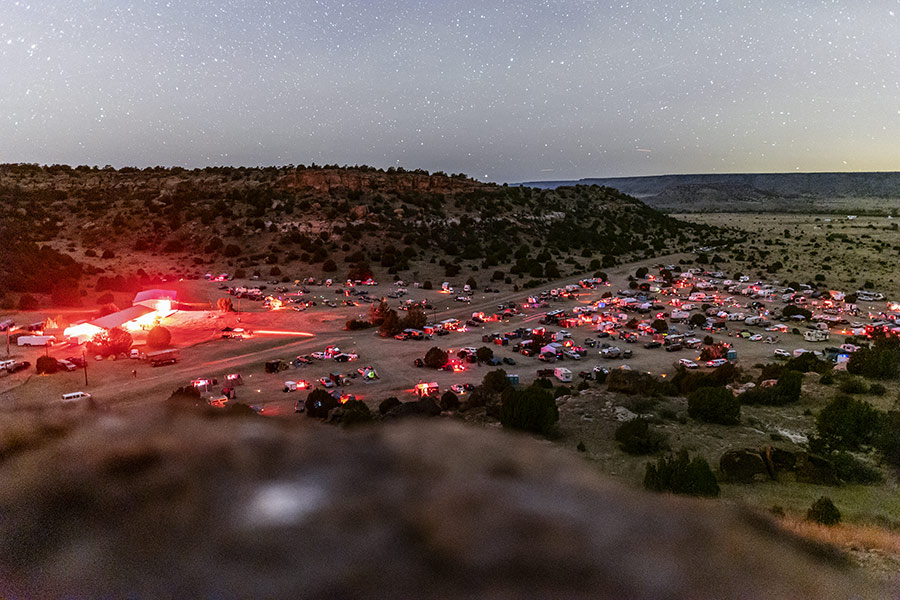
A view of the Okie-Tex Star Party from the rock formation nearby.
Meals and Food Options
When you are so far removed from city amenities, the logistics for running a star party are more complicated.
In terms of food, there is catering available for those who are in a tent or staying offsite. There is a separate registration process and cost associated with this, so keep an eye out for this when completing registration.
If you’re looking for a late-night snack, the Cosmic Cafe is also available on-site each night from 10 p.m. until 2 a.m.
If you are camping, please note that open flames are not allowed for cooking (to discourage smoke and fire issues) but cookstoves are okay.
And if you’re up for a bit of a drive (approximately 45 minutes), there are also food options available in Boise City OK, and Clayton, NM.
Events at Okie-Tex Star Party
There are a lot of activities to do at the Okie-Tex Star Party besides astronomy or astrophotography.
There are plenty of great speakers lined up throughout the week and some additional workshops you can register for. There is also a swap meet, vendor tents, and some pretty awesome giveaways.
If you’re up for a little adventure, there are some other sightseeing activities that you can do in the area, including hiking the Black Mesa Summit, walking along a dormant volcano, and checking out preserved dinosaur tracks.
South View on top of Black Mesa Summit
Black Mesa Summit
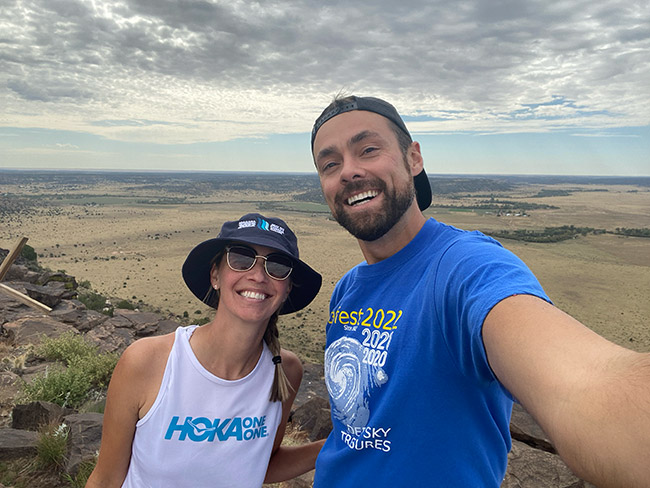
We hiked the Black Mesa Summit which is only a short 10-15 minute drive from the star party. You can use Google Maps to get you to the parking lot and follow the trail to the top. Be sure to bring a backpack with water to keep you hydrated for the 9 mile trek and be on the look out for rattlesnakes.
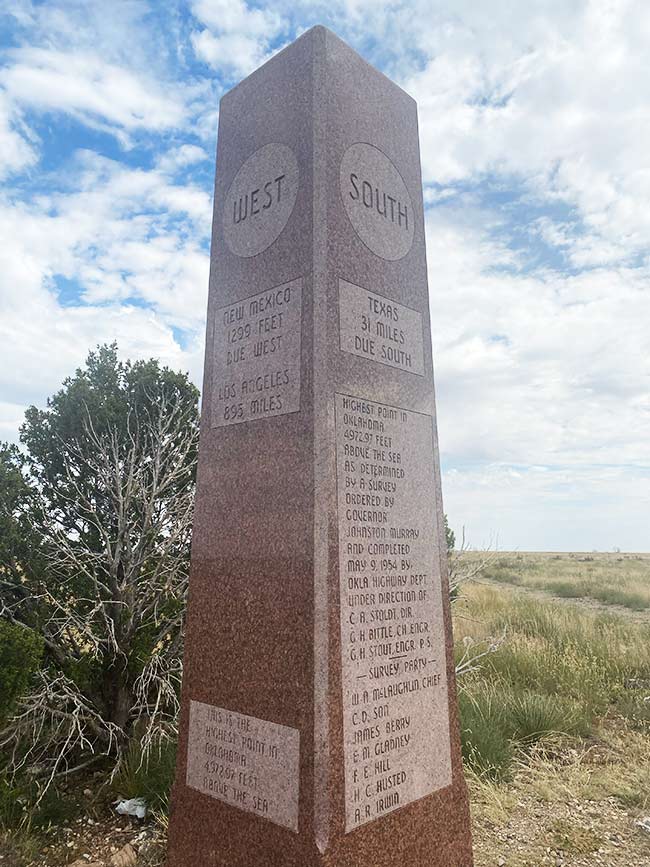
Fun fact: Cimarron County, OK, which includes the Town of Kenton and the summit, is the only county in the U.S.A to touch 4 different states (Texas, New Mexico, Colorado, & Kansas).
Summit tips:
You will want to make sure you leave plenty of time before dusk to complete the entire journey. It took us three hours to finish the 9-mile (14-kilometer) hike.
You will hike a long way (approx. 2 miles) before reaching the point of the hike where you actually start to ascend the Mesa.
Be sure to get your photo at the top of the summit, which is signified by a granite column. This is where you will see information about the 4 different states.
There is apparently a logbook at the base of the column as we later saw on social media. We did not sign it as we could have sworn the case it was in said ‘do not open’.
If you want the best view (and a view of the star party) but sure to follow a small path to the south. This will take you near the edge marked by two large wooden crosses. You can spot Kenton and to the left, the field of the star party. Again, be on the look for rattlesnakes that apparently like the tall grass.
Black Mesa Summit Column.
Bortle 1 Skies
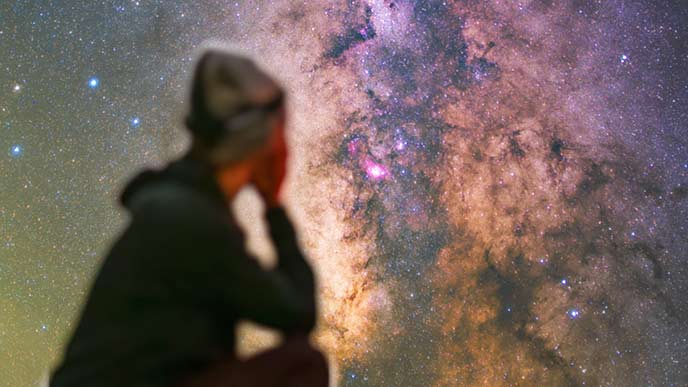
As a Bortle 1 site, the skies at Okie-Tex were incredible. We were lucky enough to have two crystal clear nights under the darkest skies I have ever seen.
Unfortunately, one of those nights was the day we arrived and we were, of course, exhausted from travel. With a half-day workshop the next day, I had to pack it in early. But the following night was also great.
We were told by the regular attendees of the Okie-Tex Star Party that some years have been very windy, but this was not the case for our trip. The skies were calm, cool, and most importantly, dark.
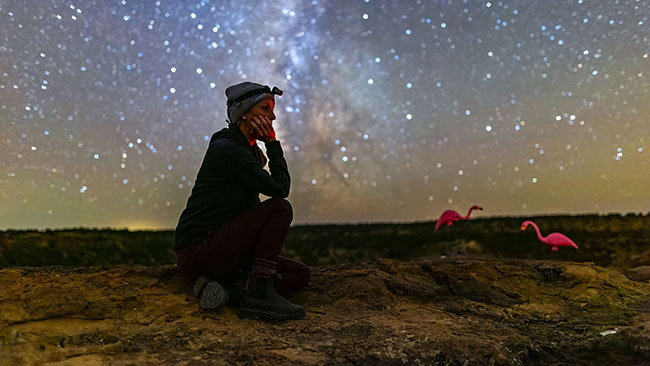
A 25-second exposure of the Milky Way, Ash, Okie, and Tex.
The scenic, rolling landscape at the Okie-Tex Star Party is well-suited for nightscape photography. Our host (Andy) spent much of his time at the party taking incredible nightscape images with creative compositions (including this incredible 360-degree view of the night sky).
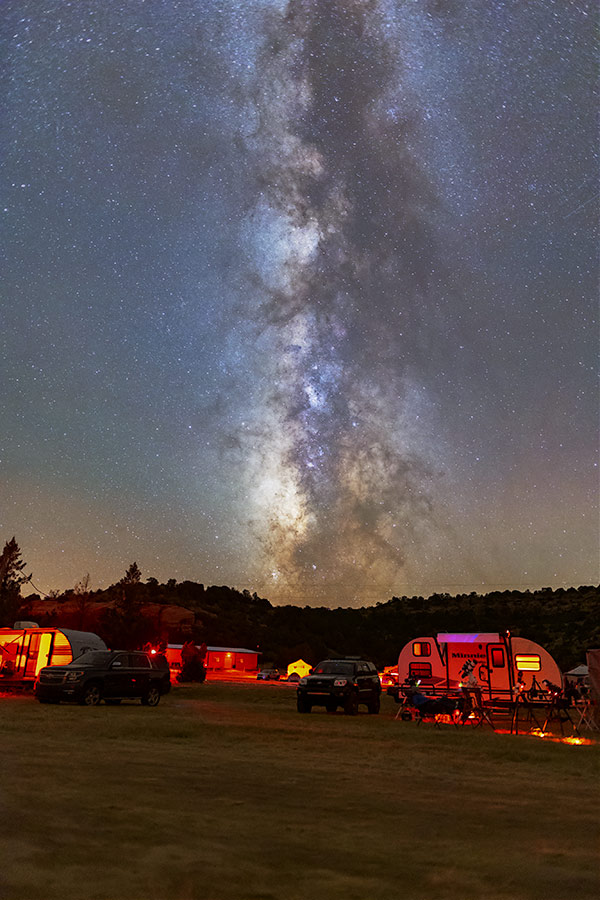
I tried to capture as many Milky Way nightscape-style images as I could with my stationary tripod and filming camera (a stock Canon EOS R6). The following image is a single, 25-second exposure at ISO 3200 of the Milky Way from our campsite.
A single 25-second exposure of the Milky Way from our campsite.
Deep-Sky Astrophotography Setup
Even though we flew, we were able to bring a fair amount of gear with us to take advantage of the dark skies. Because this was our first time under Bortle 1 skies, I did want to bring a little more focal length than I typically bring to a star party.
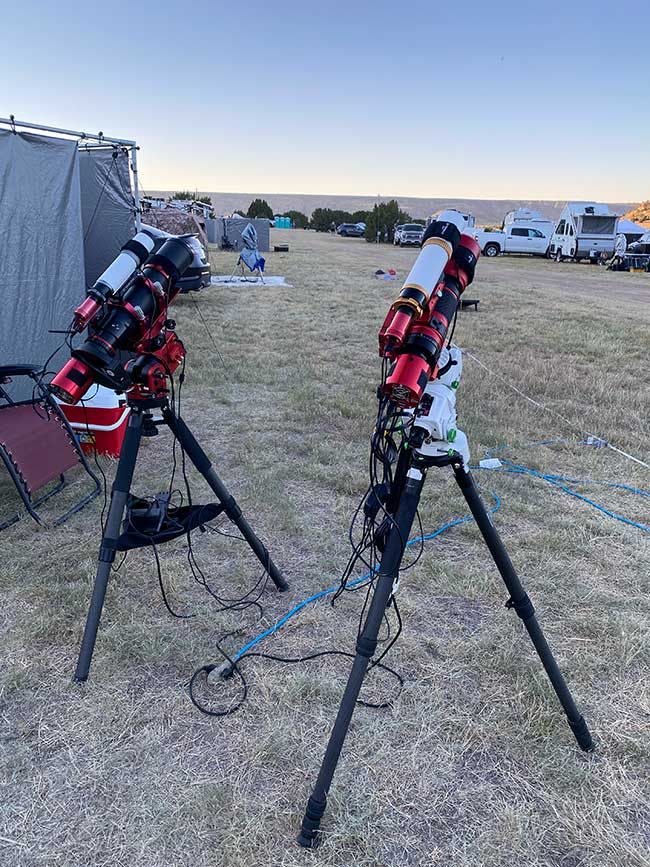
Below is the breakdown of the rig that I brought in my carry-on luggage and personal item (backpack). We did have to check one bag as our tripods did not fit in any of our carry-on bags. It also came in handy for packing some warmer clothing for at night.
Trevor (left) and Ashley’s (right) setup
My Setup:
Ashley’s Setup:
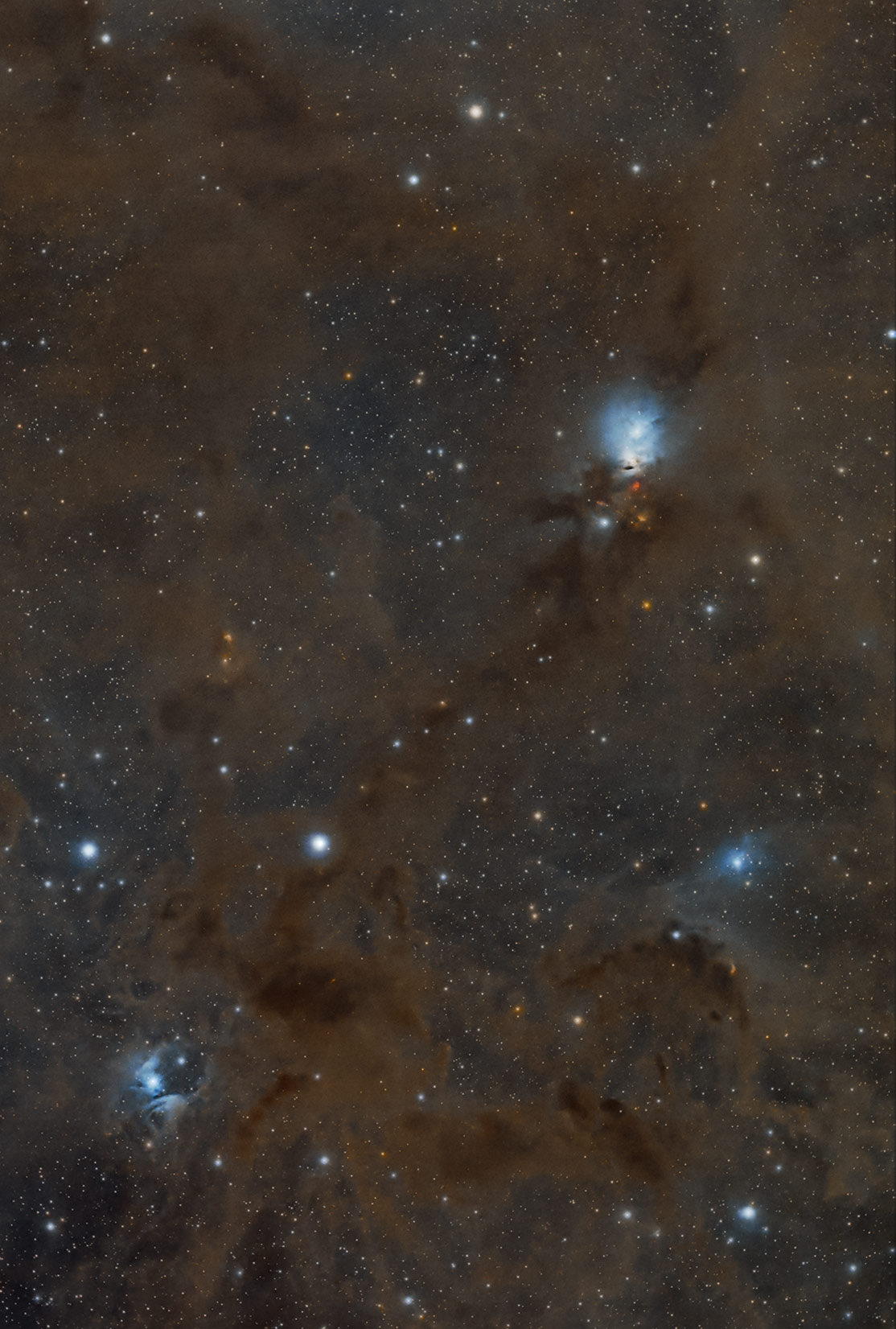
I chose to photograph the Embryo Nebula in Perseus in LRGB. Unfortunately, the clearest nights of our trip landed at times when I had to present in the morning, and I didn’t run the rig as long as I wanted to.
My final image includes just 2.5 hours of total exposure time, using a ZWO ASI6200MM Pro camera and LRGB filters.
The Embryo Nebula in Perseus.
(Ashley has not yet processed her images of the Cave Nebula, but we will add those to the post when ready!)
When you are flying to a star party, you realize there are lots of other things that you typically bring to make things more comfortable, that you wouldn’t be able to given the circumstances – things like chairs, a table, a blanket, etc. Thankfully, Andy, from the Oklahoma City Astronomy Club had us covered, and brought all those things for us, including extension cords.
He even brought and set up a sky-box for us to have a little place to go during the star party, which also doubles as protection from the wind, which is common at Okie-Tex. He also kept an eye on our gear, so we could leave it set up, while we traveled to and from the town where we were staying. Thanks, Andy!
Sky Box for Astrophotography
Star Party Speakers
In 2022, I was a speaker at the Okie-Tex Star Party. They expressed interest in having me attend in 2021, but due to the pandemic and the lockdowns between the Canada and USA border, it was arranged for the following year.
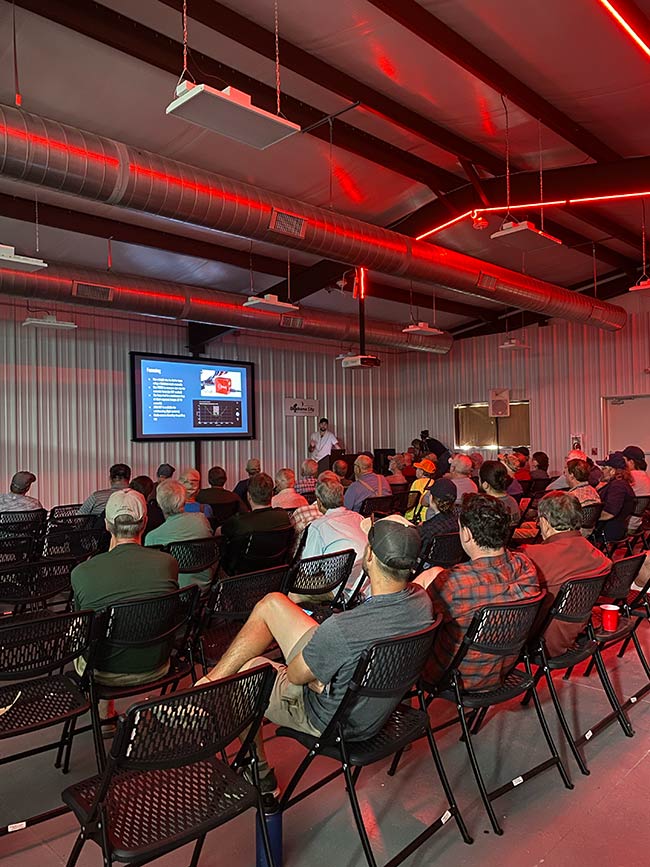
I presented on two topics: a half-day workshop on wide-field Astro imaging, and as per the request of the star party organizers, a presentation on the ZWO ASIAIR. Both talks went well and attendees seemed to be engaged in the information.
In addition to myself, there were other presentations from folks like Jonathan Talbot and Rick Fienberg on the topics of ‘Leveraging New CMOS Technology’, ‘Pixinsight Beginner Imaging’, ‘The New Era of Professional-Amateur Collaboration in Astronomy’ and ‘The Great North American Solar Eclipses of 2023 & 2024’.
ASIAIR Presentation at Okie-Tex Star Party
Rules at Okie-Tex Star Party
As far as rules go, Okie-Tex is a pretty laid-back star party. They do have a few rules to follow, mostly pertaining to white light which is normal for a star party:
No white light after dark (laptops, cars, cell phones, etc.)
No laser pointers
Dim red light only and aim it at the ground
Anticipate your vehicle lights (opening and locking doors) and take the appropriate steps to make sure there are no issues with light
Park outside the gates after 9 p.m. if you are not staying overnight and park facing away from the star party
Pets are allowed but they must be leashed and contained at all times. Be sure to clean up after them.
Okie-Tex Star Party Impressions
This is a very relaxed and casual star party that doesn’t impact the amazing Bortle 1 skies. People just ‘get’ the rules (i.e. no white light) so all you need to do is show up, set up, and enjoy yourself.
The Oklahoma City Astronomy Club are great hosts. Being in such a remote location, it can be easy to feel a little uneasy, but they really do make sure you have all the comforts and necessities at the site – washrooms, showers, catering, power, etc. The star party is well organized and runs like you think a star party that has run for 30+ years would run – like a well-oiled machine.
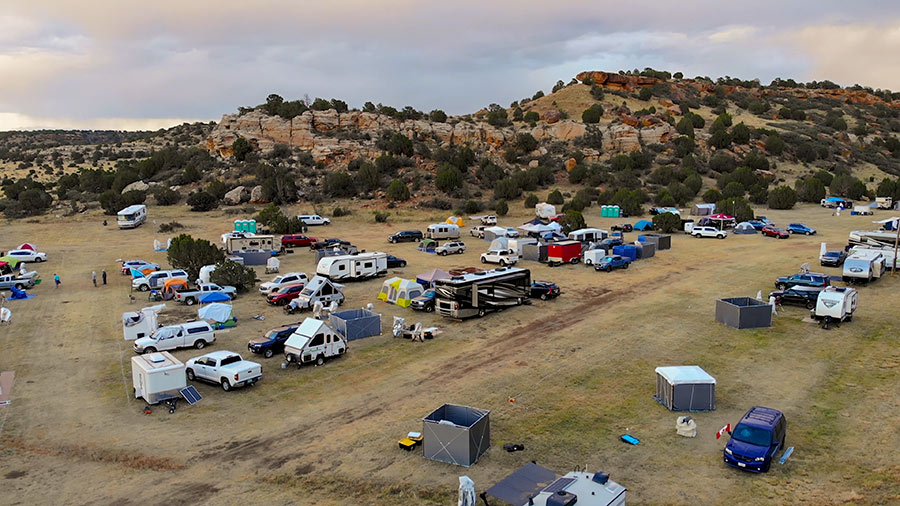
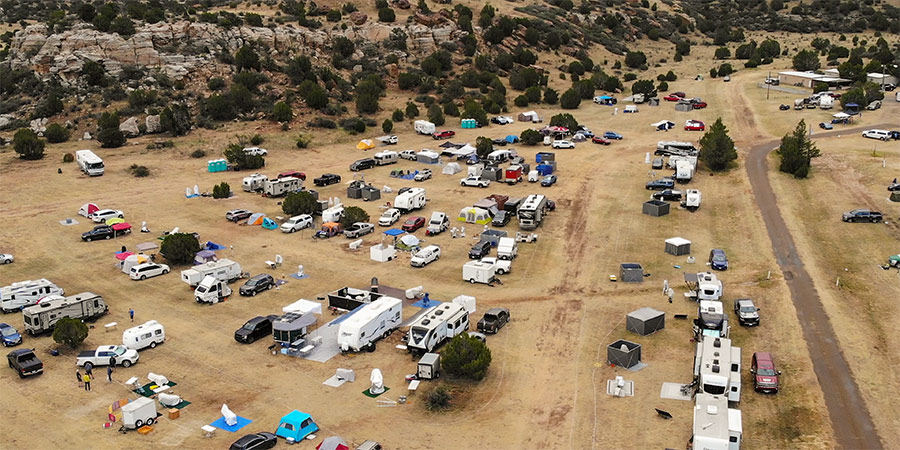
The Okie-Tex Star Party from above.
There are a lot of seasoned attendees at this star party that make it a lot of fun. You can join in on the conversation, and get the scoop on their stories from the many years they have spent attending the star party and make new friends.
You’ll also want to be sure to hike to the top of the nearby rock formation adjacent to the star party to see Okie and Tex, the official flamingo mascots of the star party.
Overall, we had such a great time at the Okie-Tex star party and can definitely see ourselves returning in the future. A big thanks to the Oklahoma City Astronomy Club for the invite and for taking such good care of us!
Battling Buckthorn: 10 a.m.-noon Oct. 29, Jay Cooke State Park, Carlton. Learn about buckthorn while helping to remove it. Bring lunch, gloves and safety goggles. Meet at the River Inn Visitor Center. Rain date: Oct. 30. Email Lori Seele at
Fifth Annual Aurora Summit: Nov. 4-6, Legendary Waters Casino, Red Cliff, Wisconsin. Events include educational sessions on over a dozen topics; photography and photo editing workshops; expert roundtables for camera questions; a gear swap meet; a group aurora chase; and more. Keynote speaker is Tamitha Skov, a credentialed space weather physicist known as “Space Weather Woman” from her popular social media and video platform. COVID-19 vaccination required; guests must register. For more information or to register, visit
TheAuroraSummit.com
. Lineup of speakers includes:
Bob King, presenting “What Is the Aurora, How Does it Happen and When Should I Look?” as well as “Upcoming Celestial Events You Don’t Want to Miss.”
Jeanine Holowatuik, presenting “The Fundamentals of Aurora Photography.”
Vincent Ledvina, presenting “The Sun-Earth Connection: The Science and Processes behind the Northern Lights.”
John O’Neal, presenting “The Parker Solar Probe, the Solar Orbiter and Space Weather Reporting.”
Melonie Elvebak, presenting “How to Use a Star Tracker and What You Can Do.”
Justin Anderson, presenting “Color in Lights: Chasing the Aurora Colorblind.”
Anna Martineau Merritt, presenting “Native Culture: Introduction to Our Anishinaabe Culture and the Meaning of Place.”
Dave Falkner, presenting “Voyager and the Heliosphere.”
Marybeth Kiczenski, presenting “Taking Your Images Further: Using blending and tracking to create beautiful high-definition photos.”
Steve Luther, presenting “From Northern Lights Newbie to Aurora Addict: My Journey and Roadmap to Successfully Capturing the Beautiful Borealis.”
Mike Shaw, “Basic Night Photography.”
The Maasepan Puukko Knife Making Class: 9 a.m.-2 p.m. Nov. 12-13, Duluth Folk School, 1917 W. Superior St. Cost: $325. Call 218-310-0098 or go to
duluthfolkschool.com
.
Snowmoble Safety Field Day: 8:30 a.m. Jan. 7, Nightriders Clubhouse, 5186 Martin Road, Duluth. Instructor: Beth Wentlaff. Must be age 11 before class starts and have completed the online course. Register by calling 218-590-7570 or email
Snowmobile Safety Field Day: 9 a.m. Jan. 7, Boomtown, 4483 Martin Road, Duluth. Instructor: Josh Carlson. Requirements: Must be age 11 before class starts and have completed the online course. Lunch provided by Boomtown. Register by emailing
Jay Cooke State Park Programs: 780 Minnesota Highway 210, Carlton.All nature walks and wildlife talks are free; a Minnesota State Park vehicle permit is needed to enter.
Vehicle permits
can be purchased upon arrival at the park office. Cost: $7/day or $35/year. There are
reduced price options
for disabled veterans, Minnesota tribal members and others. For a complete event schedule, go to
The winners of the prestigious Landscape Photographer of the Year 2022 competition have been announced. Here’s a selection of our favourites
Landscape Photographer of the Year has now been running for 15 editions. Founded in 2006 by the hugely well-respected landscape photographer, Charlie Waite, each year the judges have the unenviable task of looking through many thousands of images to decide on the best of the best.
The competition is open to images of the United Kingdom, Isle of Man and the Channel Islands, but photographers can be of any nationality. As well as the main adult competition, a youth award runs alongside it, both sharing the same main categories – many of which you’ll see on these two spreads. The categories are Classic View, Urban Life, Black and White and Your View. There also special awards, comprising Coast, Historic Britain, Lines in the Landscape and Landscapes at Night.
One of the most prestigious competitions to be shortlisted in, it also has a prize fund worth more than £20,000 and culminates in a touring exhibition across the country.
Judges for this year’s competition include some of the leading names in photography and publishing – many of whom you’ll have seen in the pages of our magazine and online. Acclaimed photographers such as Lizzie Shepherd, Verity Milligan and Martin Evening are on the judging panel, as is our very own editor, Nigel Atherton.
The overall prize goes to William Davies, for his beautiful image of the Brecon Beacons in South Wales, while the overall Youth award goes to Natasha Burns for her beautiful shot taken in Argyll.
As well as a touring exhibition, a hardback book, published by Ilex Press, containing all of the winners, plus many more runners-up, highly commended, commended and shortlisted images, is available to buy.
For more information on the competition, the exhibition, the book and how to enter next year’s competition, visit www.lpoty.co.uk
See the winners below
Landscape Photographer of the Year overall winner 2022
William Davies – Brecon In Winter
Location: Brecon Beacons National Park, Wales
Canon EOS 5DSR, EF 70-200mm f/4L
Image: William Davies
Taken from the Pen-y-Crug hillfort, the viewpoint provides a stunning panorama of Brecon and the surrounding mountains in South Wales. William says, ‘On this December morning,
I arrived in the gloom before dawn but was lucky to find the sunlight soon breaking through a clearing in the snowstorm, adding a burst of warmth and colour to the scene.’ William used a telephoto lens, which has helped to compress the sunlit fields and the snow-covered hills and mountains in the background.
Landscape Photographer of the Year Overall Youth winner 2022
Natasha Burns – Dawn Reflection
Location: Loch Creran, Argyll, Scotland
Nikon D3400, 55-300mm f/4-5.6
Image: Natasha Burns
Your View category winner
Simon Turnball – Oh! Limpet Games
Location: Ayrmer Cove, Devon, England
Canon EOS 5D Mark III, EF 24-70mm f/2.8L
Image: Simon Turnball
Simon came across this fascinating scene while wandering along the Devon coast. He was immediately taken by its intriguing lines and colours, with the rock pool providing a wonderful composition and the limpets adding interest. He describes them as ‘playfully sliding down the gully like an Olympic bobsleigh team’.
Black and White category winner
Paul Killeen – Souls Tied
Location: Stranocum, County Antrim, Northern Ireland
Canon EOS 5D Mark IV, EF 70-300mm f/4-5.6L
Image: Paul Killeen
Paul’s beautifully peaceful image has a poignant message behind it. Taken on the same day as the funeral of a family friend, the two birds at the centre of the image reminded the photographer of his late friend Lynsey and her husband Simon.
Urban Life category winner
Kevin Williams – Fully Loaded
Location: The Port of Felixstowe, Suffolk, England
Nikon D810, 24-120mm f/4
Image: Kevin Williams
Kevin used a long exposure of 120 seconds to achieve this beautiful image.
Coast category winner
Gray Eaton – The Sacred Garden
Location: Anglesey, Wales
Nikon D3, 14mm f/2.8
Image: Gray Eaton
This tiny chapel – St Cwyfan – has been photographed many times. Inaccessible at high tide, Gray wanted to capture something that was a little different. In a single frame he wanted to show both the chapel and the aquatic world surrounding it, along with the submerged garden of algae.
Lines in the Landscape category winner
Damian Waters – Loch Awe
Location: Argyll and Bute, Scotland
Canon EOS 5D Mark IV, EF 17-40mm f/4
Image: Damian Waters
Damian planned this image before arriving at the scene, but discovered that the train was delayed on his arrival. He thought that the evening would close in too quickly, but just in the nick of time, the train emerged from the gloom.
Inspired by these photos? See more photography competitions to enter here.
Top tips for award-winning landscapes from LPOTY 2021 winners
Best Camera for Landscape Photography 2022
See the best Landscapes from APOY 2022 round four!
The top 20 best landscape photographs
The best landscape photography books for inspiration
Follow AP on Facebook, Twitter, Instagram, and YouTube.
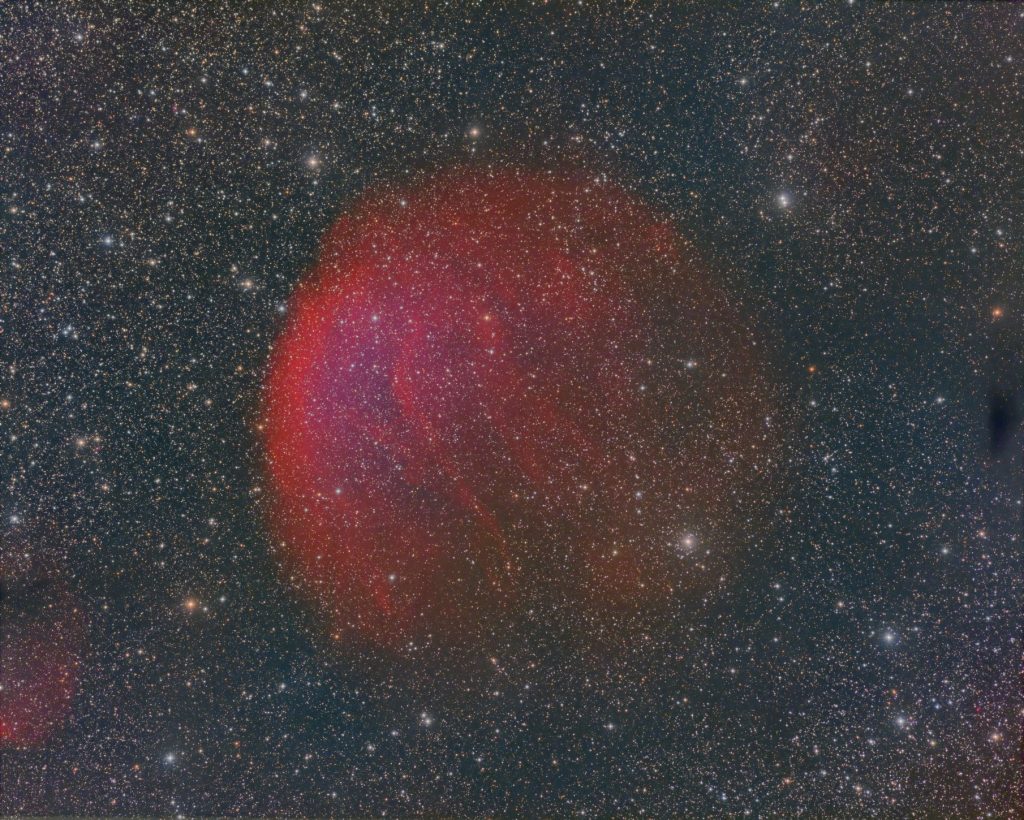
I took my first two Ha images of Sh2-216 back in January 2017 and followed them up with some more in November. The initial results were shown here: http://andrewluck.me.uk/?p=1269.
Due to the extreme faintness of the object I’d opted to use 1 hour exposures for a total of 10 hours. Initial processing was enough to show detail in the nebula but the background showed some processing artifacts.
Fast forward to September 2020 and some clear sky opportunities lead to my acquiring another 7 hours of Ha exposures. As some online images showed some OIII in the nebula as well I added 17 hours of OIII images (1 hour images) and to complete the set a further 12 hours of RGB images (20 minutes each).
To combine the images I created an RGB image and then used the PixInsight NBRGBCombination script to blend in the Ha and OIII.
This year marks the 45th anniversary of the groundbreaking book “Firehouse,” featuring photographs by award-winning photographer Jill Freedman and text by firefighter and Firehouse Magazine founder, Dennis Smith.
The New York City Fire Museum is presenting Firehouse: The Photography of Jill Freedman, an exhibition running until April 2, 2023, that showcases images from the book and videos of Freedman describing how she was able to capture these incredible images.
Freedman was a highly respected New York City documentary photographer whose award-winning work is included in the permanent collections of The Museum of Modern Art, the International Center of Photography, George Eastman House, the Smithsonian American Art Museum, the New York Public Library, the Museum of Fine Arts, Houston, and the Bibliothèque Nationale, Paris, among others. She appeared in solo and group exhibitions throughout the world and contributed to many prominent publications.
In the “Firehouse” book, “Jill Freedman created a visual story that captures an important piece of New York City history,” said Jennifer Brown, executive director of the New York City Fire Museum. “Most importantly, she showed the humanity of firefighters through their day-to-day struggles and triumphs.”
The images in the exhibition include close-ups of the firefighters, action shots at the scene of a fire, and other scenes during the FDNY’s War Years in the 1970s..
“Exhibitions such as this are crucial to honoring Jill Freedman’s work and keeping her legacy alive, much like Jill did with her photography subjects,” said the Jill Freedman Estate: Marcia Schiffman, Susan Hecht, Nancy Schiffman Sklar, and Wendy Wernick. “Jill is one of the greatest photographers of all time, and we are pleased to partner with the New York City Fire Museum and other institutions to keep her work available to the public.”
Revised book
The Jill Freedman Estate also announced that they have re-released the book with a new introduction and new captions provided by retired 40-year veteran of the FDNY, Keith Nicoliello.
When I asked Nicoliello, who spent 37 years at Ladder 30, what drew him to the assignment, he had a very interesting response.
“We were working one day, and we were going shopping for the meal when this woman comes up to me and says ‘You guys have always been good cooks! I had a lot of good meals in firehouses.’ So, I said, ‘Who are you?’ and she said, ‘I’m Jill Freedman.’ She didn’t think I’d remember, but I said, “I know exactly who you are!’ I told her all about how much I liked the book, and she was thrilled.”
Later that day, Freedman came to visit Nicoliello at the firehouse, shot a quick video and they were friends ever since.
“When she passed away, her three cousins had an idea for a book…a second writing of the “Firehouse” book. They approached me and I said I’d love to be a part of this. I loved the book, I knew most of the guys in the book, so my job became putting captions to the pictures. And I am so proud to be part of this.”
Nicoliello shared the story of how Freedman was not allowed to stay in the bunk rooms while compiling the photos for the original book.
“She used to sleep in the battalion chief’s car,” he said. “That’s how dedicated she was.”
He went on to explain how each photo has a double meaning.
“A civilian will look at one of these photos and see something amazing,” he said. “A firefighter will see something completely different, especially FDNY guys because we had a certain way of doing things and she captured all of that.”
How it started
Back in the mid-70s, Freedman ran into Dennis Smith at a club in Greenwich Village. She was singing an Irish ballad (Freedman was multitalented) and when she was done, Smith comment about the impressive range of her voice. They began talking and Smith discovered that Freedman was also a photographer whose favorite photo was of a firefighter rescuing a cat.
Smith told Freedman how he always wanted to do a book filled with photos of firefighters and Freedman said how she was always obsessed with firefighters and in fact wanted to be a firefighter when she was younger.
Smith had already authored a couple of books, including the highly acclaimed “Report from Engine Co. 82,” and was in the process of launching Firehouse Magazine. The two talked about it for a while, but then went their separate ways.
And then, somehow fate brought them back together again…in Ireland.
“Ireland was like a second home for Jill,” said her cousin, Susan Hecht. In fact, Freedman visited and photographed the people of Ireland over a seven-year period and published two books, “A Time That Was: Irish Moments” and “Ireland, Ever.”
“On one of those visits, who does she meet again? Dennis Smith!” said Hecht. “They ate, they drank, and they decided they were going to do this book.”
Every photo tells a story
Freedman spent 6–8 months at Smith’s station, Engine 82 and Ladder 31 in the South Bronx and then she went to Engine 69 and Ladder 28 in Manhattan’s Harlem neighborhood.
“Every picture tells a story,” said Hecht. “Just talking to the firefighters here tonight you can see how these photographs bring out such emotion in them.”
One of those firefighters was 89-year-old Louis Andrade, who joined the FDNY in 1957 after having served in the U.S. Marine Corps.
“I was somewhat instrumental in getting her to ride the trucks in the South Bronx,” Andrade recalled. “I introduced her to the chief and told him that she was a photographer and that I she was going to ride with me. That was Chief Cuddles, that’s what we called him because he was like a little bear that you wanted to cuddle.”
One of things Andrade liked most about Freedman’s photos was how it showed firefighters interacting with the community “especially the children. We always had a great time with the children.”
Speaking of children
Dennis Smith passed away earlier this year, but his daughter, Ashley, was on hand for the opening of the exhibit and perfectly summed up the evening.
“This is such a wonderful thing that they did,” said Ashley Smith. “Dad would be happy and proud. We all are as well.”
The exhibit runs through April 2, 2023 at the New York Fire Museum located at 278 Spring Street, New York, NY.
Here is a small sample of what you can expect to see:
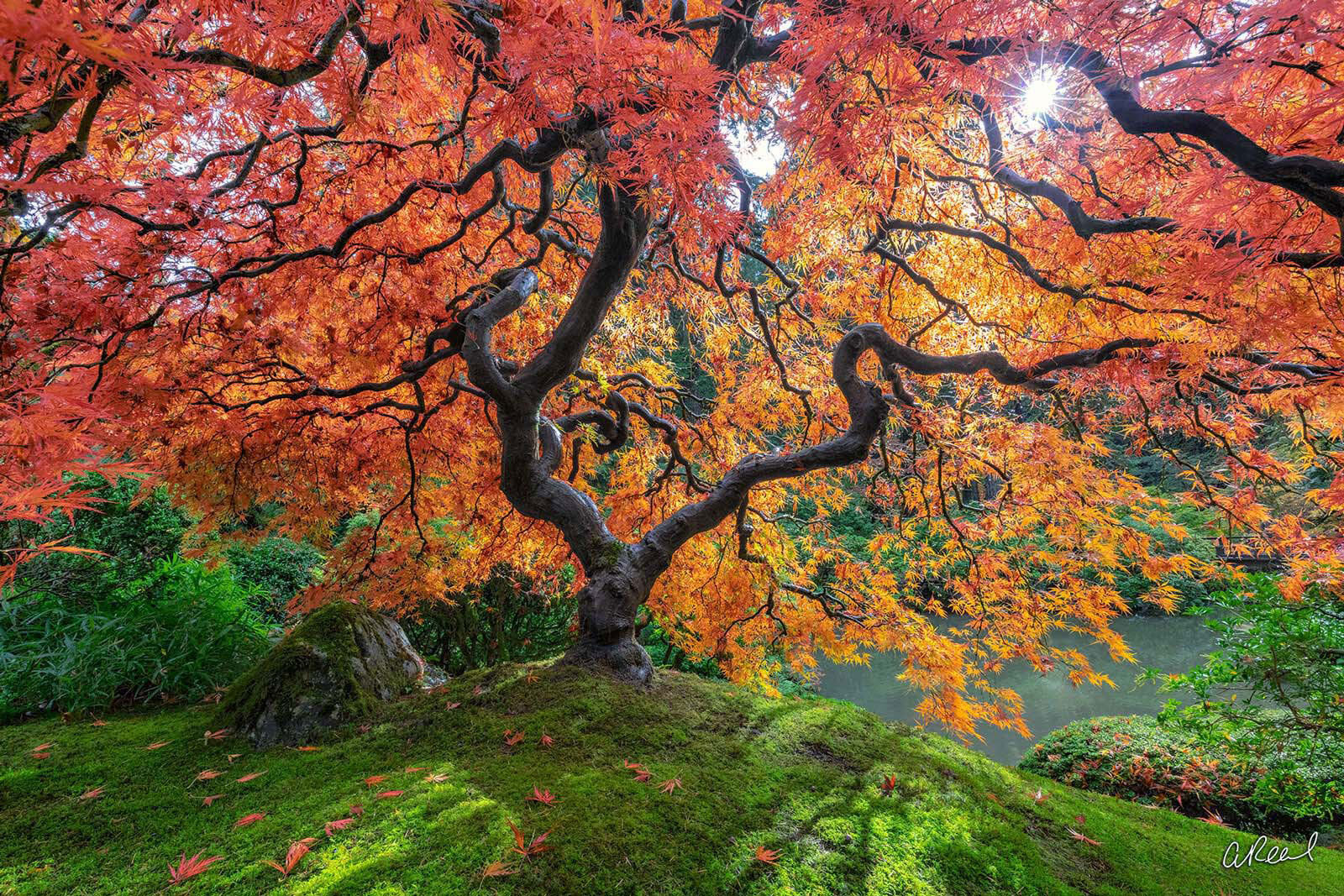
In the city of Portland, Oregon there is a world-famous Japanese Maple tree, located just inside the gates of the Portland Japanese Garden just waiting to capture your spirit and imagination. Millions of visitors each year travel to the Pacific Northwest, to the city of roses, to explore everything that this city has to offer including the world renowned Japanese garden.
In 1958, Portland became a sister city to Sapporo, Japan, helping to create a broad interest in Japanese culture. Soon after, several business leaders and the Mayor of Portland decided it would be wonderful for Portland to have a traditional Japanese Garden. On June 4th, 1962, the City Council created a commission to establish the garden on the site of the former Washington Park Zoo.
The Legendary Lace Leaf Maple Tree
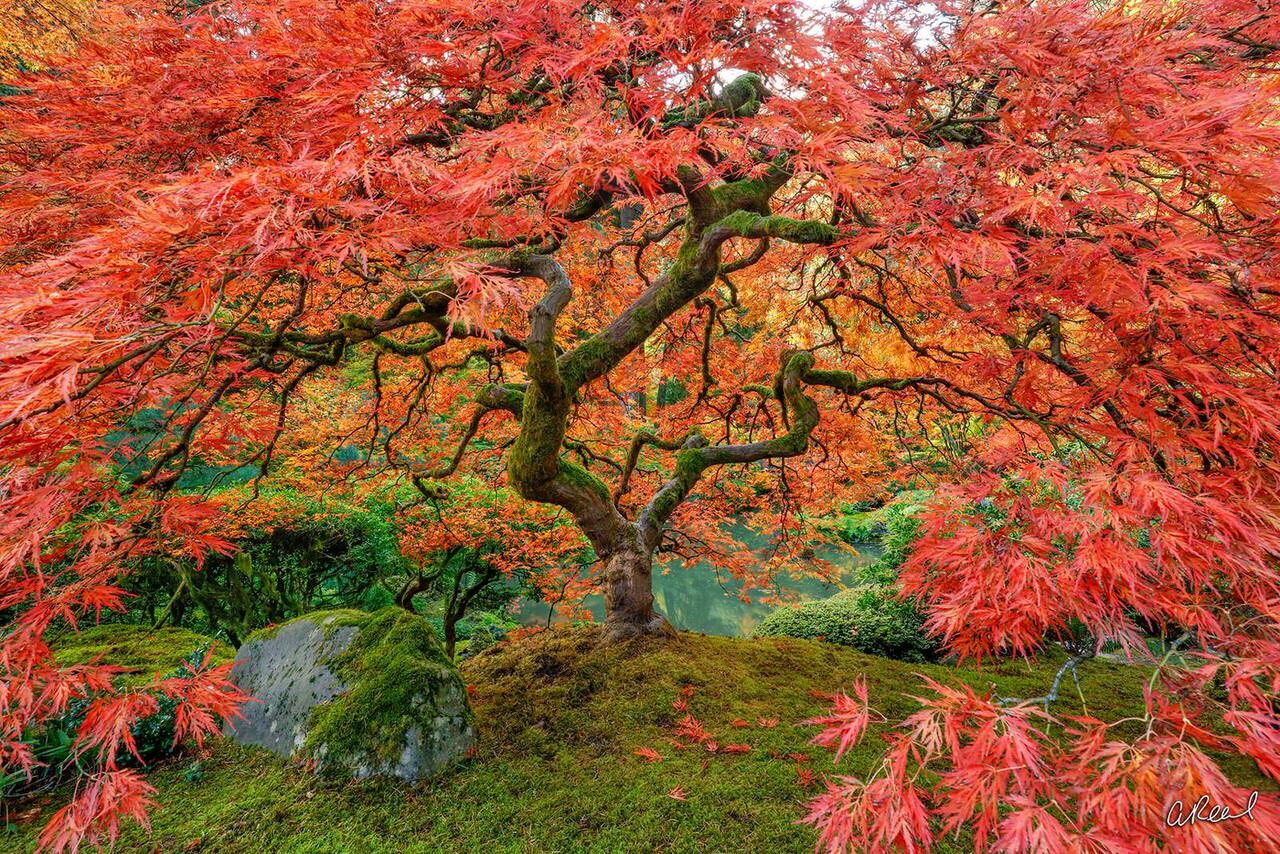
This beautiful Japanese Maple tree that so many have grown to love, was not an original planting in the garden. No one is 100% sure of exactly when it was planted, or where it came from. Speaking to Adam Hart, Senior Gardener of the garden, after looking through historical photographs, I was told that this lace-leaf maple was most likely planted sometime around 1971 and is between 65-70 years old.
Every year, when the carefully pruned leaves of the trees & shrubs in the garden shift from the greens of summer to the reds, oranges and golds of autumn, photographers from around the world flock to the garden to capture the transformation of fall and often, specifically to photograph this single lace leaf maple.
Maybe you yourself have wanted to photograph this maple tree and have heard stories about the experience itself. Let me enlighten you with some common myths about the tree and prepare you for your adventure to the city of Portland.
Nebulas of scarlet stars erupt from the twisted branches of an old Japanese maple in a garden in Portland, Oregon. A brilliant flash of fire, the autumn boughs make the surrounding beds of moss seem almost to glow. Fine Art Limited Edition of 200.
Five Common Myths About Photographing The Worlds Favorite Maple Tree
Myth #1 – This Japanese Maple Tree Is Located In A Mysterious Secret Garden Whose Location Is Only Known By Photographer Peter Lik.
This, of course is the most ridiculous and my personal favorite myth of all. Over the years I have been accused of and even have even received hate mail from collectors of Peter Lik’s work who were led to believe that Lik was the first and in some cases only photographer to capture the heavenly beauty of this tree with his camera.
In 2011, an image of this tree titled The Tree of Life by photographer Peter Lik, was awarded 1st place in a photography contest called Windland Smith Rice International Awards and was on exhibition at the Smithsonian in Washington D.C from April – September of 2012. Those of us that lived in Portland had been photographing this tree for years prior to Lik gracing the garden with his “most awarded, most wanted, most full of $%^&* presence.
For anyone still in the dark about the reality here, the tree is located in a public garden in Portland, Oregon and Lik was not the first the photograph it. Also, in case you were wondering, it is also impossible to photograph clouds BEHIND the moon, but I digress.
The gnarled branches of a Japanese maple spread forth a flaming crown in a sculpted garden in Portland, Oregon. Beside a tranquil pond, the winding footpaths and soft beds of moss are scattered with the gold and crimson stars from this dazzling display. Fine Art Limited Edition of 100.
Myth #2 – Your Dreams of Climbing This Magical Tree Are Within Reach
Maybe you loved to climb trees when you were a child and you are looking to regain some of the glory of your youth. Maybe you are trying to get closer to God. Maybe you are just a weirdo. Whatever the reason for your quest to conquer the glory of this magical tree, I’m afraid I’m going to have to crush your dreams. The tree is only six feet tall. If you attempt to climb it you will most likely get tackled by a fellow photographer, disemboweled by the ancient Samurai who watch over the garden or be forever haunted by the spirt of Peter Lik. You will most certainly make a fool of yourself.
Myth #3 – You Are Special
I mean, you are special. The odds of you being alive at all are basically zero. When it comes to your desire to photograph this legendary Japanese Maple Tree though, you are going to have to get in line. Literally. Everyone wants to photograph this tree in autumn. Everyone wants it in the best light, hopes for fog, is looking for peak color and thinks their photograph of it is going to be the best photograph ever of Portlands Japanese Maple. Everyone bought the same garden membership you did, thinking that gaining entry two hours before everyone else was going to grant them access to photograph the tree all by themselves. Wearing knee pads and a headlamp, traveling from another country or shooting with your super fancy Phase One camera does not make you special.
In reality I have witnessed lines of up to 40 people waiting to photograph the tree at any one time. I have witnessed fist fights almost break out more than once. Every year I hear the same jokes about how small it is, how someone is going to chop it down, about thinking they were going to climb It and about how special Peter Lik Is. Lol.
The fiery boughs of a grand Japanese maple fill the skies above a sculpted garden in Portland, Oregon. The enormous canopy shades the beds of jade moss and gently caresses the tranquil waters of a nearby pool. Fine Art Limited Edition of 100.
Myth #4 – It Is The Only Beautiful Japanese Maple In The World
There are at least a thousand different varieties of Japanese maples. Some are quite similar to each other and only of interest to collectors, but there are many unique and special forms of outstanding beauty which are very popular with all gardeners. I bet many of you even have one in your yard like we do. While the Portland Japanese Maple is an extremely beautiful tree, there are literally millions of others across the globe. In fact, if you find yourself in the Pacific Northwest and have an itch to photograph a beautiful maple but don’t want to fight over this one, you can visit this tree inside Seattles Kubota Garden and likely photograph it all by yourself for hours.
Myth #5 – Your Cell Phone Picture Will Make A Great Wall Art Print For Your Home
Over the years I have sold well over one thousand limited edition fine art prints of Portlands Famous Japanese Maple to collectors of my work around the world. While you can certainly capture a beautiful photograph with your cell phone these days and can even print a billboard with the photo you captured with your iPhone, when it comes to a truly spectacular large wall art for your home, there is much more to creating quality artwork for your wall. Bt all means, capture that memory with your smartphone and then give me a call so I can help you get that memory on your wall. 🙂
Transform your space with Aaron Reed’s luxury fine art photography print, Embers, from his Panoramic Wall Art collection. Order yours today! Fine Art Limited Edition of 50.
Aaron Reed’s Tips For Photographing Portland’s Japanese Maple
If after reading this blog post, you have your knee pads & headlamp on, your Phase One locked and loaded and your Peter Lik fan club membership badge displayed on a lanyard around your neck, you still want to visit the garden this year, I have a few tips for you.
The colors in the garden are typically best the 3rd – 4th week of October. The tree itself changes from greenish to yellowish and if you are lucky a bright red/orange all in the span of about 5 days. If a strong rain or wind hits Portland once the tree is at its peak, the leaves can completely fall off in a matter of a day or two.
Be patient, take your time photographing the tree, be courteous to other photographers and if you didn’t get the shot you wanted the first time, swing back around again for another go at it. The tree can look very different in various types of light and you can capture some beautiful conditions if you are lucky.
The typical way the tree is photographed is from ground level shooting under the canopy of the tree. You will want a tripod that allows you to get close to the ground, an ultra wide angle lens and will want to use a fast shutter speed to freeze the delicate leaves in the wind.
I hope you have enjoyed this article and have an opportunity to photograph the tree during peak color this year. Just don’t photoshop in a moon with magical space clouds behind it.
Who knows…. maybe I’ll even see you there. 🙂
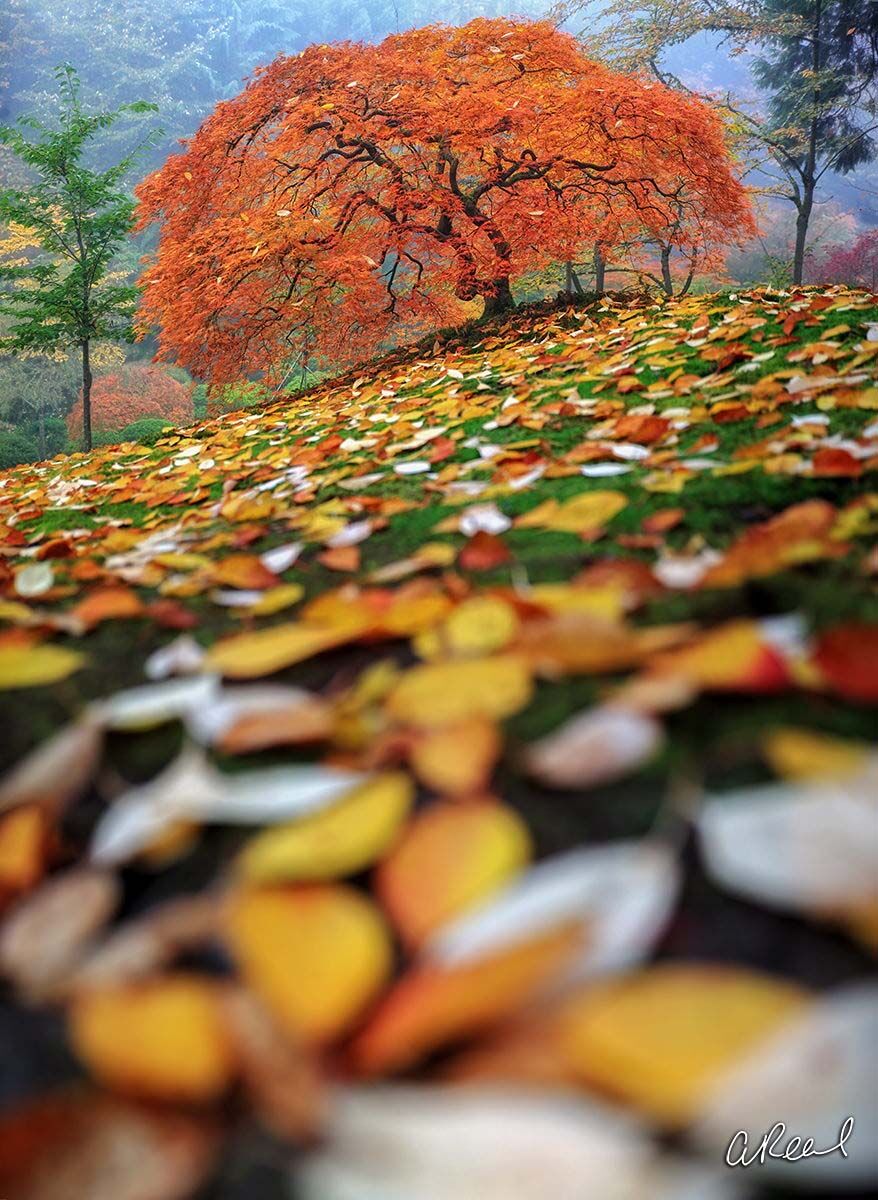
The rounded crown of a Japanese maple sits on the sloping fields of a green hillside like a polished bubble of ancient amber. Across the verdant glade, a blanket of red, yellow, and white leaves forms a dazzling mosaic. Fine Art Limited Edition of 100.
The Galaxy S22 phones have some of the best cameras of 2022. While this is true, they can still be made even better. Samsung just announced that a new update will bring astrophotography and other camera features to the Galaxy S22 phones.
The Galaxy S22 phones received praise when they launched earlier this year. They retain designs similar to last year’s phones with the exception of the S22 Ultra. This phone brought a new camera design.
Android Headlines did reviews on these phones. You can check out the review for the Galaxy S22+ and the Galaxy S22 Ultra.
The new Galaxy S22 camera update brings astrophotography and more features
Let’s start off with the most relevant feature here. Samsung introduced the ability for Galaxy S22 owners to take pictures of the stars using the Expert Raw application. This lets you take a picture of the night sky and clearly see the stars. This is something that was introduced with Pixel phones, and it’s been well sought after ever since.
There’s also a new multiple exposures feature in the Expert Raw app. This allows you to take multiple pictures and layer them on top of each other in different ways. Say, if you take a picture of flowers, you can overlay it over a picture of you. The app gives you different ways to overlay your pictures for all sorts of effects.
There is a new camera assistant app
You can download this application from the Galaxy store. What this app does is let you choose which features you want to enable and disable in the camera app.
This includes features like auto lens switching, auto HDR, fast shutter, etc. It gives you access to these features so that you can easily change them on the spot. The Camera Assistant can also soften your selfies to get that beauty filter look.
These are all welcome features for the Galaxy phones. Google just launched its Pixel 7 phones, and they bring a spectacular photography experience. So, this is a way for Samsung to keep up with the competition. The new iPhone 14 and iPhone 14 Pro also launched, and those phones brought some camera improvements. This should tide users over until the Galaxy S23 phones launch next year.
Kickstarter has been the launch platform for many exciting camera and accessory projects with the latest project to catch my eye being the HEIPI tripod, a quite unique 3-in-1 travel tripod.
What makes it unique is the way it splits down from a travel tripod in to three components that can be used in isolation, or at least two can the other is the head. As its core function it is a travel tripod, then remove the centre column, and you have a smaller compact tripod and that makes two very functional accessories from one. The third part is the removable head which can then be displaced and popped on top of another set of tripod legs.
Aside from the design, which from the photos and video looks amazing, the main USP of the unit is the 3-pillar centre column that makes up the lightweight tripod section of the design.
Essentially, the designers have replaced the standard tube-style removable centre column with one that quickly removes and transforms into a tripod. Then when it’s in place, it can be raised or lowered like any other tripod centre column, all be it looking a little different, which is all very clever.
The centre column is, therefore, lightweight, very transportable in it’s own right and features spiked rubber feet to keep it steady when working out in the field.
As a travel tripod, the HEIPI needs to be lightweight and easily transportable, and to this end, the entire tripod weighs in at 0.63lb/0.29kg while taking a maximum load capacity of 55lbs/25kg. It also features a 360º panoramic head with an audible click that highlights every 10º turn. This click has been added to enable users to accurately gauge the rotation of the head in lower light conditions. At present I’m not sure if the click is a permanent fixture or if it can be silenced, I’ll find out soon.
The three-pillar design centre column has also been designed to make the tripod more structurally sound than competitors with legs that fold tight under the head removing much of the negative space common with other manufacturers.
The legs themselves are tubed and offer angles of 22°/48°/69.5°. A simple button mechanism enables the adjustment of the leg and angles and lever locks to enable you to release and lock the legs into position. The sub-tripod features a single leg section with leg angle adjustment from 40°/85°.
A HEIPI tripod is on its way to us here at Camerajabber.com, and I’ll update you on the tripod as soon as it arrives.
Visit https://www.tripod.HEIPIvision.com/ or the Kickstarter campaign.