Experiential travel on the rise in Visakhapatnam

[ad_1]

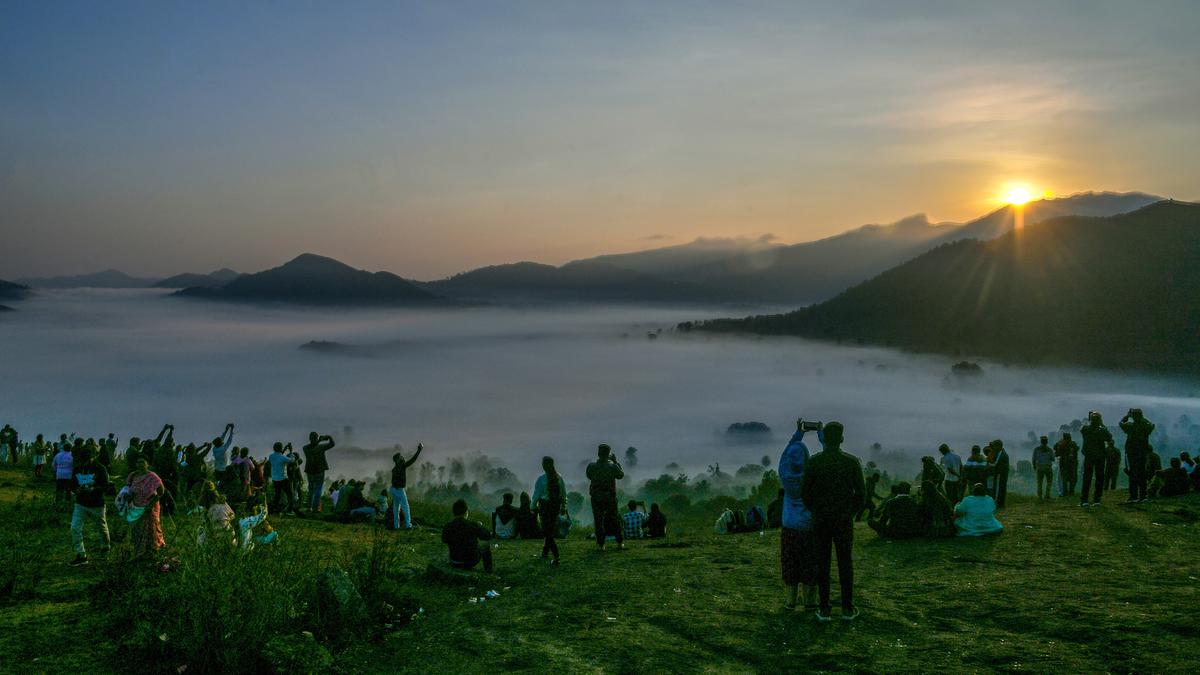
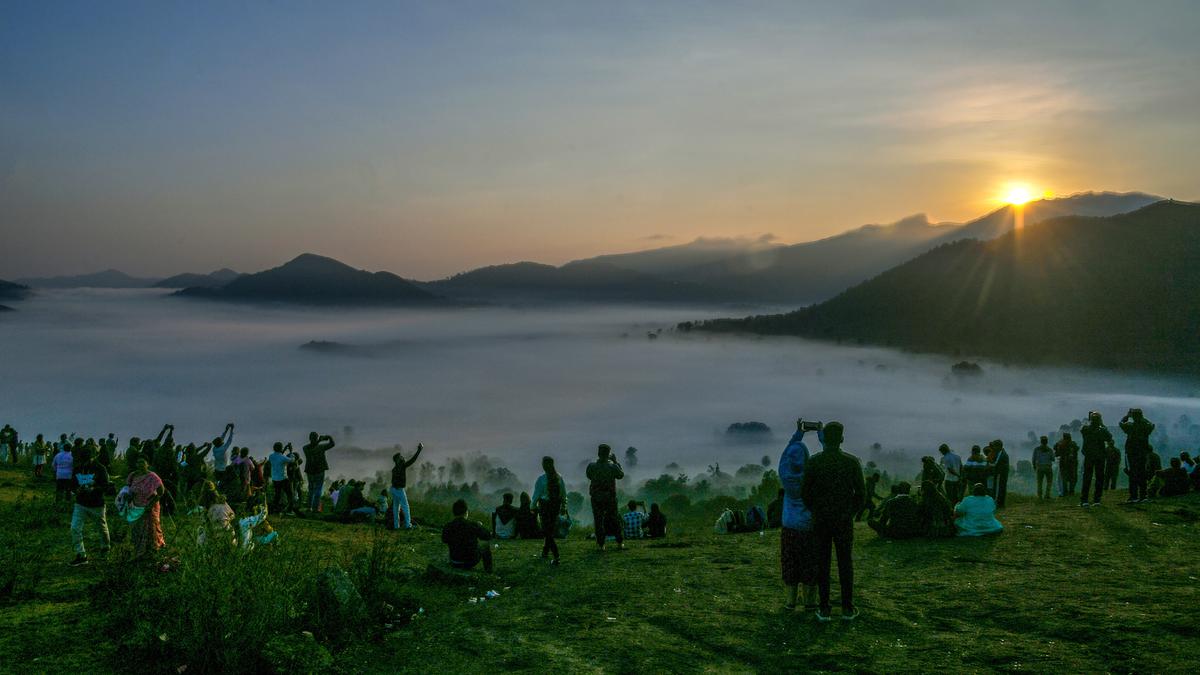
People enjoying fog engulfed araku valley from a newly discovered view piont at Madagada in Araku 130 km from Visakhapatnam

People enjoying fog engulfed araku valley from a newly discovered view piont at Madagada in Araku 130 km from Visakhapatnam
| Photo Credit: KR Deepak

From learning astro-photography at a hilly countryside, witnessing a stunning sunrise above a mist of clouds from the highest peak of the Eastern Ghats to discovering a trek route that opens up a world rich with biodiversity, a growing number of people are seeking localised and personalised travel experiences in and around Visakhapatnam.

Many are trying to learn a new skill in the process, experience a new culture, tradition and history and gain knowledge about the rich ecosystems in the vicinity.

Over 120 participants have gathered at the ongoing 10th national workshop on pictorial and travel photography organised by Khamam Photo Arts Organisation (KPAO) in Araku to travel to the interior tribal villages of the region and learn key elements of photography from experts.

“The response has been overwhelming. There are art lovers, photographers, Fine Arts students, journalists from across the country who want to experience the beauty of the place and learn the different elements of photography,” says V Naga Raju Devara Rao of KPAO. During the three-day workshop, participants in small batches visited the hills of Odisha’s Malkangiri district, which is home of the Bonda tribes, a particularly vulnerable tribal group known for their secluded lives. “Every Thursday, the Bonda tribes come to the shandy (local market). This is a great way to understand the tribal culture of the region,” says Naga Raju. According to noted photographer Sudhakar Reddy, secretary of Andhra Pradesh Photography Academy, the experience of traveling with a group that shares a common interest opens up a deeper understanding of the world around. “Participants learn the ways of identifying the subject, understanding the right composition and capturing the essence of a place,” he adds.
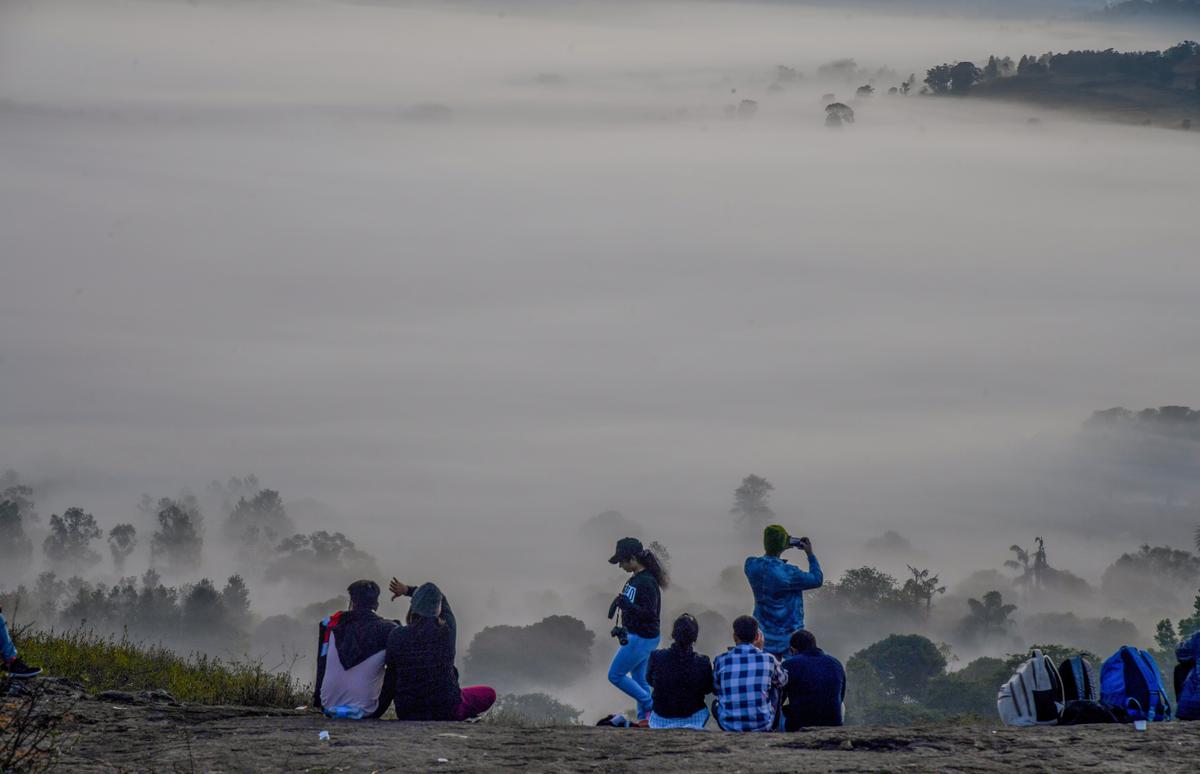
People enjoying fog engulfed araku valley from a newly discovered view piont at Madagada in Araku 130 km from Visakhapatnam

People enjoying fog engulfed araku valley from a newly discovered view piont at Madagada in Araku 130 km from Visakhapatnam
| Photo Credit:
KR Deepak

Ban Nanda, a photography enthusiast and one of the participants of the workshop, discovered a new viewpoint for shooting the sunrise from a veil of clouds from a cliff near Madagada village. “We reached before sunrise and were stunned by the beauty of place. Acessibility to the hill, proximity to Araku makes it a great place for viewing the sunrise,” he says. Madagada is a potter’s village. “Ideal days to visit are from Monday to Thursday where one can observe the potters at work. On the weekends, they head to the shandy to sell the pots,” Nanda adds.

According to Naveen Rongali, founder of Ecohikes, a trekking group that conducts sustainable treks and travels, the concept of experiential travel has picked up in a big way during this year. “We saw many people who expressed interest in understanding the local culture, food and tradition while camping at non-touristy spots in the tribal belts near Visakhapatnam. In fact, many families with children are keen on trying out these weekend camps and want children to experience Nature and rural life,” he says.

The group’s focus has been the Jhindagada peak, considered the highest peak of the Eastern Ghats in Andhra Pradesh. “We have been training the tribals to interact with the travelers and give them a peek into their culture,” says Naveen. Ecohikes has been conducting camps at lesser-known peaks and waterfalls in the Eastern Ghats almost every weekend. “Our main objective is to help people understand how our tribes have been living in these regions with reverence for Nature,” explains Naveen. Shortly, a new place near Devarapalli will be added to their list of camping sites.
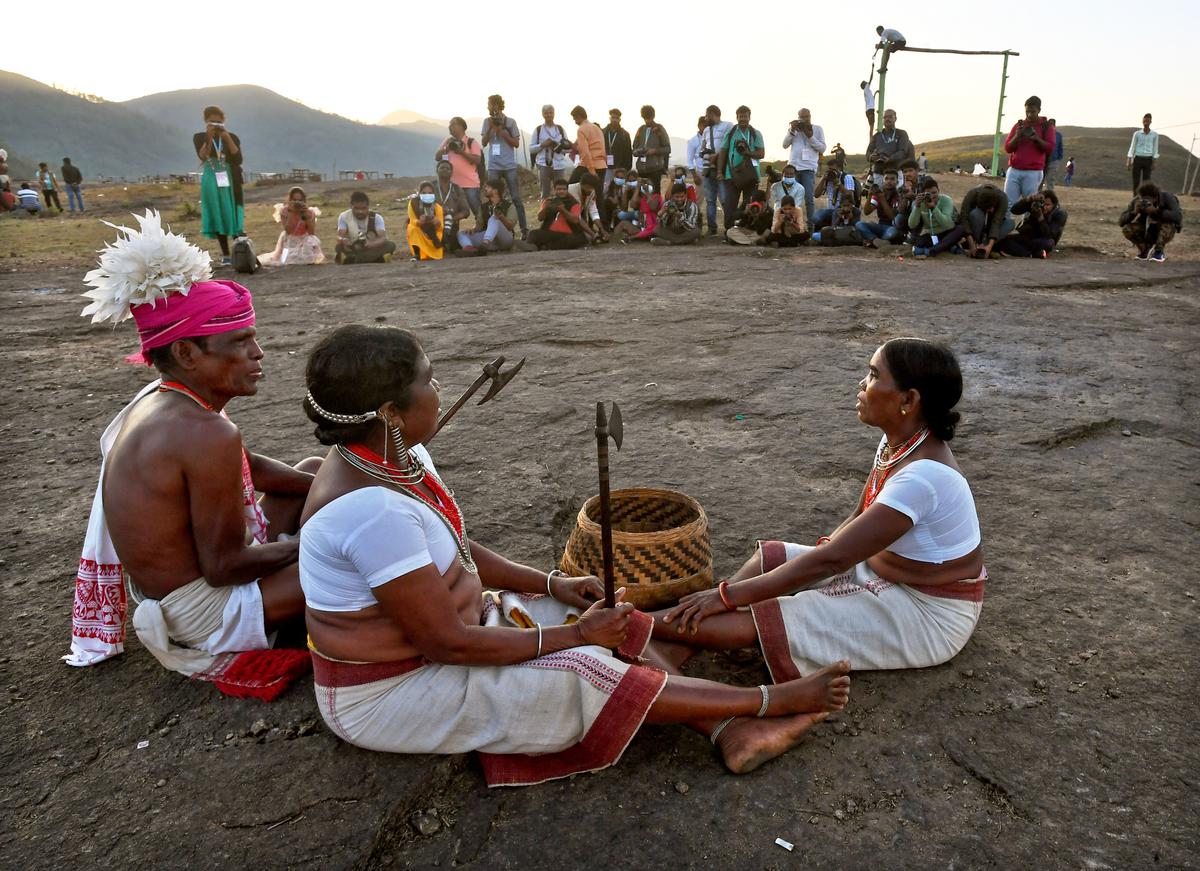
Participants of the photography workshop conducted by Khamam Photo Arts Organisation capturing tribal life at a village near Araku, 130 kilometres from Visakhapatnam

Participants of the photography workshop conducted by Khamam Photo Arts Organisation capturing tribal life at a village near Araku, 130 kilometres from Visakhapatnam
| Photo Credit:
K R Deepak

Within the city limits in Visakhapatnam, there are people who offer experiential treks that help one understand the biodiversity of the region. Sumanth Behara, who started Triptan Adventures earlier this year, says the Yarada hike is the most sought-after trail. “This is a secluded beach and the trek offers a breathtaking view of coastline,” he says. One of the essential parts of the treks involve sensitising the participants about the importance of the place, being extra careful in geo-heritage sites and to leave no plastic behind.

City-based organisation Wilded has been conducting noctural walks at the Simhachalam hill range and inter-tidal walks at Rushikonda coast to uncover a colourful world bustling with life hidden amid the rocks. “The idea is to build a community of responsible travelers and discoverers who can appreciate Nature in their surroundings and understand the significance of the varied ecosystems. Over the past year, we have seen a good number of participants turn up for these experiential treks and walks and actively involve in being citizen scientists to document inter-tidal biodiversity of Andhra Pradesh,” says Sri Chakra Pranav Tamarapalli, who along with K Vimal Raj started Wilded with the primary aim of wilderness education.

“We are now exploring Araku and Paderu to conduct camps centering around birdwatching and butterfly watching. We are planning to roll this out soon,” says Pranav.

[ad_2]
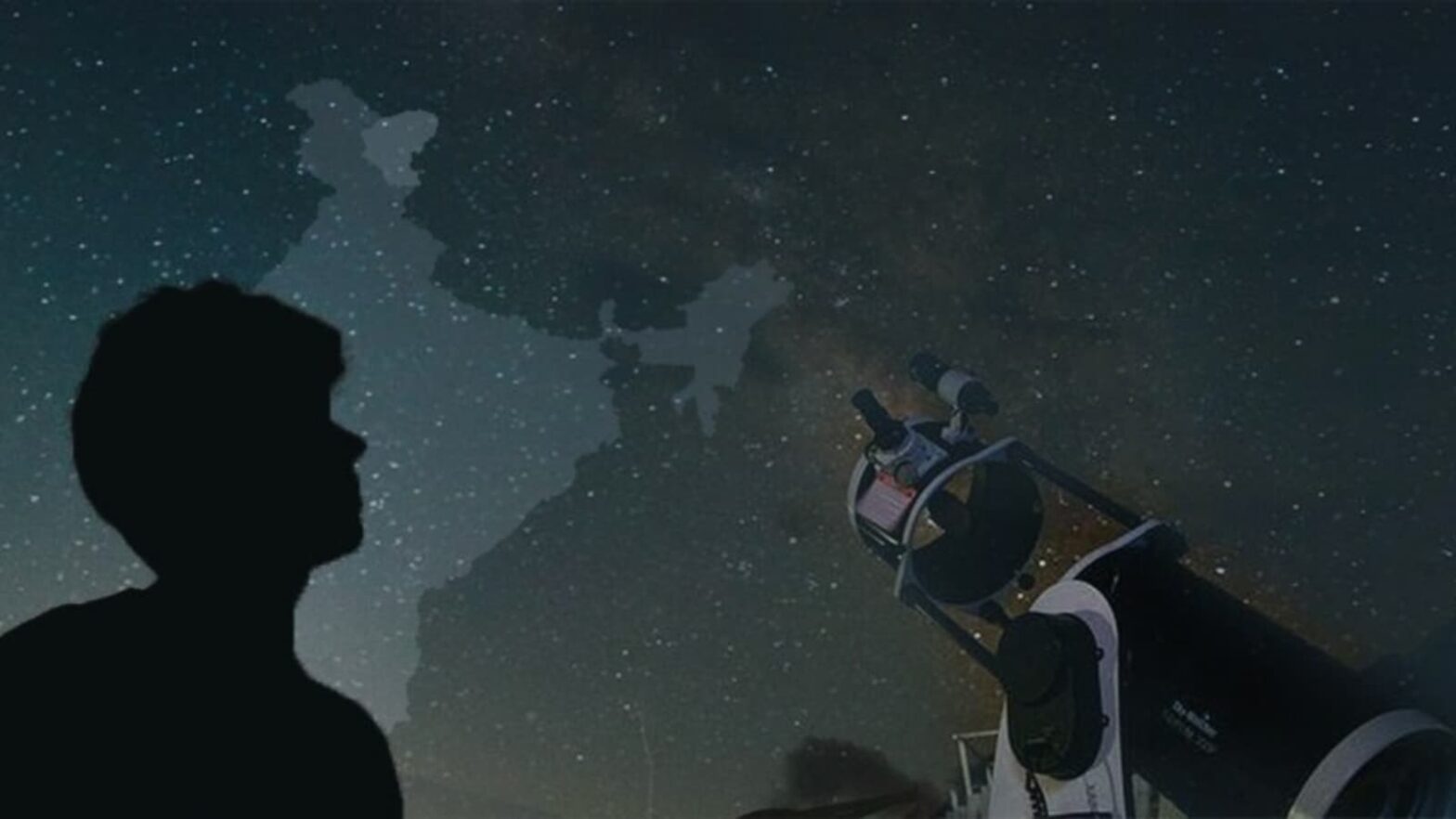
Travel trend: Why Astro Tourism is growing among domestic travellers in India? | Travel

[ad_1]

Travel enthusiasts, who crave a holistic astronomy experience to give voice to their curiosity about the vast skies beyond our stratosphere, can gain an integrated astronomy experience through Astro Tourism, a trend that has seen an increasing number of travellers who are keen to get to experience activities such as stargazing, sun observations, stargazing parties with friends, experiential science activities and much more. The spike in Astro Tourism could be a result of the post pandemic world where many people are looking for less crowded and nature driven experiences or the offer of a sense of discovery as when you look up at the sky, you may see a big white moon or two bright stars that never twinkle but when you look at them through the telescope, the moon suddenly has massive features (craters, flat grey surfaces, highlands, etc.) of varied colours and the two bright stars are no longer stars – one is Jupiter, a big disc with a giant red dot on it (which in itself is a storm three times the size of the Earth) and the other is Saturn, with many rings around it.


You literally cannot believe your eyes and you realise that the universe is so much more complex than what you see, with so much left to discover hence, a number of resorts and hotel chains are now offering stargazing as one of the activities for their guests to treat them to a flashback to their childhood. For a large number of people, the last time they looked at the skies and enjoyed the stars was when they were kids and ever since they turned into adults, they moved to a city and neither got the opportunity nor the time to experience the cosmos but looking up at the skies lets them relive their childhood.

In an interview with HT Lifestyle, Paul Savio, CEO and Co-Founder of Starscapes, revealed that Astro Tourism is seeing a spurt for three reasons:


(1) With higher disposable incomes and a more liberal view of living a wholesome life, people are on the lookout for new and exciting experiences that are beyond the usual offerings available. Anything new piques a huge interest, and today people are more willing to try them out than before.

(2) Millennials have, due to access to the internet in their formative years, a much more global exposure to life and career than previous generations. As parents, this demographic is open to encouraging their kids to look at radical career options, and therefore get exposed to such experiences that could kindle an interest in the kids becoming astrophysicists, aerospace engineers or even astronauts.

(3) Space is in the news, with NASA going back to the moon (Artemis), India sending humans to space (Gaganyaan) and space tourism kicking off with private enterprise (SpaceX, Virgin Galactic, Blue Origin). So it is currently top of mind.


He shared, “Lots of people, especially in metros, are beginning to step out to nearby dark sky locations to get a glimpse of the starry sky. Apart from the usual suspects (Ladakh, Spiti, Kodaikanal, Kutch, Coorg, Jaisalmer, etc.), myriad sites exist within 2 hours of all metros which can give a great dark sky experience. However, daytime astronomy as a concept is slowly picking up too.”

According to Neeraj Ladia, CEO of Space Arcade, there is a lot of interest in Astro tourism all over India. He said, “One major reason is social media. More and more people are showing people where they can travel. Places which were accessible for very few people earlier, like mountaineering and trekking, are now common among people. There are videos, reels on social media accounts where there is a lot of conversation around offbeat activities such as astro tourism. People have become more aware of these kinds of things. Astro tourism has gained more popularity post lockdown mainly because people want to be closer to nature and want to do something new and offbeat. Similarly, like wildlife photography/nature photography, people are developing an interest in astro photography too.”


Talking about some of the common activities under astro tourism, Paul Savio highlighted stargazing, sun observation, astrophotography (where you learn how to photograph the night sky and even deep sky objects using different cameras and mounts), astro tours (trips to dark sky locations for an enhanced night sky experience), workshops and activities to understand different phenomena associated with astrophysics and space exploration.

For a person who has never experienced astro tourism, Neeraj Ladia suggested stargazing as one of the most exciting activities to do. Secondly, he recommended, “If it is a starry clear night, guided telescope view of planets and deep sky objects along with an astrophotography session can be quite exciting. With astro tourism, people have an opportunity to see and learn the names of the stars and constellations. They can also go much deeper into understanding these concepts.”


Paul Savio concluded, “Astro Tourism is the sunrise segment of the experiential tourism industry. Massive interest is being shown by luxury resorts across India to incorporate astro-experiences in the bouquet of offerings for their guests. Today, the customer base is overwhelmingly of people who are looking for a new experience and not necessarily an astronomy experience. We expect this to flip in the next 3 years – people will travel with an intent to have an astronomy experience. This will be driven by the springing up of dark sky parks (the astronomy equivalent of national parks) and other dark sky places equipped to service this interest.”

[ad_2]