Hermantown paralegal turns passion for nature into second career as ‘free range’ photographer – Duluth News Tribune

[ad_1]

DULUTH — Dawn LaPointe calls herself a “free range” photographer, and it means pretty much what it sounds like.

“It means I go wherever I want,” said LaPointe, of Hermantown.

Free range is different from freelance, she adds. “It’s just immersing myself in nature rather than going on specific assignments to specific places.”

Free range and also “organic,” LaPointe quips, meaning there’s “no artificial color or additives” in her photos. What you see is what she saw.

LaPointe doesn’t necessarily plan her exact photos, and she loves surprises. But the effort — and the results — are far from haphazard. She seems to have a knack for going to just the right place at just the right time to capture stunning photos of nature in the raw, from pounding Lake Superior waves, to a tiny flower blossom, to a serene Boundary Waters paddler at sunset.

Hepatica, purple flower, ONE TIME USE ONLY

The bright blossoms of the hepatica, sometimes called liverwort or liverleaf. “The rich purple blossoms of the hepatica bring a smile to my face,” photographer Dawn LaPointe said. “Each spring I enjoy hiking on trails in search of a variety of emerging or blooming spring ephemerals. Finding and photographing them feels like meeting up with long lost friends.”

Contributed / Dawn M. LaPointe

“It’s being mindful, watching the weather forecast, knowing what the temperature and the sky conditions will be … knowing when there will be some clouds to help paint some color on the scene,” she said. “Then I go prepared.”

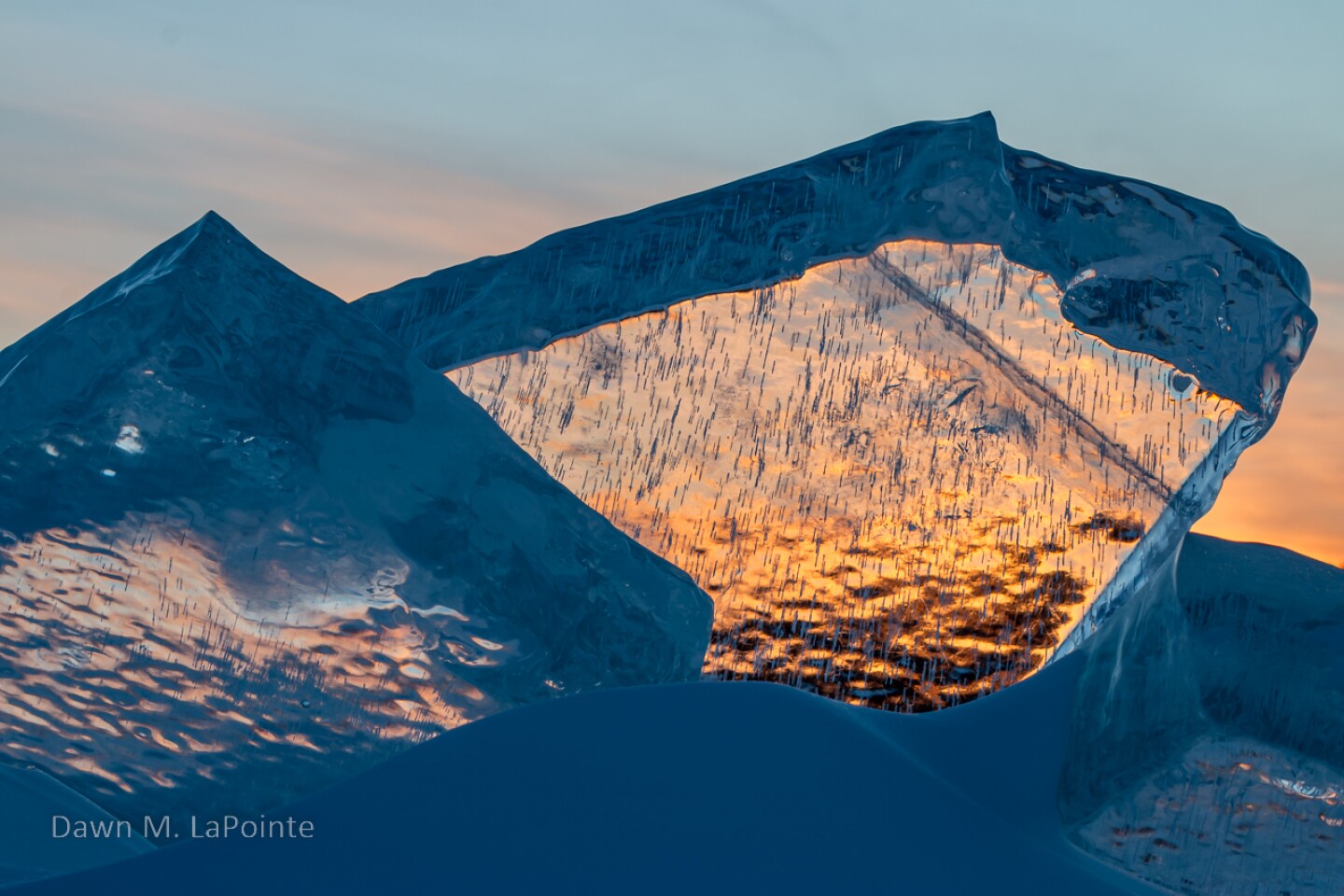
Take, for example, one of LaPointe’s many shots of ice formations along the winter shores of Lake Superior in and around Duluth. It’s not just the rising sun, which many of us would focus the photo on. She’s also keenly aware that what’s in the foreground of the scene is also important.

ice plates at daybreak ONE TIME USE ONLY

Ice near Brighton Beach in Duluth at daybreak. “The bling was abundant as the sun rose and painted the thousands of Lake Superior ice shards along the shore,” photographer Dawn LaPointe said. “I composed this photograph such that the viewer’s eye would meander along the zig-zag of pink, glowing ice plates through the center of the photo, finishing at the sunburst near the top.”

Contributed / Dawn M. LaPointe

Before the sun rises over the horizon, “I think about how the light might paint that object in the foreground, maybe that plate of ice,” she said, adding that she tries to imagine “how the viewer’s eye will travel through the photograph.”

“The sunrise paints the scene, makes it more interesting,” she noted. “But there’s a lot more going on.”

At this point in March, while many of us may be eagerly anticipating spring, later winter, when the ice forms, is one of LaPointe’s favorite times of year to be around Lake Superior taking photographs.

“There’s a different feel along the shore in winter,” she noted. “I have kind of a quiet respect for Lake Superior … a humbling feeling of respect being along the lake in dramatic ice or waves.”

Sunrise at Minnesota Point ONE TIME USE ONLY

Sunrise over Minnesota Point beach. “Duluth’s 7-mile-long sand spit known as Minnesota Point provides interesting views during winter,” photographer Dawn LaPointe said. “Waves from storms deposit Lake Superior’s ice along the beach, and the sand dunes become covered in snow drifts.”

Contributed / Dawn M. LaPointe

One photo LaPointe posted on Facebook earlier this winter was taken at dawn, the sun just above the horizon where lake meets land, along the Minnesota Point sand dunes on Lake Superior in Duluth. She managed to capture mesmerizing patterns of dune grass, sand, snow, ice and sky all in one frame. When asked to explain the photo’s allure, she paused.

“There’s a path of color and light that runs through the photo, up through the sand dunes to the sunburst,” she explained. “It’s a journey through the photo.”

Falling in love with water and shore

LaPointe, 55, grew up in Prairie du Chien, in southwestern Wisconsin, just two blocks from the Mississippi River. She was drawn to water even then, she noted, but not necessarily to take photos.

Her first camera was a red Polaroid, a gift from her parents, which shot out the film and the photo developed before your eyes.

Her first 35 mm camera was a Canon Snappy 50, she recalls, which used film. She liked taking photos, but it wasn’t her life’s ambition at the time.

LaPointe graduated from the University of Wisconsin-Madison, where she focused on political science and music, playing saxophone. She never studied photography, but her political science classes were a good prep for her current day job as a paralegal for a Duluth company.

After college she spent three years in Newport, Rhode Island, where she said she lived “like a tourist,” taking in everything the region’s seascapes and back roads had to offer.

Dawn LaPointe

Dawn LaPointe.

Contributed / Dawn LaPointe

“That’s where I developed a real love of water and the shore,” she said, noting she would sit for hours, in sometimes awful weather, watching the Atlantic Ocean waves roll onto shore.

She also loved the White Mountains in nearby New Hampshire. “That’s when I really started taking serious nature photographs,” she noted. “I was all over New England.”

In 1996, she came to Duluth and stayed, following her then-husband to his new job.

“I fell in love with this place immediately, especially Lake Superior, but also the wilderness of the Boundary Waters,” LaPointe said of the Northland.

Moose Saganaga Lake Fall ONE TIME USE ONLY

Moose on Saganaga Lake in fall. “A cow moose and her maturing calves were feeding at a campsite we hoped to utilize,” photographer Dawn LaPointe said. “I enjoy creating photographs that show the natural behavior of wildlife, and take steps to avoid disturbing or stressing the subjects, whether large or small.”

Contributed / Dawn M. LaPointe

To this day, LaPointe is drawn to the big lake’s waterfront for her photography, often Brighton Beach — where the ice tends to form and morph and move — but also the sand and ice dunes of Minnesota Point and up along the North Shore rocks.

“The waterfront here is so accessible. … And the ice conditions change so frequently that it’s never the same twice,” she noted. “So I keep going back.”

In 2009, she met Gary Fiedler, a Duluth-based photographer who encouraged her to dive deeper into digital photography. (The two later married and have since divorced, but are still friends.)

“That’s when I began shooting with more intention,” she noted, and when the couple set up her

Radiant Spirit Gallery

online. “I consider myself a part-time professional photographer now.”

The gallery’s name “reflects the intention to capture and convey the radiant spirit of nature through photography, videography and articles.”

Sunset Paddle ONE TIME USE ONLY

A canoeist enjoys a sunset paddle in the Boundary Waters Canoe Area Wilderness. “The silhouette of the paddler effortlessly gliding along the river illustrates the peace and serenity I relish in wilderness canoe country,” photographer Dawn LaPointe said. “This photograph was chosen for the ‘Wilderness Forever Exhibit’ at the Smithsonian National Museum of Natural History, where it was displayed as a 40-by-60-inch wall-hanging in 2014-2015. The special exhibit celebrated the 50th anniversary of the Wilderness Act.”

Contributed / Dawn M. LaPointe

In 2014, LaPointe’s photo of a paddler in a canoe at sunset in the Boundary Waters Canoe Area Wilderness was chosen to hang in the Smithsonian Institute’s exhibit marking the 50th anniversary of the federal Wilderness Act.

“That gave us a lot more eyes on our work, a lot of media interest, and that’s when things started to take off for my photography,” LaPointe noted.

Her photos have been used in many magazines, including Backpacker, The Boundary Waters Journal, Canoe & Kayak, Canoeroots, Nature’s Best Photography, Northern Wilds and Lake Superior Magazine. Last year, some of her best North Shore photography hung in exhibit in the Split Rock Lighthouse State Park visitor’s center.

Wild Waves on Lake Superior ONE TIME USE ONLY

A Lake Superior wave hits the North Shore. “During the memorable Oct. 10, 2018, storm, the cliffs of Lake Superior’s North Shore looked like waterfalls,” photographer Dawn LaPointe said. “The relentless waves battered the shoreline and the gale force winds whipped the spray far and wide. It is humbling to witness the power of Lake Superior’s waves and hear the thunderous crashes along the rugged shoreline.”

Contributed / Dawn M. LaPointe

Despite the quality of her still photos, however, LaPointe may be best known for a video she captured. In February 2016, LaPointe was making one of her many trips to the Duluth waterfront when she recorded video of shards of broken Lake Superior ice being pushed onto shore by wind and waves, capturing motion and sound as they tumbled and jumbled together. The mesmerizing video, “Lake Superior Ice Stacking,” went viral — viewed millions of times — and appeared on TV shows and websites worldwide. It was also a highly honored video in the 2016 Windland Smith Rice Awards.

It was no accident that LaPointe was in that place at that time. In fact, she went to the frozen waterfront expecting to see some sort of incredible ice formation. On that Saturday, a day off from her day job, she spent eight hours on the waterfront in below-zero temperatures.

As usual, she was prepared with two tripods: one for still photography cameras and one for video.

“I decide when I see what’s happening which one (stills or videos) will best convey the scene at that moment,” she noted.

On that day, video won.

Several of her video clips have been sold for use in nature documentaries worldwide. But, while LaPointe has become an accomplished videographer, she says video editing can be very time-consuming for someone with a full-time job who would rather spend her free time outdoors.

Saganaga Lake Aurora ONE TIME USE ONLY

Northern lights over Saganaga Lake. “My favorite place to view the aurora borealis is in canoe country wilderness, where the skies are dark and expansive,” photographer Dawn LaPointe said. “Occasionally, the surreal scene is accompanied by the calls of nearby loons or distant wolves. Long-exposure night photography requires a steady camera, so my tripod always earns it space in my canoe and on portages.”

Contributed / Dawn M. LaPointe

For still photos, she tends to do her “editing” more in the field, using her lenses as tools, and less on the computer. “I keep my editing very simple and basic,” LaPointe noted.

That’s part of being a free range photographer, she said.

“I try to convey a natural scene,” she said. “Nature is the artist, really, and I’m just its messenger.”

Ruffed grouse ONE TIME USE ONLY

Fall ruffed grouse along the North Kawishiwi River in Boundary Waters Canoe Area Wilderness. “As I was setting up for dinner at a BWCAW campsite, I heard the familiar sounds of a ruffed grouse rustling in the brush,” photographer Dawn LaPointe said. “Much to my surprise, it strutted into plain view atop the granite outcropping of the campfire area.”

Contributed / Dawn M. LaPointe

For 2023 LaPointe is embarking on a self-inspired project, using both videography and photography, that she hopes will convey her love for nature in winter in the Northland and encourage others to develop that same love.

“To inspire folks to layer up and enjoy winters in our region,” she said. “And appreciate the beauty in this challenging season.”

Frog on Lily Pad ONE TIME USE ONLY

A frog on a lillypad. “While canoeing in the BWCAW, I was drawn to an area with abundant water lilies in bloom, and noticed a frog resting on the thick, vibrant lily pads,” photographer Dawn LaPointe said. “I steadied my canoe to capture its portrait from a distance, so as not to stress or disturb the critter.”

Contributed / Dawn M. LaPointe

To see more of Dawn LaPointe’s work, order her Minispriations calendars or order prints, go to her online gallery at

radiantspiritgallery.com

or follow her on

Instagram

or

Facebook

. You can also see and buy her photographs at The Frame Corner & Gallery in downtown Duluth, the Two Loons Gallery in Duluth’s Lincoln Park business district and at Piragis Northwoods Company in Ely.


[ad_2]
A Complete Guide To Nature’s Light Show

[ad_1]

More often than not, the aurora borealis (also known as the northern lights) appears as a pale streak of light almost indistinguishable from a cloud. But sometimes, it spreads and intensifies into something very special indeed.

That’s the joy and frustration of hunting for the northern lights—an atmospheric phenomenon where energized solar particles bombard our atmosphere causing waves of colored lights.

The uncertainty of getting a glimpse of the natural phenomenon doesn’t put people off trying though. Far from it.

Tourism boom for the northern lights

In the 1980s, Japanese tourists began to travel to Alaska to see the northern lights, something that surprised and mystified many locals. Aurora borealis tourism has since gone on to become popular in northern destinations around the world.

2019 analysis from Visit Norway revelaed “northern lights” was the third most travel-related search term used by people researching trips to Norway behind only fjords and glaciers. More people searched for information on the aurora borealis in Norway than cruises, hiking, skiing and camping.

Widespread coverage of the expected solar maximum in the coming years is sure to only increase interest in northern lights tours and cruises.

What causes the aurora?

Auroras are caused by our Sun and the solar wind that brings charged particles towards the Earth. Our atmosphere—specifically the magnetic field—protects us from these particles.

The electrons travel along the magnetic field towards the poles, where the electrons meet hydrogen and oxygen. The resulting reactions cause a release of energy, which we perceive as light. This happens at both poles: the northern lights or aurora borealis in the north, and the southern lights or aurora australis in the south.

A recent scientific study proved that these electrons ride along on Alfvén waves, which accelerate them to a sufficient rate to cause auroras. It’s the space weather equivalent of a surfer catching a big wave.

What does the aurora look like?

You may have seen sensational photography of the northern lights and thought, ‘do they really look like that?’ The answer is it depends. As a natural phenomenon, there is substantial variation between auroras.

Pale light may appear as an arc, or it may be a much more intense color and appear as rays or the famous curtain-like effect. It can also behave in curious ways, from being almost completely still to pulsing or even leaping around. What you see depends in part on your location. The exact same aurora will look very different from different latitudes, for example.

As for the different colors, they are caused by the intensity of the electron bombardment, which elements are being struck in our atmosphere, and the altitude of the reaction. Green—ranging from pale to vivid—is the most common color.

How to see the northern lights

There is plenty of universal advice for people wanting to experience a spectacular aurora borealis display. But while following this advice will increase your chances, it can never guarantee success.

First and foremost, you should be as close as possible to the aurora oval in the northern hemisphere. This donut-shaped ring around the Arctic gets bigger and moves southwards with stronger displays, but it’s most commonly located over the northern parts of Scandinavia, Alaska and the north of Canada.

Next, it must be dark, so sometime within September to April is essential. As the darkest months, December and January may seem ideal, but that time of year often brings with it the worst weather. Cloudy skies will ruin any hope you have of a sighting no matter the aurora’s strength. For this reason, late September to early November and February to early March are considered prime time for aurora hunting.

Finally, being away from the artificial lights of a city will increase your chances of seeing a weaker display.

Forecasting the northern lights

Space weather forecasting has improved significantly in recent years and thanks to the smartphone, virtually everyone has access to the same aurora forecasting information used by pro tour guides.

The Geophysical Institute of the University of Alaska Fairbanks has excellent broad forecasting to give you an idea of what to expect on a given evening. It uses the Kp scale to forecast the aurora strength. A Kp of 1 or 2 is considered weak but may still be visible in the far north. A Kp of 3 or above means the chances of a dramatic display are substantially higher, and the lights should be visible from farther south.

For more real-time data, download one of the many aurora forecasting apps. They will give a 15-30 minute warning of strong activity in your current location. While not perfect, they are a handy tool to have at your disposal.

The best aurora borealis destinations

While heading as far north as you can is important, latitude alone isn’t the only consideration in selecting a good spot. Weather is just as important, particularly cloud cover. Many northern lights tours based in coastal parts of Norway actually travel for hours inland in order to find clear skies, sometimes even crossing the border into Sweden or Finland.

Another important consideration is what else there is to do in the area. Travel to remote parts of north America or Scandinavia have one thing in common: it’s expensive. That means you’ll want to make the most of the daytimes when the skies are not dark to get full value from your trip.

Alaska: The lack of urban areas in Alaska means much of the state has ideal conditions for viewing the aurora. Many northern lights tour companies are based in Fairbanks, an ideal place for first-timers given its northern latitude and the other things to do in the city.

The adventurous may want to consider heading even farther north to Coldfoot or Wiseman. By day you can indulge in winter activities such as snowshoeing and dog mushing, while at night you’ll regularly enjoy some of the world’s best conditions for seeing the aurora.

Canada: Churchill, Manitoba, offers the opportunity to see another of nature’s wonders, the polar bear. Thirty minutes from Churchill, the Northern Studies Center is a great spot for seeking the lights as it offers clearer, wider skies than in the town itself.

Although farther south, Alberta’s Elk Island National Park and Jasper National Park are both designated dark sky reserves. The adventurous might like to consider heading to Yukon, with Whitehorse and Dawson City good options.

Iceland: Although the volcanic island has a good reputation for aurora sightings, it’s actually a little farther south than the ideal latitude. However, with so much to see and do in Iceland it remains a good option if you are prepared to stay a little longer to increase your chances of a sighting.

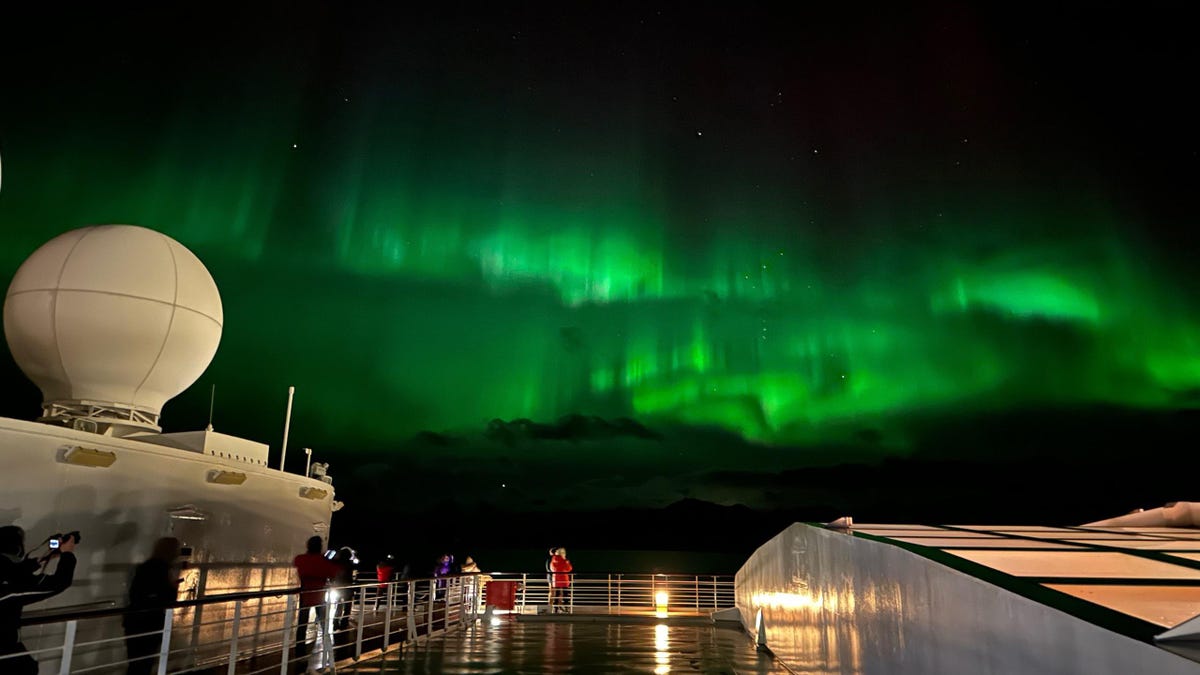
Norway: Tromsø and Alta compete for the best place in Norway to see the northern lights, with many tour companies based in both cities. Norway’s long coastline means northern lights cruises are very popular. The constant movement of the ship means finding clear skies at some point is likely, although it does make photography more challenging.

Sweden: Abisko bills itself as not just the best place in Sweden to see the lights, but one of the best places in the world. The reason? The so-called ‘blue hole’, a patch of sky rarely covered in cloud because of its position to the east of the Scandinavian mountains.

Finland: Often overlooked compared to its Scandinavian neighbors, the north of Finland can be an excellent alternative. Rovaniemi is a good base for families as it’s accessible by plane or train, and known as the home of Santa Claus.

Aurora photography tips

Capturing the aurora borealis used to require professional camera equipment to stand any chance at all. Thanks to rapid advances in smartphone camera technology, that’s no longer the case.

Magazine-quality photography still requires a professional camera and the skills to use it. There’s no point in investing in expensive equipment without understanding the relationship between aperture, ISO and shutter speed.

However, most advanced smartphones released in the last few years are able to capture something that will be good enough to relive the moment for years to come. You’ll need a smartphone camera with a night mode or the ability to take a long exposure shot. It’s worth taking the time to practice these techniques at night before your trip in order to avoid disappointment when the moment arrives.

That being said, rather than desperately fiddling about with your smartphone, it’s a far wiser choice to simply watch the aurora when you get the chance.

[ad_2]