Photography: Real And Imagined At The NGV A Huge And Dazzling Exhibition That Reexamines Our Thinking

[ad_1]

(MENAFN- The Conversation) Photography is almost 200 years old and Photography: Real and Imagined at the National Gallery of Victoria (NGV) can be interpreted as an attempt to make sense of its history.

A huge and dazzling exhibition containing 311 photographs, the basic thesis of this exhibition is that some photographs record an actuality, others are purely a product of the photographer’s imagination, while many are a mixture of the two.

The parameters of the exhibition are determined, in part, by the holdings of the NGV collection and, in part, by the perspective adopted by the curator, the erudite and long-serving senior curator of photography at the NGV, Susan Van Wyk.

Mercifully, the curator has not opted for a linear chronological approach from daguerreotypes to digital, although both are included in the exhibition, but has devised 21 diverse thematic categories, for example light, environment, death, conflict, work, play and consumption.

Australian artists, international context

The categories have porous boundaries. Even with the assistance of the 420-page book catalogue, it is difficult to determine why Michael Riley’s profoundly moving photograph of a dead galah shown against the cracked earth belongs to the environment theme instead of death; why Rosemary Laing’s Welcome to Australia image of a detention camp belongs to movement, instead of being in community, conflict or narrative.

Installation view of Photography: Real & Imagined on display at The Ian Potter Centre: NGV Australia from October 13 2023 – February 4 2024. Photo: Lillie Thompson.

I felt that there was a perceived need to somehow organise the material, and the broad thematic structure allows the viewer to develop some sort of mega-narrative for the show.

There is also evident a desire to create an international context within which to display the work of Australian photographers.

It is indeed a very rich cross-section of Australian photographers assembled in this exhibition. This is not an Anglo-American construct of the history of photography; Australian photographers are presented together with New Zealanders and their Asian contemporaries.

Installation view of Photography: Real & Imagined on display at The Ian Potter Centre: NGV Australia from October 13 2023 – February 4 2024. Photo: Lillie Thompson.

Although the NGV boasts of having the first curatorial department of photography in any gallery in Australia, in the department’s 55-year history there remain serious lacunae in the collection.

For example, Russian constructivist photographers, including Aleksandr Rodchenko, who, as far as I am aware, in the NGV collection is represented by a single small booklet , but looms large in any account of the history of photography as presented by the British, European and American museums. Eastern European photographers are also generally underrepresented.

Read more: Friday essay: 10 photography exhibitions that defined Australia

Key moments, and surprises

This exhibition combines the iconic with the new and the unexpected.

The expected key moments in the history of photography are generally all present with the roll-call of names including Dora Maar, Man Ray, André Kertész, Henri Cartier-Bresson, Dorothea Lange, Eadweard Muybridge, Bill Brandt, Lee Miller and László Moholy-Nagy.

They are all included in the exhibition and are represented through their iconic pieces.

Henri Cartier Bresson, Juvisy, France 1938; printed 1990s. Gelatin silver photograph 29.1 x 43.9 cm (image). National Gallery of Victoria, Melbourne. Purchased NGV Foundation, 2015. © Henri Cartier-Bresson / Magnum Photos. Photo: Nicholas Umek / NGV.

Henri Cartier Bresson’s Juvisy (1938), colloquially known as Sunday on the banks of the Marne, is an intentionally subversive image by this left-wing radical photographer.

This image, made at the height of the Great Depression, shows a victory by France’s popular left-wing government that legislated in 1936 the entitlement for French workers to have two weeks of paid vacation. Here the working class is enjoying a picnic at Juvisy, just to the south of Paris.

Dorothea Lange, Towards Los Angeles, California 1936; printed c. 1975. Gelatin silver photograph 39.6 x 39.1 cm (image); 40.8 x 50.5 cm (sheet). National Gallery of Victoria, Melbourne. Purchased, 1975 © Library of Congress, FSA Collection. Photo: Predrag Cancar / NGV.

At about the same time, Dorothea Lange’s Towards Los Angeles, California (1936) contrasts the anguish of the unemployed trekking in search of work and a billboard advertising the comforts of train travel. An aphorism ascribed to her sums us much of her work:

Man Ray’s Kiki with African mask (1926) is one of the most famous photographs in the world, also known as Noire et blanche (Black and White). The surrealist artist juxtaposes the elongated face of his Muse and mistress, Kiki (Alice Prin), with her eyes closed with that of a black African ceremonial mask.

Man Ray, Kiki with African mask, 1926. Gelatin silver photograph 21.1 x 27.6 cm (image); 22.1 x 28.5 cm (sheet). National Gallery of Victoria, Melbourne. Purchased through The Art Foundation of Victoria with the assistance of Miss Flora MacDonald Anderson and Mrs Ethel Elizabeth Ogilvy Lumsden, Founder Benefactors, 1983. © MAN RAY TRUST / ADAGP, Paris. Licensed by Copyright Agency, Australia. Photo: Helen Oliver-Skuse / NGV.

The photograph was controversial when it was first published and continues to be controversial to the present day.

There are also numerous modern classics in the exhibition, including Pat Brassington’s Rosa (2014), Polly Borlan’s Untitled (2018), from MORPH series 2018 and Robyn Stacey’s Nothing to see here (2019), that can all be viewed as edging into the realm of the uncanny. Beyond the façade of the familiar, we are invited to enter an unexpected world.

Installation view of Polly Borland’s Untitled 2018 from MORPH series 2018 on display in Photography: Real & Imagined at The Ian Potter Centre: NGV Australia from October 13 2023 – February 4 2024. Photo: Lillie Thompson. Reinterpreting our world

Photography’s reputation of creating a trustworthy facsimile of the real had long been eroded, even before the creation of digital software. There is an old adage,“paintings sometimes deceive, but photographs always lie” – precisely because there was a perception that they could not lie.

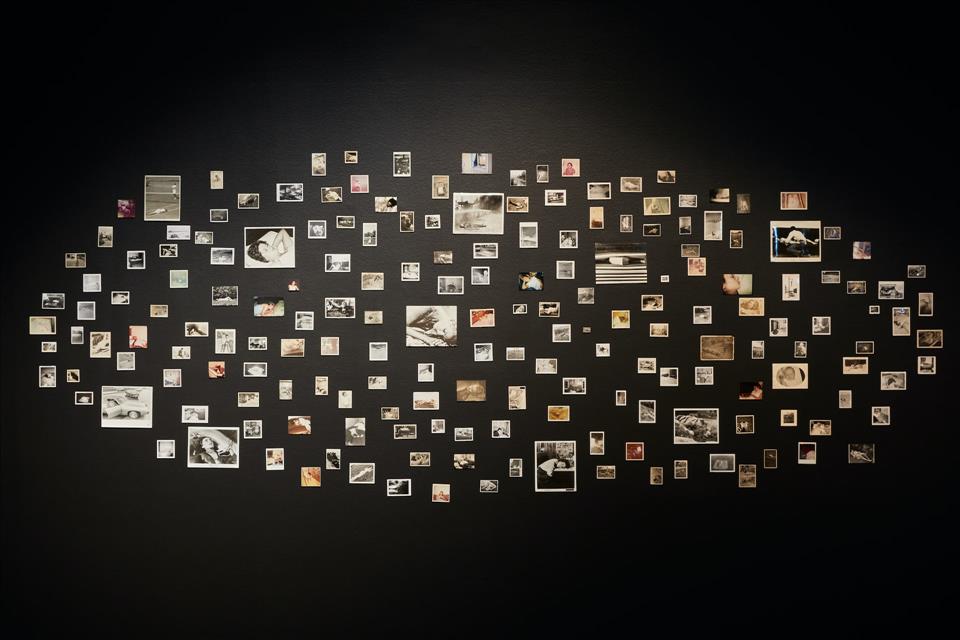
One of the most intriguing works in the exhibition is by the New Zealand-born photographer Patrick Pound, titled Pictures of people who look dead, but (probably) aren’t (2011–14). It is a sprawling installation of mainly found photographs where the audience is invited to create a life and death narrative.

Photography: Real and Imagined reexamines our thinking about the art of photography and explores photography’s ability to recreate and reinterpret our world.

Photography: Real and Imagined is at the Ian Potter Centre, National Gallery of Victoria, Melbourne, until February 4 2024.

Read more: Can a photograph change the world?

The Conversation

MENAFN12102023000199003603ID1107234959


Legal Disclaimer:
MENAFN provides the information “as is” without warranty of any kind. We do not accept any responsibility or liability for the accuracy, content, images, videos, licenses, completeness, legality, or reliability of the information contained in this article. If you have any complaints or copyright issues related to this article, kindly contact the provider above.

[ad_2]
These Are The Best Camera Lenses To Use If You Want To Get Into Fashion Photography

[ad_1]

(MENAFN- usa art news)
down to its essentials, photography is capturing light to craft an image-and fashion photography is no exception. renowned fashion photographer calypso mahieu agrees.“[lighting] can destroy or make a picture sublime very easily,” she says, underlining that her utilization of light is a secret weapon in creating her vibrant pictures.
if you’re an aspiring fashion photographer intent on picturing the best of style and couture, you will want to use light in the same way as mahieu, and that means choosing the right camera lenses . these will determine the extent to which you can catch that light and manipulate it. with the right lens, you can shoot your subjects near or far, as brightly or dimly as you want-and ultimately set the right depth and mood for your photos to achieve their desired effect.
but which one should you start with? the following is an overview of the best lenses to use if you want to get into fashion photography. sigma 24-70mm f/2.8 dg os hsm if art lens

you won’t want to splurge on multiple specialized lenses when you’re just starting. this model is a great first lens because of its robust quality and versatility. its 24-70mm focal length is perfect for capturing a vast array of angles and shots of a singular subject, whether you want a close-up on a remarkably detailed fabric or a wider shot to snatch a picture of the model posing in a particularly picturesque walkway. sigma art lenses are also designed for detail via their higher apertures of f/1.4 to f/2.8-with this kind of sharpness, no part of a fashion design will escape you, and you’ll be able to present it with crystal clarity. the lens also has high-speed focus and an advanced optical stabilizer function. choose the sigma 24-70mm f/2.8 dg os hsm if art lens for flexibility and caliber when taking photos.

sony fe 35mm f/1.4 gm lens

fashion photography isn’t all about clothing. it’s also about what stories you can tell within the four sides of a frame-and a sony fe 35mm f/1.4 gm lens will give you everything you need to maximize that space. its extreme aspherical elements can create a butter-smooth bokeh effect, while its extra-low dispersion glass element optimizes resolution while reducing flare and ghosting. its f1.4 max aperture even makes it capable of night photography. if you want to take your work outside for more interesting shots-just don’t forget to leverage tools like photography reflectors to disperse and scatter light in different ways depending on the image you want to achieve. pick the sony fe 35mm f/1.4 gm lens to craft a narrative around the clothing you want to exhibit.

canon rf 85mm f/1.2 l usm lens

zooming in doesn’t limit your ability to take an intriguing picture. in fact, a study in
fashion photography portraiture
notes the infinite choices you have within portraits-with clothing alone, you can alter the drape, texture, form, and luster of the fabric while directing your model to emphasize or downplay the silhouette to emit strength or vulnerability. a canon rf 85mm f/1.2 l usm lens has 13 elements in 9 groups and a 9-blade aperture system, which means you can easily shift from a soft haziness perfect for a fairytale-dress photoshoot to razor resolution for high fashion images. it also has a 12-pin communication system that boosts the digital lens optimizer, eradicating image deterioration. choose the canon rf 85mm f/1.2 l usm lens to depict striking, intimate fashion portraits.
building fashion photography skills means developing an eye for manipulating light. use these lenses to widen your options and depict the best of fashion

MENAFN20062023005694012507ID1106469149


Legal Disclaimer:
MENAFN provides the information “as is” without warranty of any kind. We do not accept any responsibility or liability for the accuracy, content, images, videos, licenses, completeness, legality, or reliability of the information contained in this article. If you have any complaints or copyright issues related to this article, kindly contact the provider above.

[ad_2]
Extraordinary Travel and Wildlife With Netflix’s New ‘Our Planet II’

[ad_1]

Wander the world with wide-eyed wonder from the ease of your armchair, as Our Planet II, an inspiring new Netflix four-episode docuseries (premieres June 14), unveils answers to mysteries about why and how billions of animals relentlessly migrate — phenomenal travel adventures that have criss-crossed our globe for millennia. Silverback Films and its Emmy Award-winning team behind Planet Earth and Our Planet dazzle once again with gorgeous swoop-and-soar, dive-and-discover, cutting-edge cinematography, which showcases intimate storylines that are pulse-racing, perilous, enlightening, tender and joyful. “Only now are we beginning to understand that all life on Earth depends on the freedom to move,” declares narrator Sir David Attenborough, British author, biologist, broadcaster and natural historian, whose famously gold-standard soothing voice resonates. “Experience the extraordinary journeys that shape our world,” he invites. “For many animals, the instinct to move is overwhelming, despite the dangers. But for every trip that ends in tragedy, countless millions reach their destination.” This is an opportunity to peek at far-flung getaways and creatures that you might otherwise never see. Orchestrating this ambitious project, the program’s crew touched down in 21 countries on seven continents, tallying up 934 filming days, 292 travel days and 85 quarantine days. More than 200 people were involved in creating the show, including 50 camera operators. Special kudos to music composers Jasha Klebe and Thomas Farnon, who have scored stellar high notes for this production; the official soundtrack (released June 14) is available to stream/download on Amazon and other major digital music services. Series Producer Huw Cordey and Executive Producer Keith Scholey share their personal behind-the-scenes insights below.

Four thematic narratives — World on the Move, Following the Sun, The Next Generation and Freedom to Roam — weave this extravaganza together. Each episode covers three months of Earth’s orbit, celebrating key animal movements. At every hour of every day, astonishing masses of animals — gigantic and minuscule; in the air, on the ground, throughout the seas — are guided by instinct, sun position and a compass-like mental-mapping agility that is intrinsic to their essence, replicating the same often arduous routes that their ancestors followed eons ago, seeking havens to eat, drink, breed, give birth and secure safety. Each episode culminates with a cliffhanger.

Elegant drone shots record landscapes’ grandeur, as well as ride the skies alongside flocks of birds, so proximate that you can stare at their eyes and almost sense the air currents uplifting their wings. Newly advanced low-light camera technology now makes possible documentation of night activities and the infiltration of darkest rainforest hideaways. Underwater camera submergence spotlights splashy revelations.

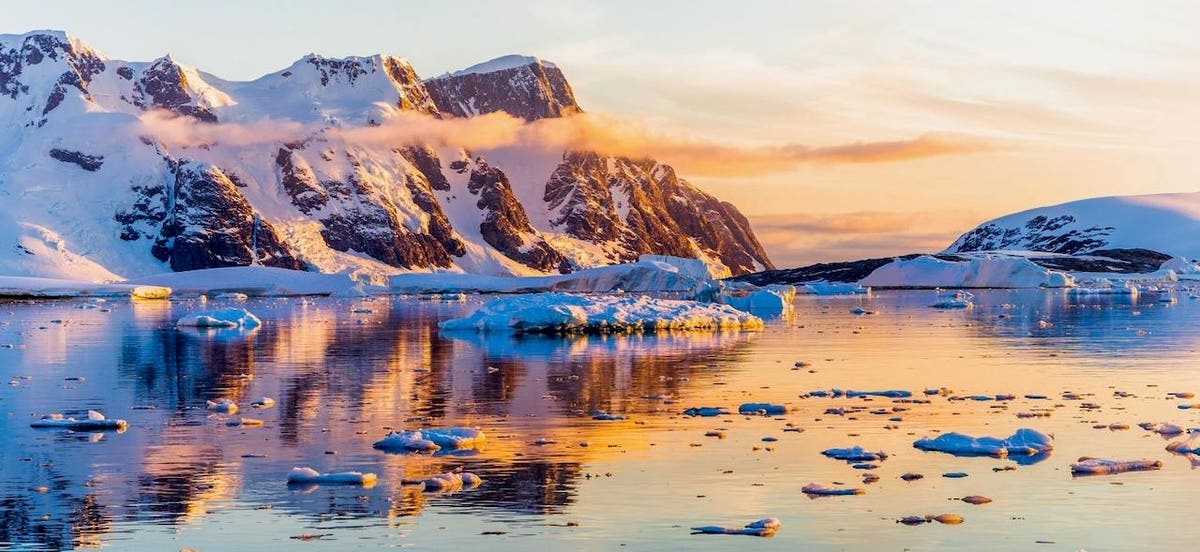
For travel lovers, destinations abound. Among the favorites: lions and buffalo in Botswana; humpback whales in the Bering Sea; Laysan albatross and tiger sharks in the Northern Hawaiian Islands; lions, zebras and wildebeests in Tanzania’s Serengeti; rarely seen Tawaki penguins in Fiordland, New Zealand; elusive pumas in Patagonia; nesting turtles on Mexico’s Escobilla Beach; elephant seals in the Falkland Islands; Gentoo penguins in Antarctica; gray whales off the coasts of California and Mexico; orcas (killer whales) hunting in California’s Monterey Bay and, in the Himalayas, Demoiselle cranes that forge the most strenuous migration of any bird species, navigating at heights of almost five miles above sea level over the stupendous Asian mountain range and continuing across the desolate Gobi Desert in Mongolia before wintering in Khichan, India, where villagers kindly welcome them.

Understanding The Importance of Migration

Huw Cordey, Series Producer: “The integrity of every habitat is dependent on the animals moving in and out of it, particularly those in the more Northern and Southern parts of our planet. But, even in jungles along the Equator, you have animals moving very large distances. Movement is absolutely fundamental to every single habitat on Earth.”

Keith Scholey, Executive Producer: “It’s also about the life cycles of animals, and how crazy they sometimes are. The journey of the sockeye salmon is familiar, but I think a lot of people don’t realize that they are actually programmed to breed and die. They spend their life as an ocean fish until that one journey up the river.”

Embracing a Team Spirit

Scholey: “The scientists in the field, the ones who live in these remote places, are the people who know those stories. We are totally dependent upon their knowledge and their skills. Once we actually get on location, our experienced producers, directors and cinematographers can jump in and choose which of those stories to follow.”

Cordey: “That’s why I don’t believe in storyboards for wildlife films. It’s not that we don’t think very carefully about the sequences that we’re going to film, but if you go into a shoot with a storyboard, you will miss important things. Animals don’t read scripts. They do unexpected things and you have to be prepared. I try to get my teams to tear up the shot list at the airport. But we can’t make films without the scientists, or at least the scientific information that they provide.”

Scholey: “When that perfect combination of scientists and filmmakers come together, it’s really powerful. Sometimes the scientists even look at our footage and say, ‘Wow, I never knew that. That’s really helpful.’”

Cordey: “Obviously this is an entertainment series, and we do need to get the big iconic animals in there. But while the audience might come to it for polar bears and lions, I always think the things they remember are the smaller stories. Locusts, for example. Christmas Island crablets. When it comes to migrating animals, some of the best stories are birds, because of the distances they travel. We tried to use a balanced approach, and keep in mind that some shoots won’t work out the way we hoped they would. Although I have to say that for a project that was three years in the making, covering many different species across every single continent, there was very little that didn’t work out – which is, in my experience, quite unusual. I think we got a little lucky with some of the stories, but our research was also very good.”

Excelling at Exciting Film Advances

Cordey: “Nighttime and drone technology have vastly improved in the last five years. Macro technology, too – there are some very, very innovative macro lenses out there. Our bee shoot is a good example of a very special grip. It was designed by the cameraman that shot the bee story, and the whole shoot was probably a year in the planning. We were working with some very experienced beekeepers in Germany, as well as a photographer who has done an amazing book on bees and a scientist who had been studying bees for years. That was a classic example of where we’re dipping into years of experience to try to film the very best sequence we possibly can.”

Surprising With Spectacular Animal Stories

Cordey: “In the case of the Laysan albatross, we had the rare opportunity to spend almost the entire shoot following the trials and tribulations of a single chick. There it was — this big, chunky chick — and we could just stick with it for six weeks. The shoot itself was very interesting: It took six days to sail there from Hawaii, and I believe we are the first natural history series to film the maiden flight of a Laysan albatross. They’re the longest-lived birds of all, and they take this enormous journey around the planet for years before they breed for the first time. The original idea was to do an underwater shoot with the tiger sharks waiting in the shallows at Laysan, but the first day the tiger sharks were around, the crew got into these inflatable boats — and two sharks attacked them. It was like something out of Jaws. The crew was panicked, and basically made an emergency landing on the sand.”

Talking About The Impact of Climate Change

Cordey: “The changing world is very noticeable at the poles, the ends of the world. We were on a boat in the Arctic for a month, and our sightings of polar bears were virtually nil. We got [an] amazing sequence in the last 48 hours — the crew came across that mother and her two cubs and they were immediately on it. The audience is almost seeing it unfold in real time. The polar bear mother climbs on the island, followed by one cub, and the second cub just couldn’t do it. There were hardened Arctic watchers on that boat who were in tears, because they thought it was just so sad…. In the narration, I think David [Attenborough] handles it very well, because he tells you what’s going on. But as is always the way with David, he doesn’t push it. He just says, ‘Look, this is how it is.’ Where we witness unsettling scenes, we think sometimes you have to show the audience for them to really understand. It’s a delicate balance though, across the whole show. I think we have a duty of care.”

Cordey: “Animals move for a better life. As climate change makes things more difficult, the need to move is even greater. Of course, there’s a huge analogy there with humans, and it’s pretty understandable. If you grow up in a place where you can barely grow food to feed your family, you’re going to want to move.”

Scholey: “The underlying environmental story of Our Planet II is that to have a healthy planet, you can’t have borders. You have to let life roam. We as humans like to divide the world. We like to have territory and we like to protect our borders and stop movement. We have to use our intelligence to look at the natural world and compensate for this tendency of ours, if we want to actually allow the natural world to function. Because so many ecosystems on which we ultimately rely for our agricultural health need to have this movement of nature.”

Balancing Tourism and Conservation

Scholey: “Through my career, I’ve seen this really interesting scenario happen with the natural world. The big picture is that habitats are being destroyed, and there is less wildlife in the world than when I started. So that’s the downside. The upside is that there have been more people studying the natural world, and in some places, there has been intense conservation. That has led to two things: more knowledge, but actually more habituation.”

Cordey: “Places that become more protected get tourism, and through tourism, animals become more used to humans. They don’t see us as a threat. But it is the most extraordinary thing to get that close to a large, dangerous predator on foot, like a puma. That’s the most surprising thing. The crew did come across a male puma that was on a kill. It wasn’t one of the habituated animals, and he looked extraordinarily angry. They had to back off really, really quickly. So it’s not the species, it’s individuals.”

[ad_2]

Shoot Express Photography: The New Name To Watch In The World Of Wedding Photography

[ad_1]

(MENAFN- EIN Presswire)

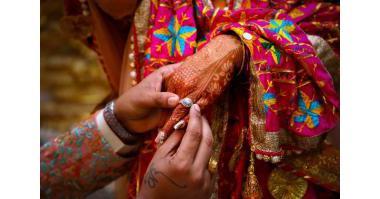
Wedding Ring Candid Photoshoot by Shoot Express Photography Team in Mumbai

Breaking Through the Noise: Shoot Express Photography Gains Momentum in Mumbai

MUMBAI, MAHARASHTRA, INDIA, April 24, 2023/einpresswire.com / — shoot express photography , a young and dynamic photography company, is quickly gaining recognition as a leading player in the photography industry. With a unique approach to capturing stunning images and an unwavering commitment to customer satisfaction, Shoot Express Photography has quickly emerged as a name to watch in the world of photography.

Shoot Express Photography has quickly made a name for itself in the industry. With a focus on delivering high-quality photography services, the company has quickly gained a reputation for providing customers with stunning images that capture the essence of every moment.

At Shoot Express Photography, the team of photographers brings a fresh perspective to every project they undertake. With a keen eye for detail and a deep understanding of the latest trends and techniques in photography, the team is able to create images that are both stunning and timeless.

One of the things that set Shoot Express Photography apart from its competitors is its unwavering commitment to customer satisfaction. Whether working with individual clients or corporate clients, the team at Shoot Express Photography is dedicated to providing a photography experience that exceeds expectations.

From initial consultations to the final delivery of images, Shoot Express Photography works closely with clients to ensure that every detail is taken care of.

Whether working on a corporate project or an individual photoshoot, Shoot Express Photography brings the same level of dedication and professionalism to every project. With a wide range of photography services on offer, including weddings, pre-wedding, corporate events, food, interior, fashion and individual portraits.

With a commitment to staying up-to-date with the latest trends and techniques in photography, Shoot Express Photography is constantly evolving and adapting to meet the needs of its clients.

As the photography industry continues to evolve and grow, Shoot Express Photography is poised to remain at the forefront of the industry. With a dedicated team of photographers, a commitment to customer satisfaction, and a passion for capturing stunning images, Shoot Express Photography is quickly becoming the new name to watch in the world of photography.

About Shoot Express Photography

Looking for a wedding photography services provider in mumbai that is creative, experienced, and passionate? Consider Shoot Express Photography. They offer customized packages, state-of-the-art equipment, and exceptional customer service to make the wedding photography experience stress-free and enjoyable. Contact Shoot Express Photography today to schedule a consultation and capture precious moments beautifully.

Ashwin Singh
Shoot Express Photography
+91 77381 11094

Visit us on social media:
facebook
linkedin
instagram
youtube
other

Indian Wedding Photography & Videography by Shoot Express Photography Team

[ad_2]