A road trip in Canada brought this Malaysian closer to nature

[ad_1]

Write to us

We can finally travel again! We would love to hear about your travels and adventures. If you don’t feel like travelling yet, that’s OK, as you can always tell us about your past holidays instead. Your story – experiences, tips, advice – should be 700 to 800 words long in Word or Text format. Please attach some photos (1MB, captioned) in a separate email. There is no payment for submissions, and we reserve the right to edit all submissions. Email [email protected] with the subject “Readers Share”.

My long overdue road trip adventure in Canada with college friends finally became a reality this year. Despite my busy work schedule and the challenges posed by the Covid-19 pandemic, I decided to seize the opportunity and embark on this adventure with my friends, Siva and Mathi.

Siva, who had many relatives in Canada, had always extended an invitation to us, and this year, we accepted.

In May, we flew from Malaysia to Britain, where I caught up with some other classmates before our flight to Canada. After landing at Calgary International Airport in the Canadian state of Alberta, we encountered a hiccup when my check-in baggage went missing. It was eventually located in the lost and found section.

Siva’s relative, a local, helped us secure a rental car – an SUV. We had to adjust to the left-hand driving, which was unfamiliar to us. With Mathi behind the wheel, Siva as the navigator, and me as the general coordinator, our road trip began.

Our first drive through the Calgary countryside was a bit clumsy, but the scenic views and prehistorical stories of the area mesmerised us. We woke up very early the next morning due to jet lag, and headed to Banff.

The roads were clear, and the sight of wild animals like elk, mountain goats and foxes, as well as horses added to the charm of the place, and made the drive more interesting.

When we arrived in Banff, a resort town in Alberta, we were greeted by the majestic peaks of Mount Rundle and Mount Cascade, which dominated the skyline.

In the evening, we took a walk downtown for dinner, but on the way back to our hotel, we lost track of where we were going because it was dark and the streets all looked pretty similar. Eventually, after an exhausting time trying to search for the right way again, we found our hotel, drained of all energy.

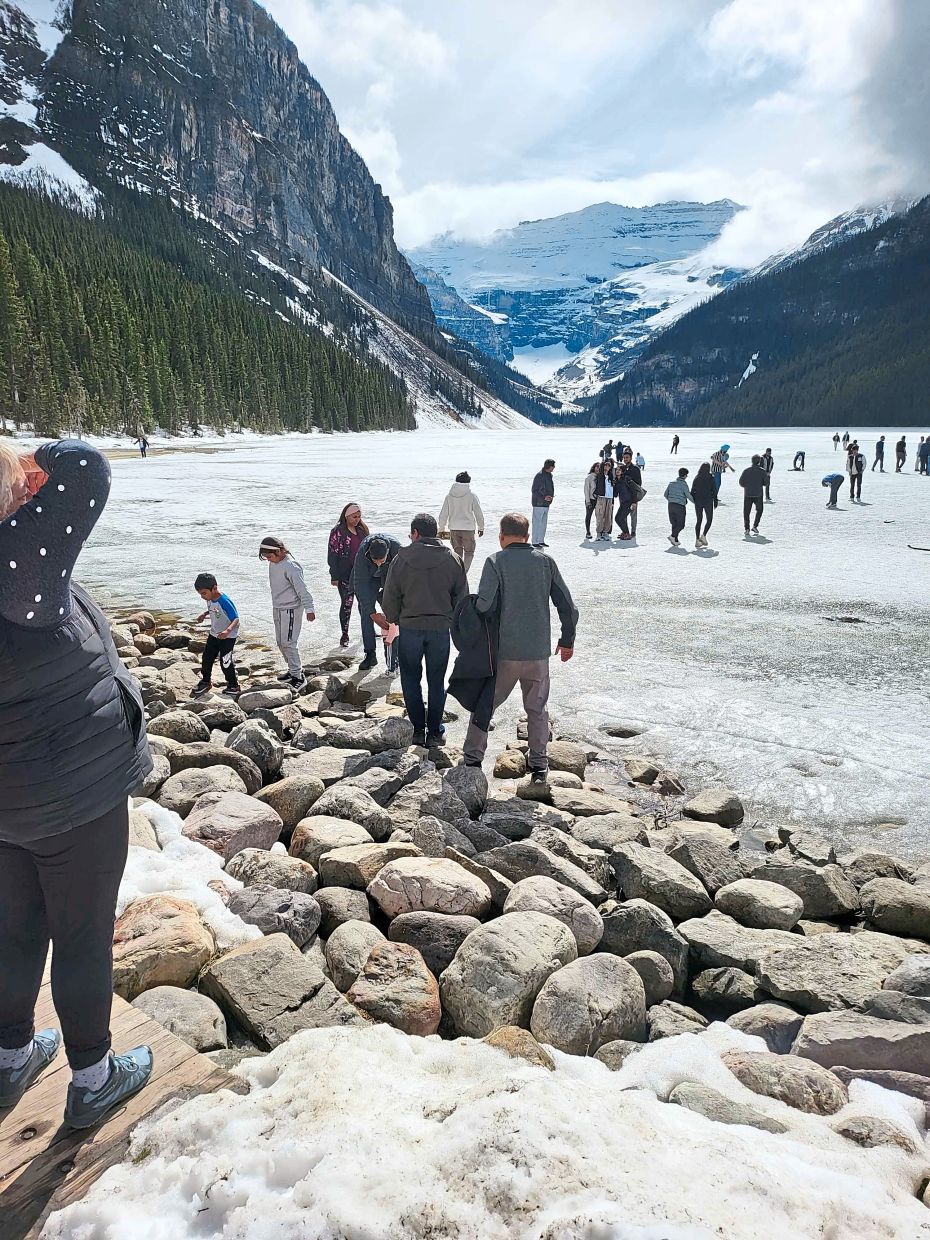
The next day, we drove to Revelstoke in British Columbia, passing through breathtaking landscapes featuring lakes and snow-covered mountains. During our two-day stay there, we visited the wolf dog sanctuary, gaining insight into these unique animals, and marvelled at the beauty of Lake Louise.

We then went to Kelowna, a city surrounded by picturesque views and renowned for its vineyards. After a refreshing dip in a heated outdoor pool, we encountered a problem with our accommodation due to a discrepancy between our online booking and the reception details. Fortunately, Siva’s relative arranged a stay for us at another place called the Sandman Hotel.

However, our exhaustion was further compounded when Siva realised he had misplaced his passport. After a frantic search, we discovered it on my bed, much to our relief.

Our next destination was Vancouver, where we enjoyed the hospitality of Siva’s friend, a chef. Indulging in the finest steaks and dishes prepared by the chef was undoubtedly a highlight of our trip.

We explored Whistler, a famous ski resort town, where we saw people skiing during the summer season.

One of Mathi’s childhood friends joined us as we ventured into Victoria Island by ferry. We explored the town, enjoying the warm weather, drinks, and bites for lunch. On the ferry back, we were fortunate to witness two orcas playing in the water – an incredible sight for us indeed.

Our last destination was Toronto, where we embarked on a two-hour drive to Niagara Falls, which is actually situated on the border of Canada and the United States. Due to heavy traffic on the motorways, we arrived in the late afternoon, just in time to see the awe-inspiring beauty of the falls illuminated by vibrant lights.

With a mix of excitement and sadness, we concluded our epic road trip and made our way back to Malaysia. Reflecting on the unforgettable experiences, the mishaps, and the laughter we shared, we realised that our trip had been more than just a journey – it was a testament to our long, enduring friendship.

As we parted ways at the airport, promising to plan for our next adventure, I couldn’t help but feel grateful for the memories we had created together. The road trip had taught us to appreciate the beauty of nature, embrace the unexpected, and cherish the bonds of our friendship that had grown stronger through the years.

The views expressed are entirely the reader’s own.


[ad_2]
How a new ‘nature economy’ is transforming the fight for B.C.’s ancient forests

[ad_1]

Another way a ‘nature economy’ is finding a foothold is through talent acquisition. Scott Sinclair, whose company, SES Consulting, retrofits buildings to move them off fossil fuels, says having a nature-first mindset baked into the business model attracts innovative young minds who grew up with the environment front and centre – as well as clients.

“It’s just, I think, an incredible business opportunity,” he says.


Click to play video: 'Why protecting the planet and making a profit are no longer at odds'


Why protecting the planet and making a profit are no longer at odds


For some environmentalists as well, this work is about combining environmental action, long associated with protesters blocking roads and affixing themselves onto trees, with the idea of promoting business.

Though still niche, it’s starting to happen.

‘Valuing’ Nature

To understand the economic value of their natural assets, some communities are putting a price on them.

The District of West Vancouver is one of the first in Canada to do so.

There are some rare strands of urban, old growth trees left standing in the city’s Lighthouse Park. In a walk through the park, District officials Matthew MacKinnon and Heather Keith explained the uniqueness of the old growth forest. They told Global News how these ancient trees, some over 500 years old, maintain an extremely biodiverse ecosystem in the park, while offering people a break from the hustle and bustle of city life.

“There are trees here that have lived longer than any person that’s alive right now,” says Heather Keith, the senior manager of climate action and environment for the District.

The municipality has determined the idea has value in dollar figures. It’s one of the first places in Canada to take this approach, estimating its natural assets – forests, waterways, parks – to be in the ballpark of $3.2 billion, with forests providing up to $1.8 billion in ‘services.’

They’ve estimated that to be the cost of ‘replacing’ those assets, which provide immeasurable ecological and health benefits to the community, Keith says.

An infographic showing West Vancouver’s dollar valuations of its natural assets.

Many Indigenous communities are also charting a clear path forward toward that new nature economy.

One model that’s proven successful is called Coast Funds. It’s an investment strategy created by coastal First Nations to pool money to help local communities shift from extraction – logging old growth trees, for example – and toward protection. This means keeping those vital resources intact and leveraging them to make them profitable – ecotourism, carbon credits or guardianship programs.

“We understood that 500-year-old trees don’t just grow up overnight,” says Dallas Smith, the president of Nanwakolas Council, a group of six First Nations that’s part of the Coast Funds initiative.

The broader financial and business communities have realized that the costs of environmental inaction are far greater – and are starting to move toward a sustainable direction, too.

Adam Scott is an analyst whose group, Shift Action for Pension Wealth and Planet Health, monitors how credible Canadian pension funds are when it comes to climate action. In January, Shift released a report arguing there’s a long way to go. But at least there is a recognition that things need to change.

“The smart players in the financial industry have understood that […] the financial performance of their institutions is based on having a climate strategy,” he said.

Unfortunately, the moves are largely voluntary and without teeth, says Tom Rand, a managing partner with ArcTern Ventures. In other words, he insists, there’s a long way to go before a nature economy becomes the norm.

“If you’re asking if the broad swath of economic actors are understanding that we can make money preserving nature, absolutely not.”

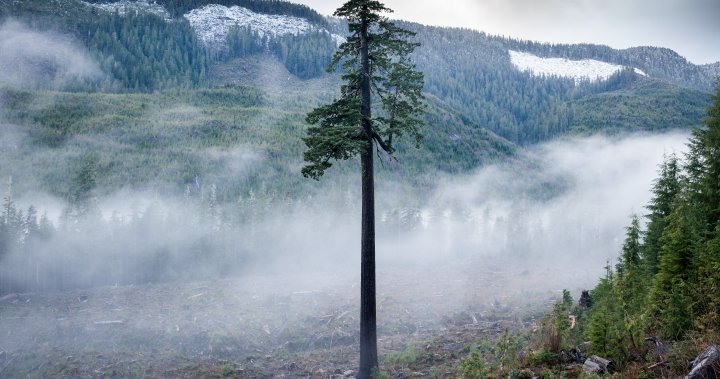
But big trees are offering an inspiration for change. People name them. They trek through the forest to see them, and in the case of photographer TJ Watt, to document them before they’re gone.

A man stands at the base of a huge tree.

Photo:
TJ Watt/Ancient Forest Alliance

“These are some of the most enchanting and beautiful ecosystems on all of Planet Earth,” says Watt, who represents the Ancient Forest Alliance.

“They’re really some of our oldest friends.”

Tracking giants

When author and book editor Amanda Lewis set out to write a book about big trees, she thought she’d focus on the dwindling, majestic resources nestled in the coastal forests of B.C.

But, solo expedition after solo expedition hiking through various groves in search of the biggest of the big led her to another, more optimistic conclusion – “I wanted to focus on what we have left” and not so much on “what we’ve lost.”

The pandemic was a catalyst for Lewis – and, it seems, for many other Canadians too.


[ad_2]