How a Zero-Gravity Omega Watch Repair Revolutionized NASA’s Space Station Fixes

[ad_1]

“I paid my way through college as a diesel mechanic for a logging outfit, so I feel comfortable with mechanical things and electric things, taking them apart and fixing them. I figured it all out myself. I didn’t have any instructions,” Pettit says. “As you can hear in the watch-repair video, I make the comment: ‘The tool you use at the frontier to fix it is the tool you use to get the job done.’”

However, 20 years ago, this repair job didn’t just fix Don’s Omega. As the chemical engineer and NASA’s oldest-serving astronaut (68) reveals to WIRED, it transformed the space agency’s supply protocol at an early stage in the ISS’s own life.

“At that point in time,” Pettit says, “the concept of doing repairs on orbit was to pull out a ‘box,’ put in a new box, and you don’t take the box apart. Up to that point, [the Space] Shuttle could carry 20 tons of supplies, and you’re flying four shuttles a year, and there was no problem getting spare parts. So your ‘repair mechanism’ wasn’t to take something apart, it was to replace these units.

“Then Columbia happened, while I was on orbit.” Pettit is referring to the disaster of February 2003, when the shuttle disintegrated on reentry having suffered damage to its heat-insulation tiles during launch 15 days prior. It meant Houston’s fleet was grounded for a full two and a half years, extending Pettit’s stay aboard ISS from two and a half months to five and a half, before returning aboard Roscosmos’ Soyuz capsule (a first for an American).

“We had to drop the [ISS] crew size to two, and we could barely keep the food and water supplies on station to support the crew. That brought in a whole new regime of how you do repairs. When I downlinked the watch-repair instructions, [around the time] Columbia happened, what this did was demonstrate that on orbit we could do fine repair.

“Taking a watch apart is kind of the paragon example of ‘fine repair.’ So the maintenance people at NASA started to think: ‘Let’s take our boxes apart and fix them on orbit.’”

Long before Instagram, Pettit’s video wasn’t for likes or “instant gratification,” as he puts it, though he now treasures the social medium for how meaningful it can be: “It track-proved a whole new mindset at NASA: the concept that astronauts aren’t klutzes; we aren’t just bulls in a china closet; we have the dexterity to do fine motor repair work on spaceship.”

With Congress having passed the NASA Authorization Act last year, extending US participation in ISS to 2030 and easing the transition to more commercial space operators than simply SpaceX and Boeing’s Starliner, it’s gratifying to know that more than 50 years since Jack Swigert relied on his Speedie to time the 14-second reentry burn aboard the stricken Apollo 13 capsule, Swiss watchmaking continues to play its part, up there.

[ad_2]

Top 5 winners of the 2023 astronomy photo of the year contest

[ad_1]

The winners of the Royal Observatory Greenwich’s 15th year of astronomy photography have been announced, and the images are nothing short of incredible.

Top 5 winners of the 2023 astronomy photo of the year contest 9632

VIEW GALLERY – 7 IMAGES

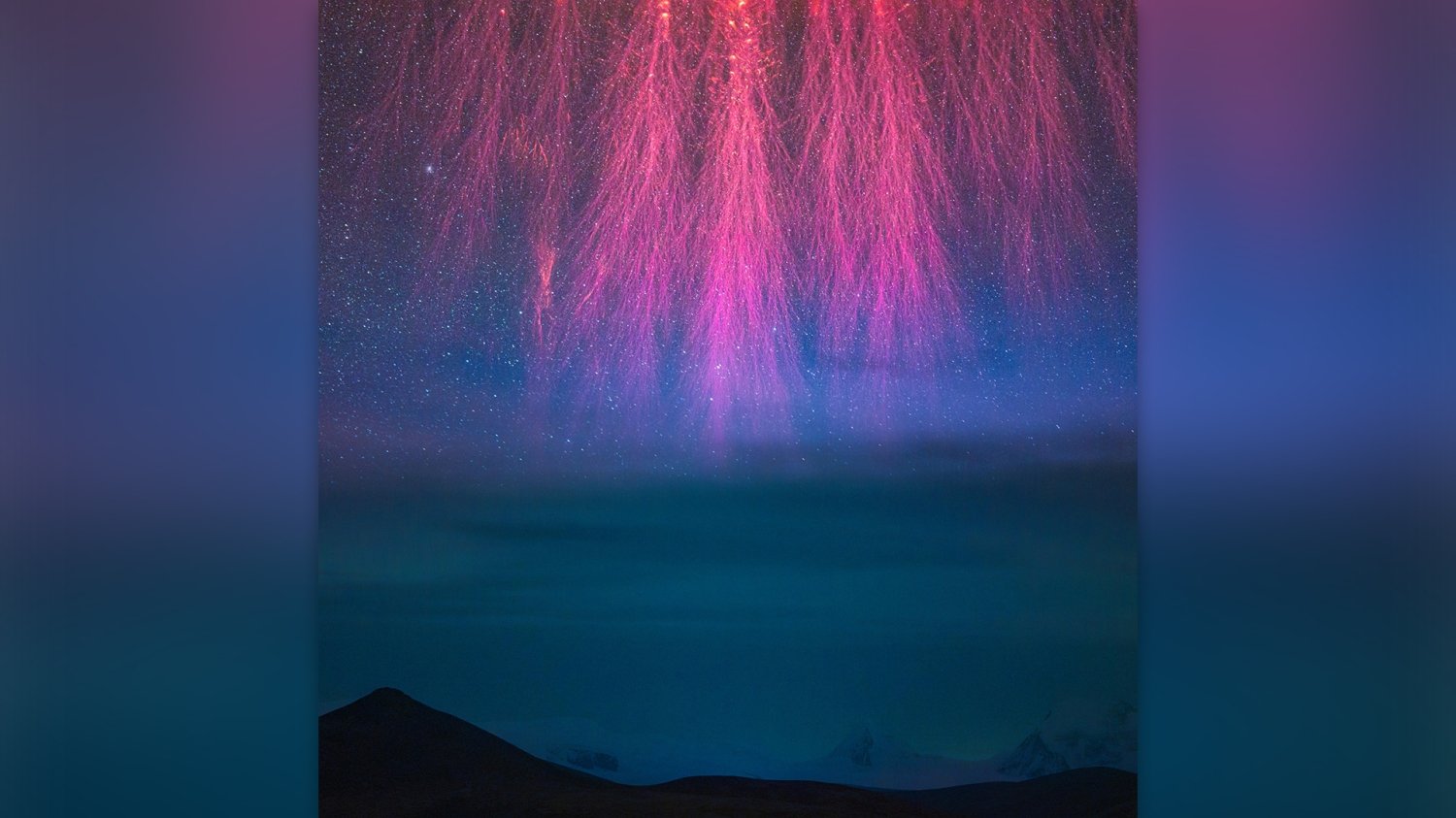
The world’s largest astrophotography contest consists of more than 4,000 separate submissions from 64 different countries, with each of the submissions going into a selection of different categories. The winners of 2023 were announced via a shortlist that was published in July, and now we able to see all of the notable submissions. The contest features 11 categories and below you will find winners for; Overall Winner, Auroras, Our Moon, Our Sun, and Stars & Nebulas.

The first image below is the winning photograph of 2023’s astrophotography contest, and it showcases the neighboring Andromeda galaxy. The image titled “Andromed, unexpected” was snapped by an amateur astronomer team led by Marcel Drechsler, Xavier Strottner and Yann Sainty. Notably, the plasma streak on the left-hand side of the image was a unique discovery, with researchers now studying it as its believed it could be largest discovered streak of its kind.

Overall Winner/Galaxies

Image credit: Marcel Drechsler, Xavier Strottner and Yann Sainty

Image credit: Marcel Drechsler, Xavier Strottner and Yann Sainty

Our Moon

Image credit: Ethan Chappel

Image credit: Ethan Chappel

Our Sun

Image credit: Eduardo Schaberger Poupeau

Image credit: Eduardo Schaberger Poupeau

Auroras

Image credit: Monika Devia

Image credit: Monika Devia

Stars & Nebulas

Image Credit: Marcel Drechsler

Image Credit: Marcel Drechsler

[ad_2]

Stars in eyes, sky is limit for this astrophotographer | Lucknow News

[ad_1]

When astrophotography began as a hobby for Harshwardhan Pathak three years ago, he had never dreamt that it would get him international recognition.
According to great philosopher Plato, “Astronomy compels the soul to look upward and leads us from this world to another. ” The same rollercoaster journey happened to Harshwardhan (21), who out of curiosity went to the Indira Gandhi Planetarium to have a look at the celestial events using a telescope under the guidance of senior scientific officer Sumit Srivastava. He developed an instant passion and soon became an ace astrophotographer.
Today, this Lucknow lad is making his presence felt in the world of astrophotography as one of his images was recently selected by the National Aeronautics and Space Administration (NASA) as the picture of the day.
Harshwardhan, who is a science graduate (physics, mathematics, astronomy) student at the Lucknow University and also an amateur astrophotographer associated with the Uttar Pradesh Amateur Astronomers Club(UPAAC), featured as ‘India’s Astrophotographer of the Year 2022′ at APOD, Astronomica, Italy. He also won the HOYS (Hunting Out Bursting Young Stars) citizen science astrophotography competition conducted by Kent University, Australia, and participated in various citizen science projects like ‘NASA asteroid search campaign’ and others.
“My astrophotography journey began at Indira Gandhi Planetarium where workshops on astrophotography were held. I would often visit the planetarium and gradually I picked up an interest in deep-sky objects (DSO) which is an astronomical object that is not an individual star or solar system object (such as the sun, moon, planet, comet and others),” said Harshwardhan.
“Soon, I learnt space image processing on my own through articles on the internet and various videos on YouTube of various astrophotographers around the globe. Indira Gandhi Planetarium supported me a lot by providing the equipment and helping me with image processing which is the main aspect of astrophotography. It reveals the dust and ionized gases after capturing them in different filters, and helps in revealing the beauty of various celestial objects in space,” he adds.
Harshwardhan says that in deep sky, the main issue that he faced was he couldn’t do deep sky imaging from Lucknow’s main city without proper narrowband filters, due to light pollution (emitted from streetlights) which hides the beauty of the night sky.
“We can’t even see stars from the main city. So, what I did was to use a remote astronomical telescope that can be controlled offsite by an observer over the Internet, and is housed in an observatory with an automated system for opening and closing the roof. Allsystems are mechanical and controlled by computer. It’s made available by various astronomical organizations at nominal rates. This helped me a lot to continue my hobby and reveal the beauty of space which is hidden and cannot be viewed by humans on earth,” Harshwardhan adds.
“It was like a dream come true when my image was selected as NASA’s ‘Astronomical Picture of the Day’, where images are sent by astrophotographers from across the globe. It is a very prestigious recognition and a dream of every astrophotographer of every tier. Another image selected in APOD Astronomical, Italy, was the second big success for me in this field,” he says.
After graduation, he plans to pursue post-graduation in physics and conduct research in astrophysics. Buoyed over the achievements of Pathak, Indira Gandhi Planetarium has shared that soon the planetarium will be revamped with hi-tech facilities to nurture young astro-enthusiasts.
“On May 12, 2023, an astronomical photo of Harshwardhan: NGC 7000 (North America Nebula) was awarded Astronomy Picture of the Day by NASA. His second astronomical photo NGC 3372 (Carina Nebula) was also featured in APOD Astronomica, which publishes astronomy photos globally. We are proud of his achievements,” says senior scientific officer Sumit Srivastava of the Indira Gandhi Planetarium.


[ad_2]

Meteor Shower 2022: Geminids Meteor Shower 2022: Internet lights up with Night Sky Glitters, see video

[ad_1]

The Geminids meteor shower, which peaks around mid-December each year, is widely recognised as one of the best and most constant annual meteor showers. According to NASA, it is a unique astronomical phenomena that may be enjoyed during the night and predawn hours.

The Geminids Meteor Shower, expected to generate 120 meteors per hour and be active from November 19 to December 24, 2022, will peak on December 14th.

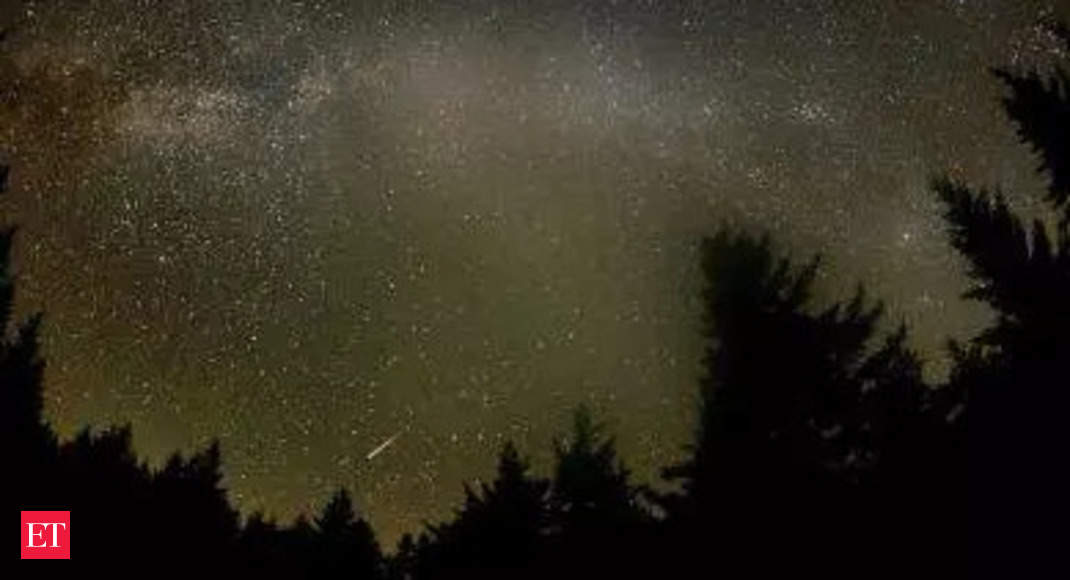
Many individuals shared photographs and videos of celestial occurrences on social media. People from throughout the world uploaded pictures and films of streaks of light seen in the night sky, enthralling the stargazers. Here are some of the greatest Geminids meteor shower photographs obtained by Twitter users.

What exactly is the Geminid Meteor Shower?

Geminids, according to NASA, move at 78,000 mph. These meteors are 1000 times quicker than a cheetah, 250 times faster than the world’s fastest automobile, and 40 times faster than a speeding bullet. The meteor shower was seen from both Hyderabad and Delhi.

Our solar system is still littered with debris, and the Geminids meteor shower is made up of fragments of rock comets that pass close to Earth once a year. The Geminids are made up of debris from the asteroid 3200 Phaethon.

The name “Geminids” refers to stars that appear to radiate from the constellation Gemini. According to Earthsky, the meteor shower will be best visible in the northern hemisphere, although individuals in the southern hemisphere will also be able to view some of the meteors. Astronomers predict that at the peak of the meteor showers, around 150 Geminids will be seen per hour.

The Geminids get their name from the constellation Gemini, which looks to be their ancestor. While some scientists think it is an asteroid due to its orbit and similarities to the main-belt asteroid Pallas, others believe it is an extinct comet based on studies that show a little amount of debris exiting Phaethon’s surface, as detailed in a statement by NASA.

FAQ

When were Geminids discovered?

1983 was the time when Germinids were discovered.

Which time of the year Germinids are seen?

Geminids are mostly seen in the November – December of the year.

Disclaimer Statement: This content is authored by an external agency. The views expressed here are that of the respective authors/ entities and do not represent the views of Economic Times (ET). ET does not guarantee, vouch for or endorse any of its contents nor is responsible for them in any manner whatsoever. Please take all steps necessary to ascertain that any information and content provided is correct, updated, and verified. ET hereby disclaims any and all warranties, express or implied, relating to the report and any content therein.


[ad_2]