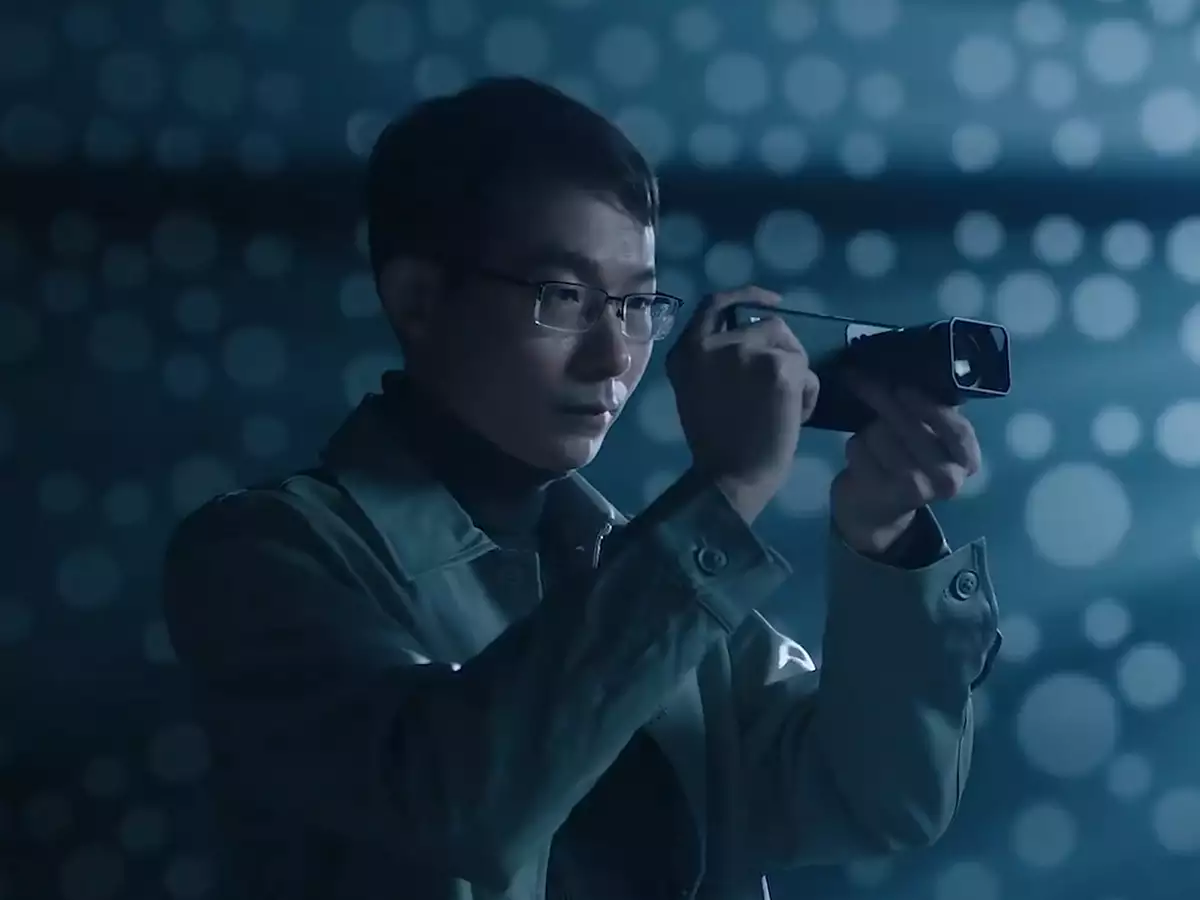
Xiaomi has showcased a new concept device that allows you to attach a camera lens module.
The Chinese smartphone maker has partnered with German camera giant Leica for the Xiaomi 12S Ultra Concept.
The device will offer features such as focus peaking, zebra lines, histograms and more.
Xiaomi has revealed a new concept smartphone, dubbed the Xiaomi 12S Ultra Concept, which might make it one of the best smartphones for photography. The device has an excellent camera setup but does not stop there – the company has made it possible to attach a camera lens module at the back.
The Chinese tech giant has partnered with German camera giant Leica to enable you to attach a camera lens module to your smartphone, allowing you to capture professional photographs without having to splurge for a DSLR.
Add a lens to capture professional images
Discover the future of SaaS in India
The 6-part video series will capture the vision of Indian SaaS leaders and highlight the potential for the sector in the decades to come.10th Nov, 2022 Starts at 04:00 PM (30 mins)Register Now
Our Speakers
The Xiaomi 12S Ultra Concept phone allows you to attach a lens at the backXiaomi
The Xiaomi 12S Ultra Concept features a large circular camera module at the back, featuring a triple camera setup at the back. The module has been designed to mount a Leica M series lens at the back, allowing you to capture professional photos.
The device features two 1-inch sensors, one in the smartphone and one in the Leica lens. This allows you to suppress most of the noise while capturing images.
The Leica lens used in the concept phone teaserXiaomi
The lens used by Xiaomi in the teaser is the Leica Summilux-M 35mm f/1.4 ASPH module; however, the phone supports all M-lenses from the company as it features an M-mount.
The teaser has revealed that once the lens is attached, the smartphone will offer features such as histograms, zebra lines, focus peaking, and 10-bit RAW shooting.
Some of the features offered with the lens attached on the phoneXiaomi
It is to be noted that the device is only a concept at the moment, and the company has not revealed any information about a commercial launch. It may take some time before such a device can be launched for consumers.
SEE ALSO:
From longer tweets to proper verification of users, here are some of the Twitter features we want Elon Musk to introduce
India’s IT giants are worried about moonlighting employees sharing their corporate secrets
These are the 5G bands supported by Airtel and Jio – make sure your phone has them
Mount Rainier National Park is an American national park located in southeast Pierce County and northeast Lewis County in Washington state. The park was established on March 2, 1899 as the fifth national park in the United States, preserving 236,381 acres (369.3 sq mi; 956.6 km2) including all of Mount Rainier, a 14,411-foot (4,392 m) stratovolcano.
The mountain rises abruptly from the surrounding land with elevations in the park ranging from 1,600 feet to over 14,000 feet (490–4,300 m). The highest point in the Cascade Range, Mount Rainier is surrounded by valleys, waterfalls, subalpine meadows, and 91,000 acres (142.2 sq mi; 368.3 km2) of old-growth forest. More than 25 glaciers descend the flanks of the volcano, which is often shrouded in clouds that dump enormous amounts of rain and snow.
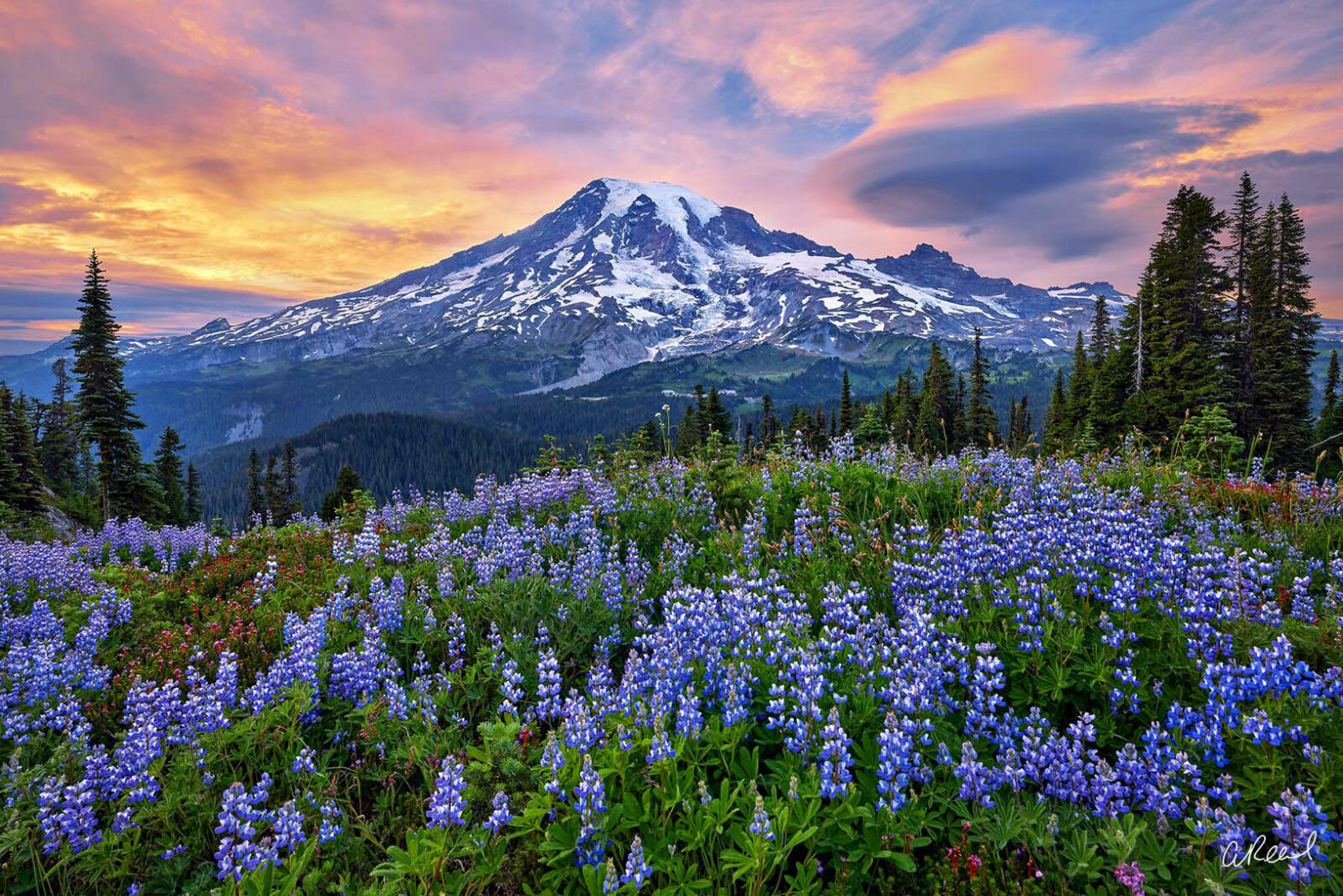
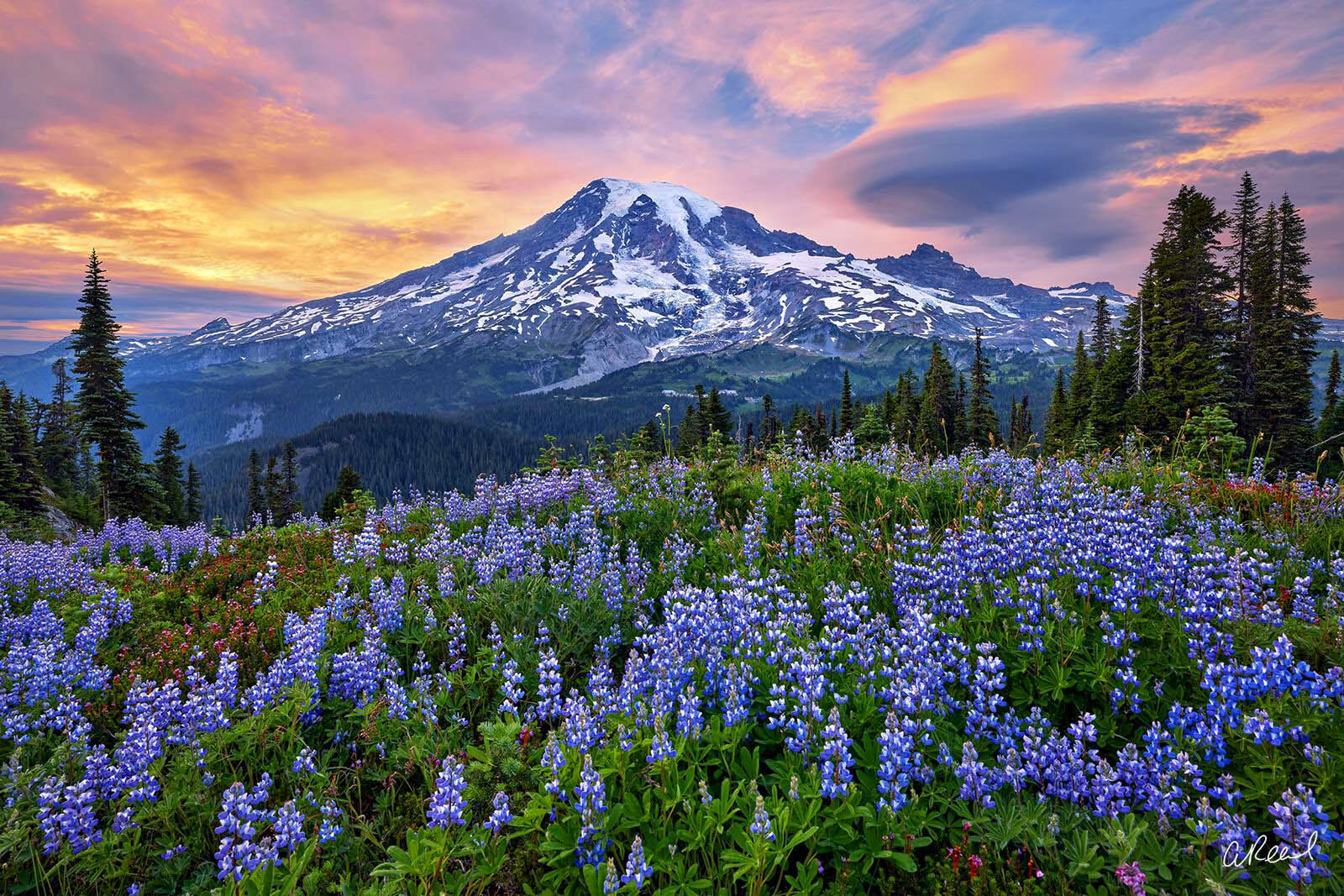
Elevate your home with Aaron Reed’s limited edition photography print, On Earth As It Is In Heaven, from his Newest Work Photography collection. Order yours today! Fine Art Limited Edition of 100.
Glaciers, lava flows, wildflower meadows, giant stands of ancient trees. All these extraordinary sights can be found in Mt Rainier National Park, one of the nation’s oldest national parks found less than sixty miles from Seattle.
All year round, sightseers, hikers, and photographers flock to this iconic feature of the Washington landscape; not only to see an active volcano that towers more than 14,000 feet above sea level, but to explore the gorgeous surrounding scenery.
The national park is home to ancient forests, dense wildflower meadows, and abundant wildlife. Overall, Mt Rainier offers one of the best locations in the world to fully experience nature unlike anywhere else in the world.
Due to its high probability of eruption in the near future, Mount Rainier is considered one of the most dangerous volcanoes in the world, and it is on the Decade Volcano list. The large amount of glacial ice means that Mount Rainier could produce massive lahars which could threaten the entire Puyallup River valley. According to the United States Geological Survey, “about 80,000 people and their homes are at risk in Mount Rainier’s lahar-hazard zones.
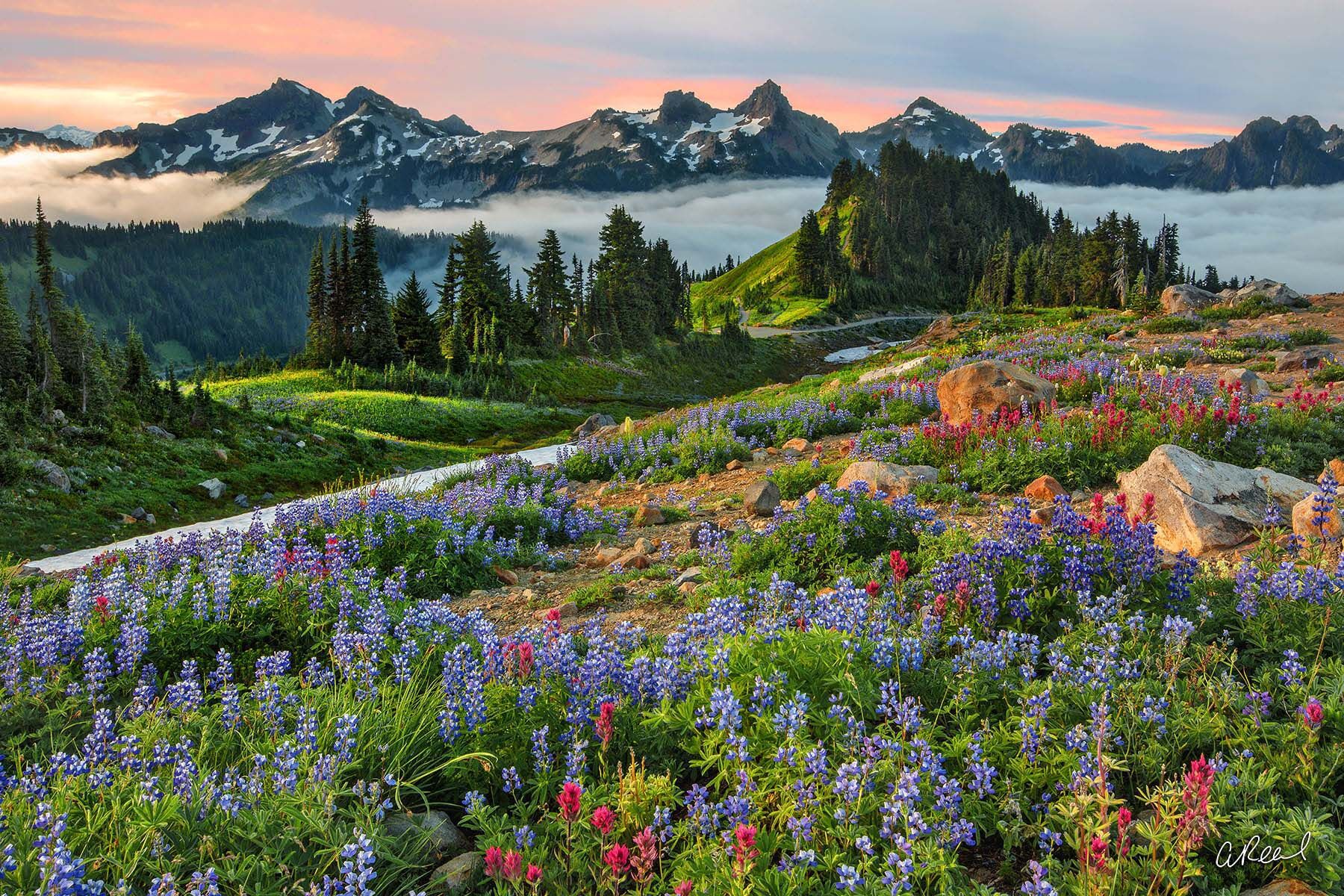
Elevate your home with Aaron Reed’s limited edition photography print, Shockwaves, from his Newest Work Photography collection. Order yours today! Fine Art Limited Edition of 50.
Osceola Mudflow
The Osceola Mudflow of 5,600 years ago was Mount Rainier’s signature event during the Holocene. During a period of eruptions, avalanches caused 2 to 3 km3 (0.5 to 0.7 mi3) of mainly hydrothermally altered material from the volcano’s summit and northeast slope to slide away. This lahar swept down the west and main forks of the White River, passing the location of current day Enumclaw before reaching the Puget Sound near present-day Auburn.
The Osceola collapse left a 1.8 km-wide (1 mi-wide) horseshoe-shaped crater, open to the northeast, almost the same size as the crater produced by the 1980 eruption of Mount St. Helens. Most of the Osceola crater has been filled in by subsequent lava eruptions, most recently about 2,200 years ago.
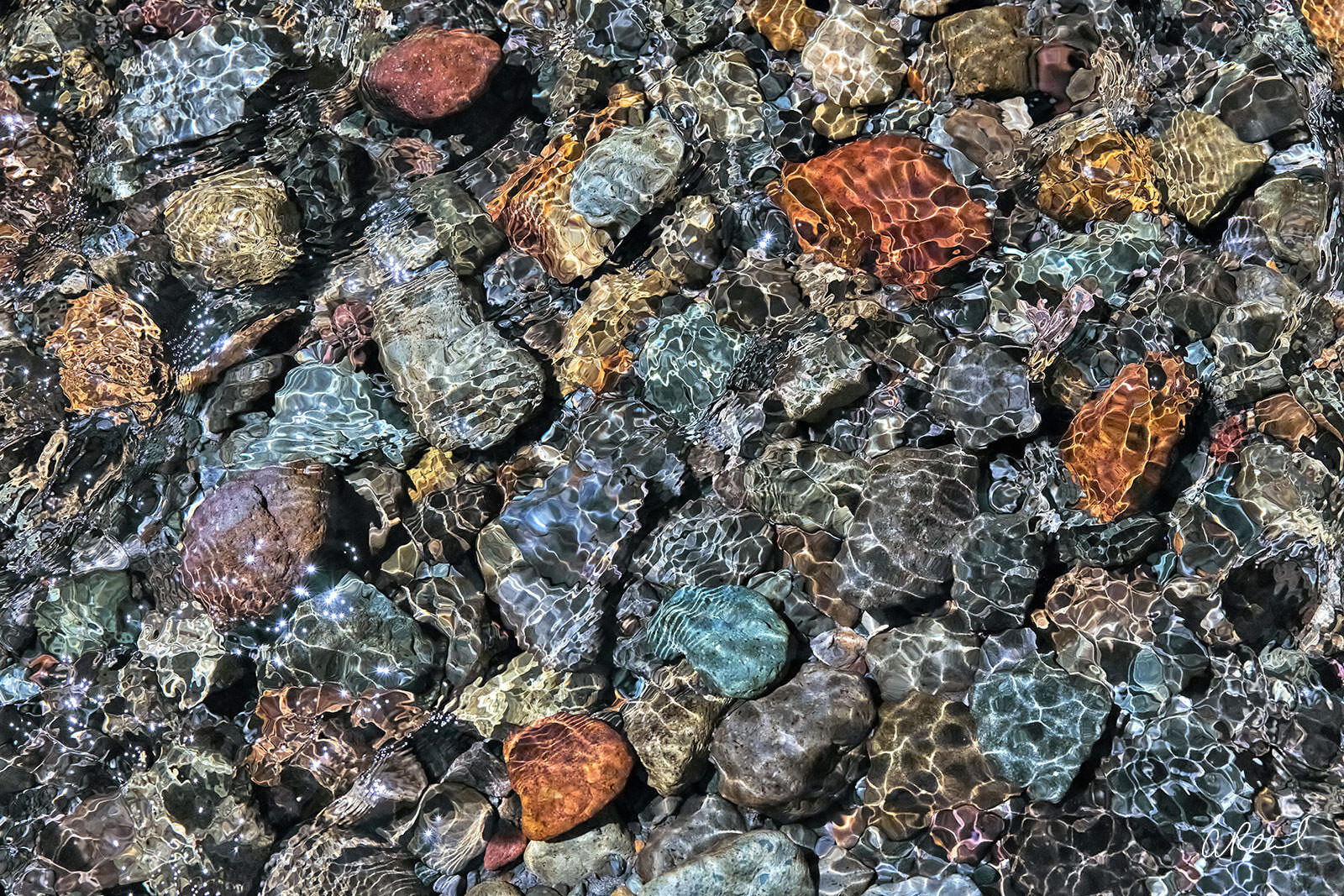
As a nature and landscape photographer, I truly believe that you can find beauty everywhere you look in the natural world, from the grandest vista to pebbles in a stream. That being said, there are some places that just ooze wonder and Mt Rainier National Park is at the top of this list. It truly is a photographers paradise. I am blessed that the park is just over two hours from my doorstep and while I have visited many times with my camera, the past year hunkered down in our homes has made me realize I haven’t visited nearly enough. This year, with hopes of life returning to some sort of normalcy, I hope to return to the slopes and alpine meadows of the park many times, with my family and with my camera. I took my daughter on her first long hike there when she was three and a half and now it’s her brothers turn. 🙂 I hope you find your way to the park one day to see it with your own eyes as well!
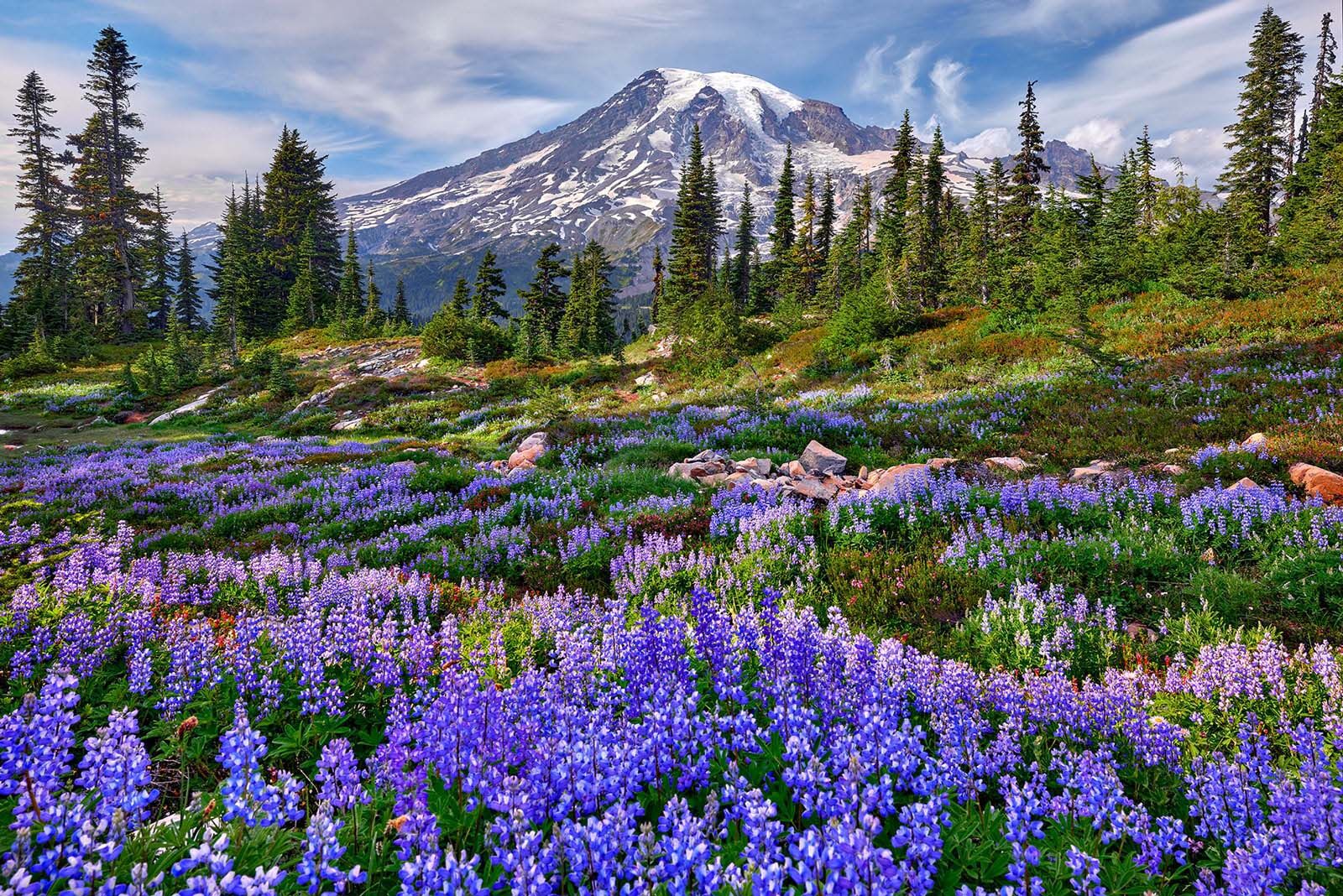
Elevate your home with Aaron Reed’s limited edition photography print, Wonderland, from his Newest Work Photography collection. Order yours today! Fine Art Limited Edition of 100.
The History of the Park
Mt Rainier’s unique glacial landscape generated interest in preservation as early as 1893. Due to the nature of the landscape, the land couldn’t be used for other purposes like agriculture or mining and there was a need for tourism near Seattle and Tacoma. People from a wide variety of backgrounds united over these issues and, ultimately, passed a bill to make Mt Rainier a national park in 1899. At that time, Mt Rainier became the nation’s fifth national park.
Since then, visitation has continued to steadily grow. It saw steep inclines over the course of its first few years. In 1906, roughly 2,000 visitors made their way to the park. Less than a decade later, that number would grow to nearly 35,000. Over the years, park administrators have had to constantly strive to keep up with demand for more roads, lodging, and other amenities. And, as you can imagine, the glacial landscape means it isn’t the easiest accomplishment in the world to just build more roads!
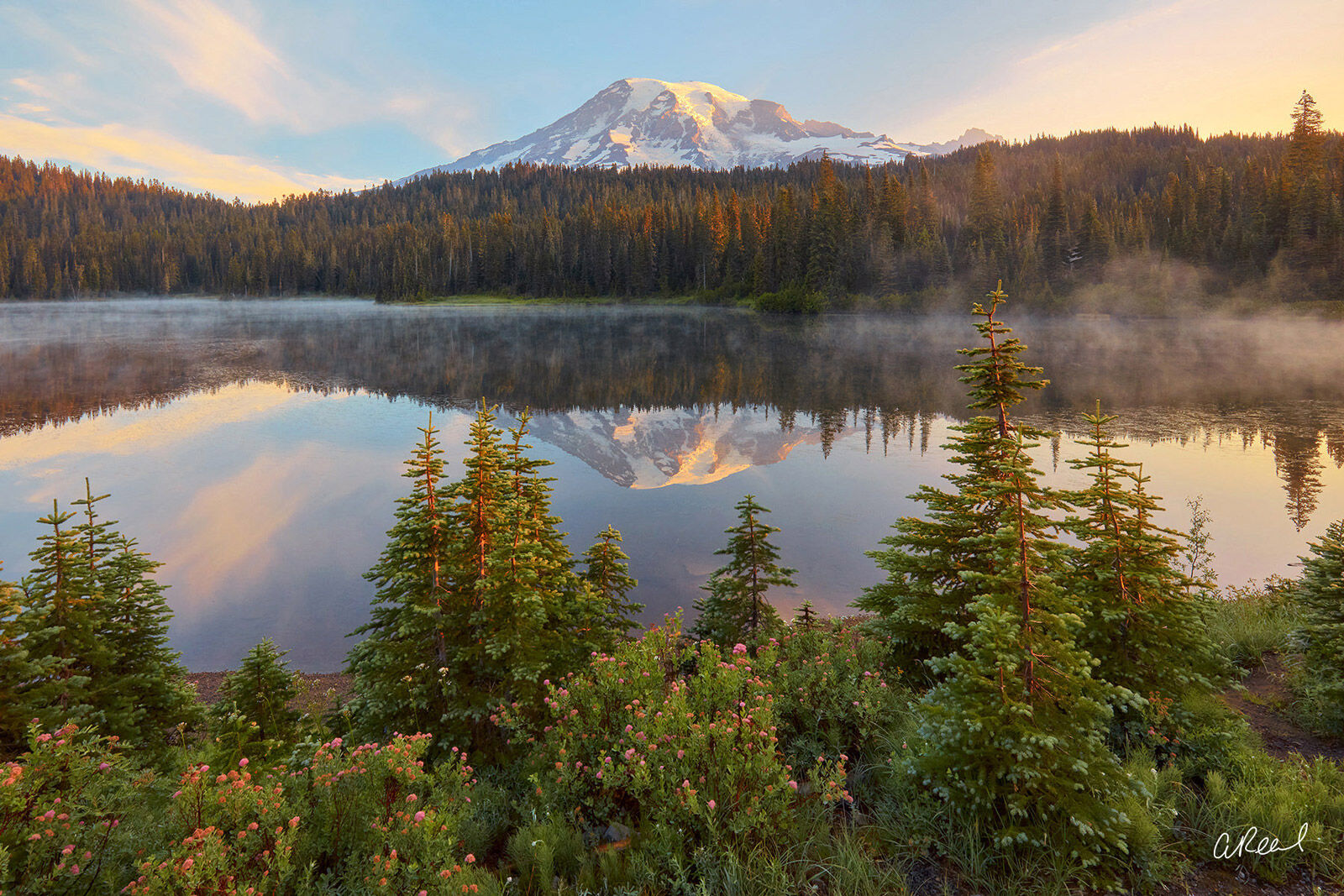
Elevate your home with Aaron Reed’s limited edition photography print, Shirley Temple, from his Newest Work Photography collection. Order yours today! Fine Art Limited Edition of 50.
Mt Rainier would eventually figure out its road troubles and become the first national park to allow cars! While this might not have been the best news for the environment, it was great news for those looking for an easier way to access and experience the park.
Whatever infrastructure was eventually put in place is working; from the early 1900s all the way to today, growth within the park has continued to blossom and visitor numbers climb each year. In 2016, over 1.8 million people visited the park.
Despite its challenges, nothing has ever stopped administrators or visitors alike from being truly passionate about Mt Rainier National Park.
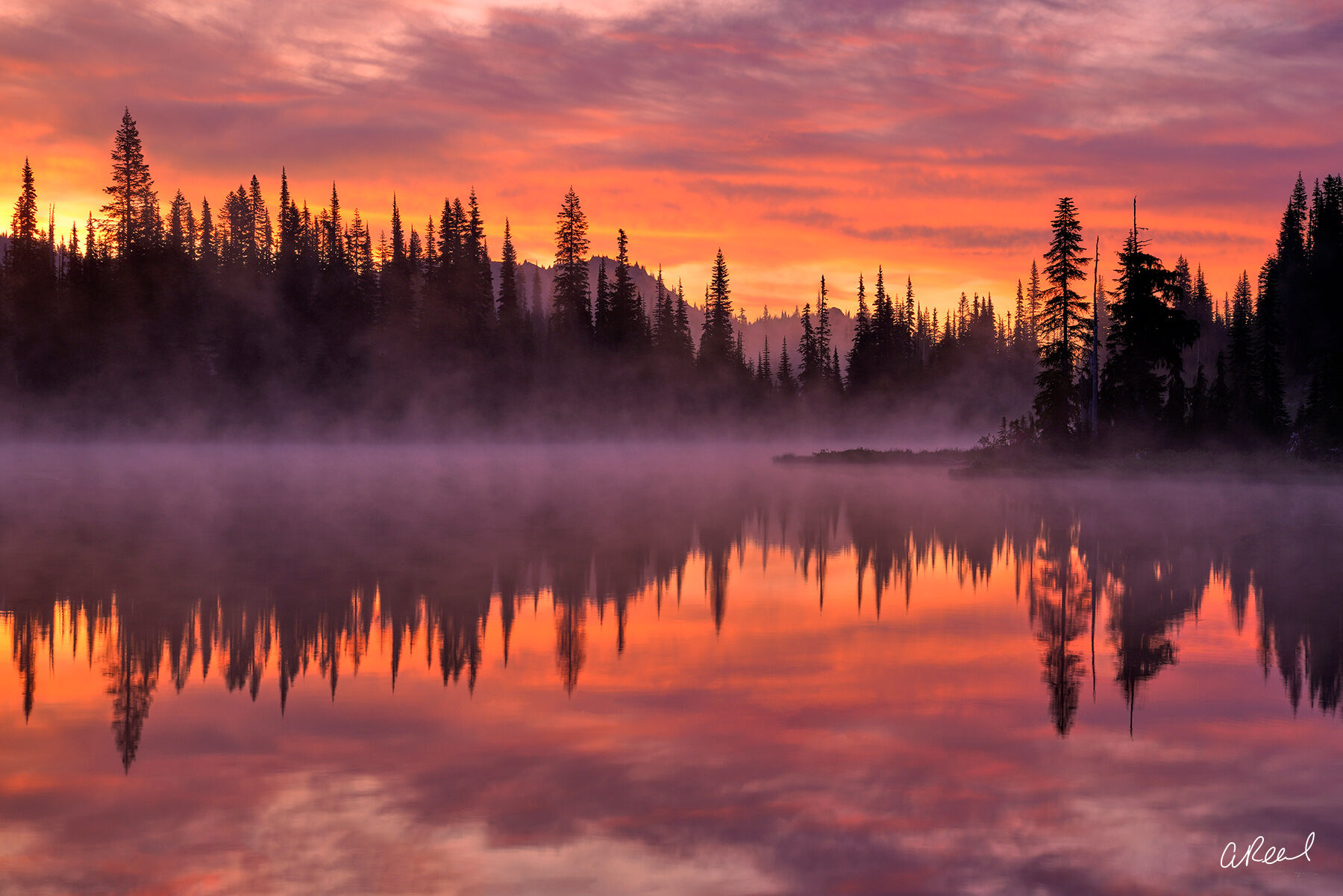
Elevate your home with Aaron Reed’s limited edition photography print, Morning Fire, from his Newest Work Photography collection. Order yours today! Fine Art Limited Edition of 50.
The Priority of Preservation
In 1988, The Washington Wilderness Act of 1988 designated 98% of the park as wilderness. This not only gave the land greater protection against development, but shifted the focus of the park to emphasize and protect its most precious resource: nature.
Long ago, the park said goodbye to health spas and golf courses and instead ushered in an age of preservation and outdoor recreation.
The evolution of the park is part of what makes exploring it so magical. When you visit, you likely get on a plane or get in your car, take a shuttle from the airport, stay in a nice hotel, and enjoy any number of other modern conveniences all to experience the natural wonders of Washington’s Mt Rainier.
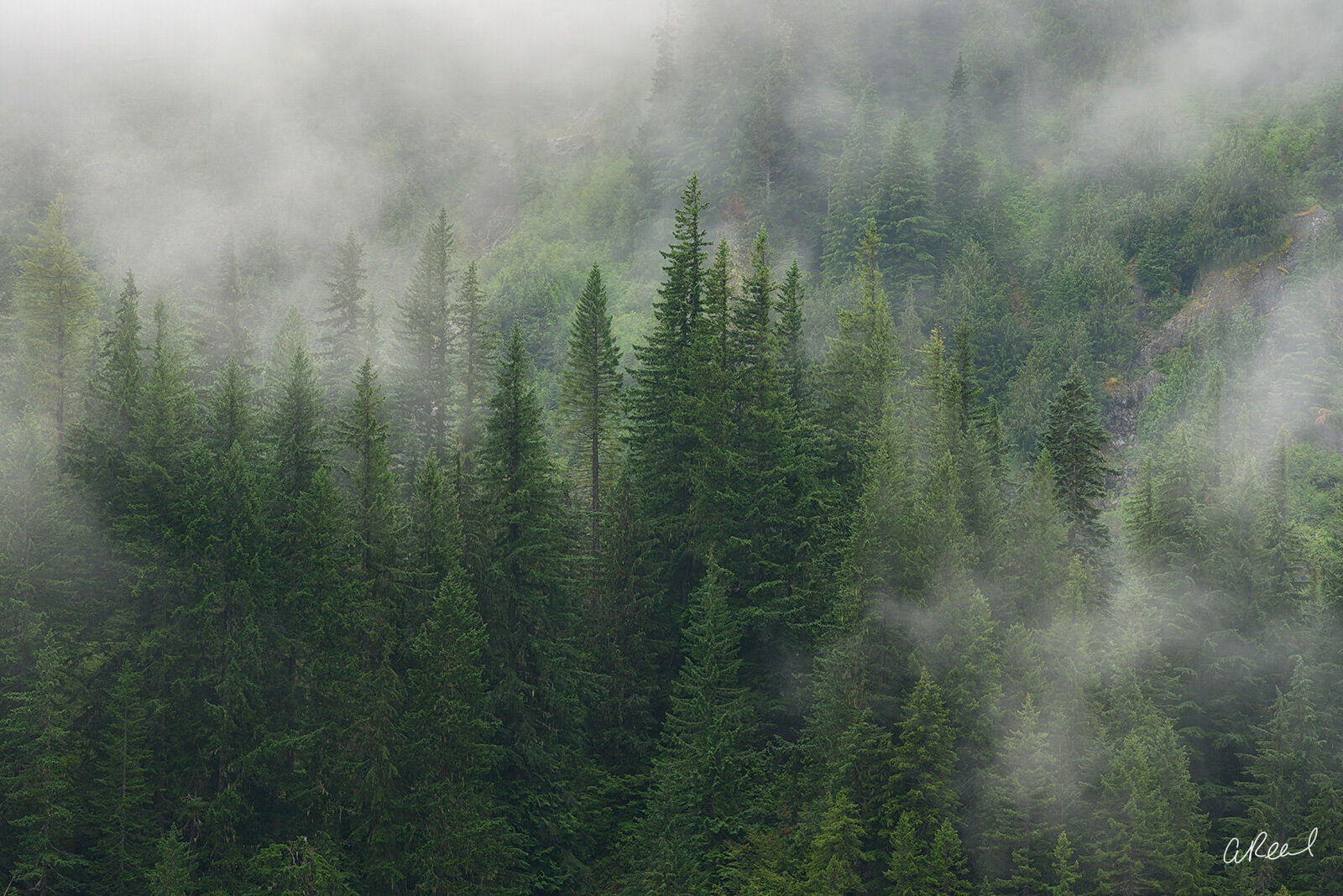
Wispy receding fog dances among the evergreens inside Mt Rainier National Park in Washington. Fine Art Limited Edition of 50.
But, for hundreds of years, visitors of all kinds truly struggled to get there — either by horse or by foot — through the Washington wilderness to experience the overwhelming beauty of such an iconic location.
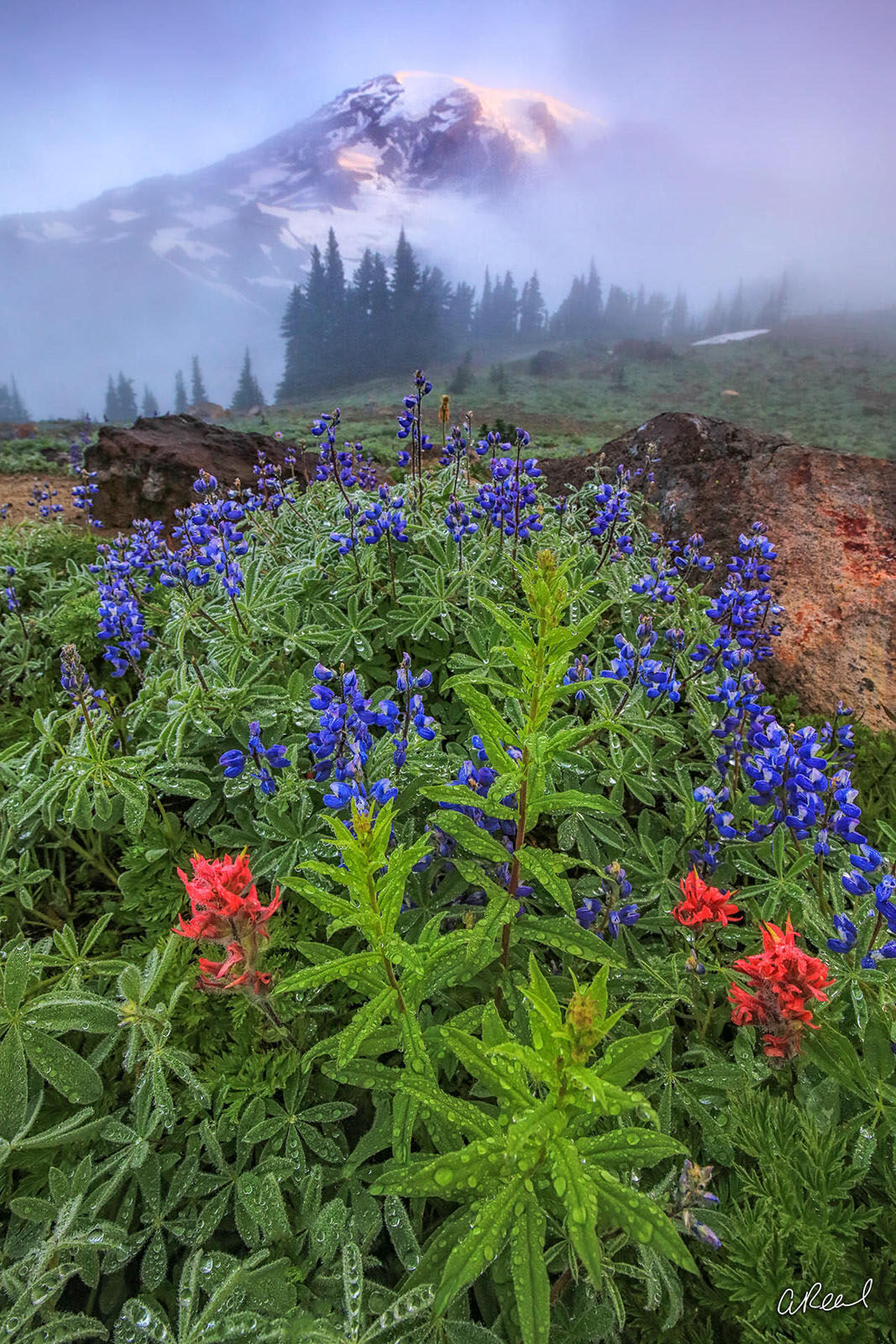
Walking among the same trees that those visitors walked among is truly something special. Forests alone are nearly 58% of the park landscape. Western hemlock, western red cedar, and Douglas-fir are just a few of the trees that tower around you. And, when you travel too high up the mountain, the forests open up to sweeping wildflower meadows. That means that no matter where you go, there’s always new wilderness and hidden treasures to discover.
In addition to Mt Rainier’s ancient forests and wildflower meadows, Mt Rainier itself is an impressive sight. No matter the season, the volcano serves as an impressive and majestic backdrop for the rest of the landscape. No matter how enthralled you are by the forests and meadows, it’s hard to take your eyes off this impressive summit.
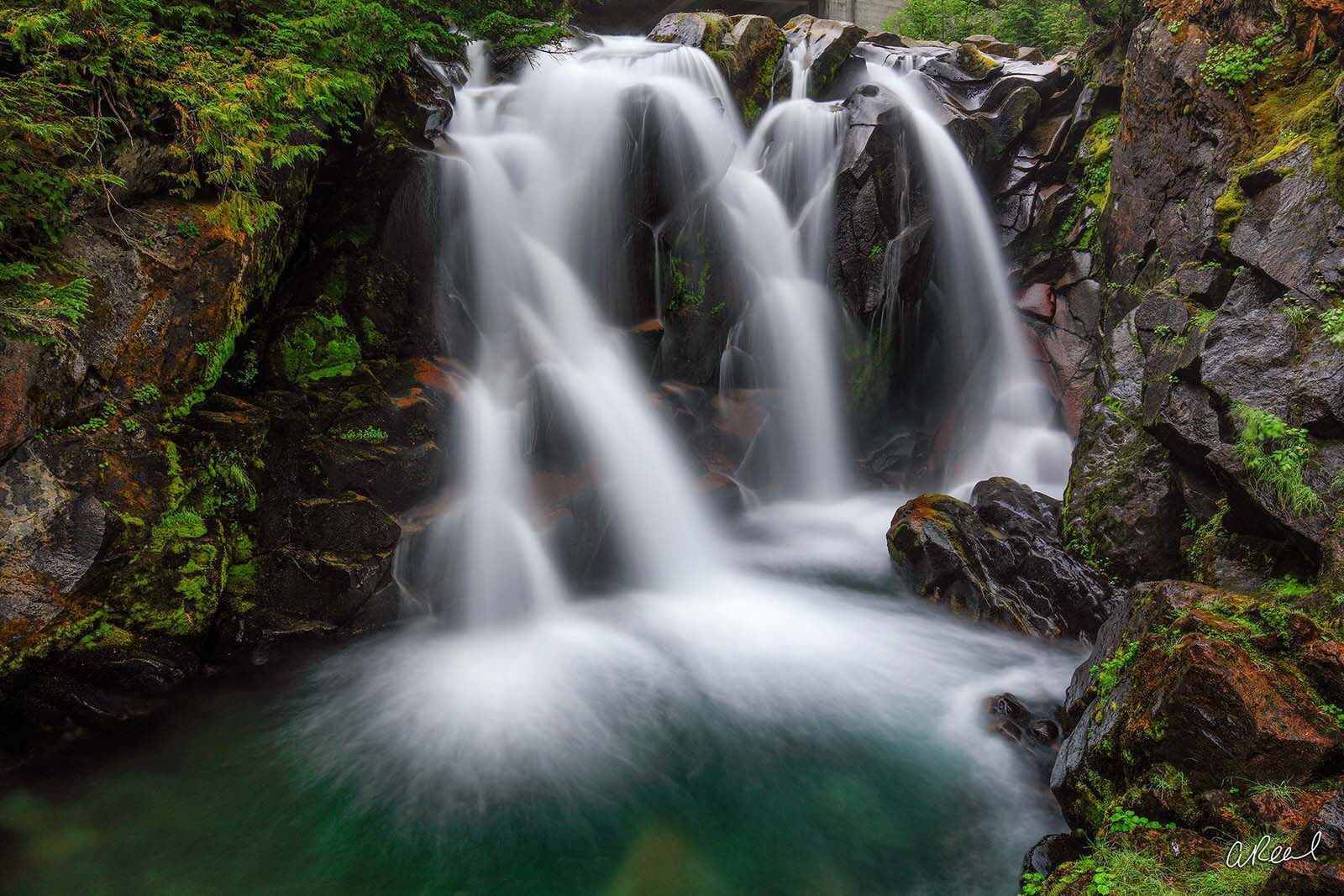
Additionally, Mt Rainier National Park is home to a variety of hidden waterfalls fed by snowmelt from the glaciers. Some waterfalls only appear during certain times of the year, while others are always present. Most of the waterfalls are best viewed in the early summer as snow truly begins to melt or in autumn during seasonal rains.
Whether you’re looking for scenic landscapes, extensive hiking, nature photography, or you simply want to find your own special spot in the park, Mt Rainier has a little bit of everything, making it one of the most unique destinations in the world.
The entire park is teeming with life, while also residing in the shadow of a looming volcano. The beauty and the contrast are what make Mt Rainier a magical destination.
Type: Mirrorless Sensor: 12.1MP full frame CMOS Lens mount: Sony E ISO range: 80-102,400 (exp 40-409,600) Viewfinder resolution: 9.44m dots Video capability: 4K 120p / 1080p 240p Weight: 1.35lbs Size: 5.07 x 3.78 x 2.74 inches Memory card type: 2x CFexpress A / SD
Sony’s Alpha 7 series cameras are split into three categories: the all-purpose A7, the resolution-focused A7R, and the video-oriented A7S. And it’s in the latest iteration of the latter, the Sony A7S III, that we find a camera that may be designed for ultimate video performance, but also offers virtually unparalleled stills performance when it comes to shooting in low light conditions.
While the A7S III was designed as a specialist video device, a byproduct of its ingenious design also makes it one of the best astrophotography cameras (opens in new tab) on the market. That’s thanks to its low-resolution, back-side illuminated, 12.1MP image sensor and outstanding 80-102,400 ISO sensitivity (which is expandable to 40-409,600).
In a world where high resolution is all we seem to hear about, you may be wondering why we’re recommending such a low-resolution camera – but that reduced pixel count is exactly why this camera is such a sniper in low light. With just 12.1 million pixels on a full-frame sensor, each individual photosite is much larger and able to capture a greater amount of light – and because the camera only has to process half as many pixels as most rivals, it generates minimal heat (and, therefore, noise).
So whether your reason for shooting is getting the cleanest 4K video imaginable or achieving the best low light, astrophotography and night capture possible, the A7S III offers a truly inspired solution and rather remarkable results.
Sony A7S III sample image (Image credit: James Artaius)
Sony A7S III: Design
Bigger, better buttons
Phenomenal viewfinder
Fully articulating screen
If you’ve ever handled a Sony A7 camera then you know exactly what you’re getting here. A compact, lightweight body with all the buttons and dials exactly where you’d expect them. Within that, though, there are some very welcome updates, such as a beefier grip and buttons (including the larger REC button), though there are also video-first rearrangements such as the REC, Movie and S&Q buttons being given top-plate priority. This makes sense given the video-first nature of the A7S III, though stills shooters will have to get used to the re-jigging.
The top plate is also where we see one of the most important upgrades, as the newly chunkier electronic viewfinder section accommodates one of the best digital finders we’ve ever seen. It boasts a phenomenal 9.44 million-dot OLED monitor that offers resolution arguably better than the human eye is capable of reading. The result is that every detail of your scene is crystal clear – and in particular, the night sky is rendered with the kind of clarity that astrophotographers have always dreamed of.
While the resolution of the rear touchscreen is comparatively paltry, at just 1.44 million dots, the fact that it is a fully articulating affair is again incredibly welcome. It’s obviously a must for the videographers that the A7S III is aimed at, but it also offers ultimate versatility for stills shooters, especially when the camera is mounted on a tripod.
(Image credit: James Artaius)
Sony A7S III: Functionality
Dual native ISO
4K internal at 10-bit 4:2:2
Hybrid CFexpress A / SD cards
When it comes to low light / cleanest output performance, the Sony A7S III has three tricks up its sleeve. The first two are the 12.1MP sensor and enormous ISO range, which we’ve discussed. However, the third is equally important: dual native ISO. This means that the camera has two base (in other words, optimum) ISO settings, one at ISO640 and the other at ISO16000.
When you increase the ISO, more current is run through the circuitry – which introduces noise, and also generates heat (which compounds the noise). By having dual native ISO settings, the camera produces low-noise, low-voltage capture at a medium (640) and high (16000) sensitivities. So, rather than bumping your ISO and introducing noise, you can shoot at either of these settings for imaging that’s clean as a whistle.
Looking to the video specs, which are the intended selling point of this camera, the A7S III offers a treasure trove of 10-bit 4:2:2 codecs that can be used to record unlimited, uncropped 4K video internally at up to 60p, or at 120p with a minimal 1.1x crop, all while retaining full autofocus performance. And if you want to record to an external monitor (over the full-size HDMI out), you can push that to 12-bit ProRes RAW. You can even capture 240fps in 1080p, though this S&Q mode is video-only.
We’re also supremely grateful to Sony for introducing a hybrid memory card system. The twin slots support the standard SD format, but also accommodate the new CFexpress Type A cards (which, it should be noted, are different to the CFexpress Type B cards supported by Canon, Nikon and co). This means you can upgrade to the newer format as and when you’re ready, while still using your existing SD cards to get shooting right away.
Sony A7S III sample image (Image credit: James Artaius)
Sony A7S III: Performance
Great autofocus
Minimal rolling shutter
Beware “star eating”
The Sony A7S III delivers the kind of low- and zero-light performance that we’ve only dreamed of in the past. Shooting with all the aforementioned technology means that you walk away with images possessing maximum brightness and minimum noise, with a claimed 15 stops of dynamic range (and from our tests, we’ve no reason to doubt that) whether you’re capturing stills or video.
As a video device it boasts fantastic autofocus performance, with a fantastic hybrid AF system, along with minimal rolling shutter (the Jell-O-like warping of vertical objects, when you pan side to side) and capable image stabilization (though Sony still lags behind the stabilization of all its rivals).
The only thing to be wary of is the Achilles heel of many Sony A7 bodies, the “star eater” phenomenon. This is where the camera’s overenthusiastic noise reduction system ‘eats’ stars that it misidentifies as noise or hot pixels. This tends to rear its head when shooting with particularly sharp wide-angle lenses, and / or at extreme ISOs, so be mindful if you start to see stars disappearing!
Sony A7S III sample image (Image credit: James Artaius)
Should you buy Sony A7S III?
If you’re a video-first shooter, then you shouldn’t even think twice about picking up the Sony A7S III. There’s a reason that it’s the camera of choice for the majority of professional YouTubers and content creators. However, this is far more than a video-centric device.
For the cleanest possible low-light performance, particularly when it comes to night and astrophotography, the A7S III is exceptionally compelling. The only strike against it is that you may find yourself limited by the 12.1MP resolution. This is more than fine for video, online and even for small prints, but if you want to produce large prints of your work then you may want to consider the merits of a higher resolution camera – even though it won’t be able to match the Sony’s unique combination of back-side illuminated sensor with dual native ISO.
Sony A7S III sample image (Image credit: James Artaius)
If this product isn’t for you
For astrophotographers familiar with conventional cameras, the obvious alternative is the Canon EOS Ra – a dedicated astro camera, with a full frame sensor boasting more than twice as many megapixels, a modified IR filter array (for superior star-shooting capabilities) and an extremely useful 30x magnification (compared to the Sony’s meager 4x).
If you’re savvy enough to try a dedicated CCD camera, then the ZWO ASI183MC (Color) (opens in new tab) packs a Sony-made sensor and a dedicated cooling system to reduce noise, while still delivering 12 stops of dynamic range and impressive spectral response.
Finally, don’t overlook a camera that can fit into your pocket: a high end smartphone. Our pick is the Samsung Galaxy S22 Ultra (opens in new tab), which offers fantastic bang-for-buck imaging – especially for shooting the stars, with an f/1.8 primary camera and an f/2.2 ultra-wide, and Pro mode enabling you to shoot up to 30-second exposures and adjust the ISO to 3200.
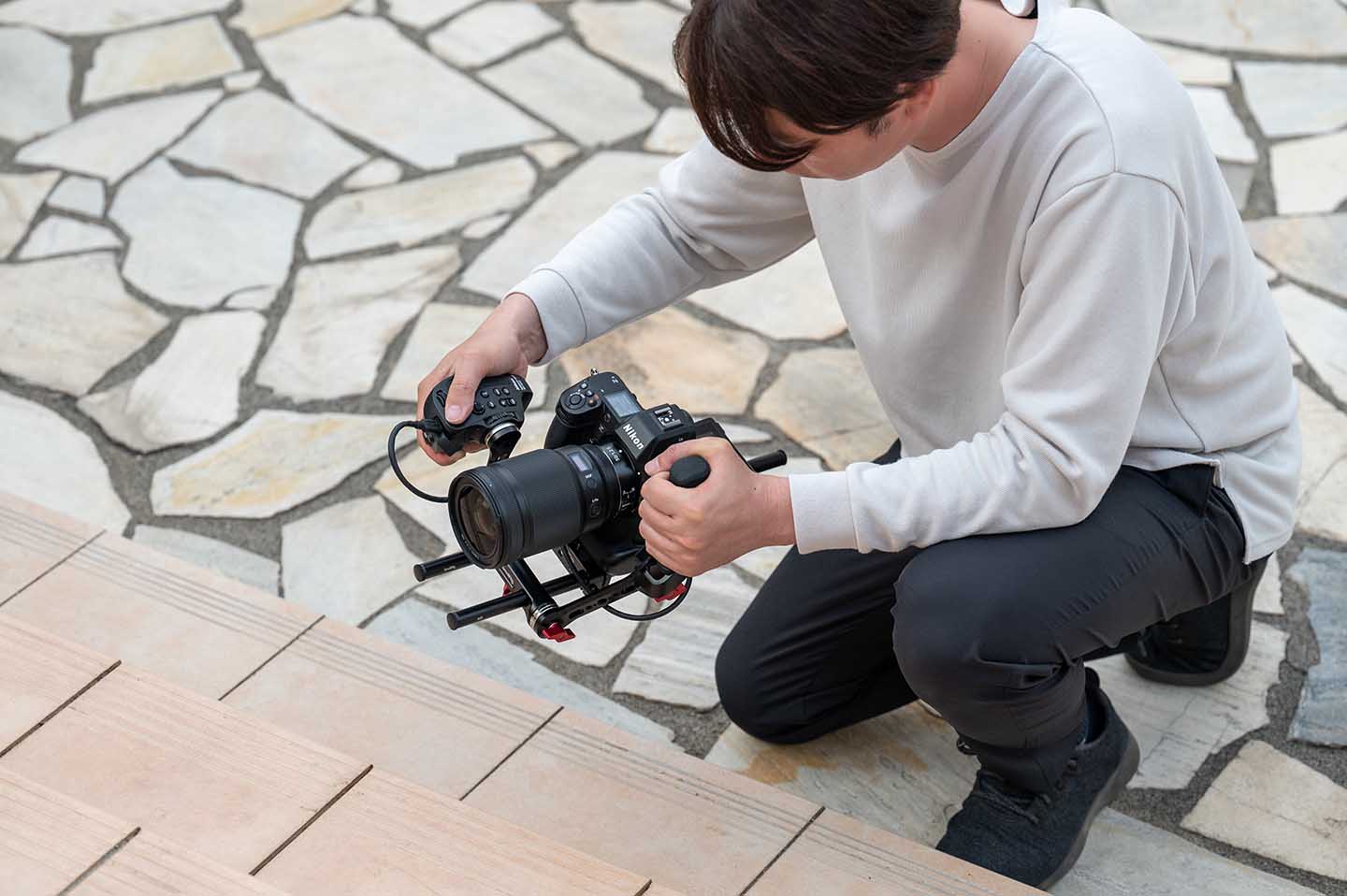
Nikon has announced the Remote Grip MC-N10, price tag £439 / €519, a new lightweight grip aimed at videographers and filmmakers.
The grip weighs just 310g (including two AA batteries inside) and can deliver 12 hours of operation on those two batteries.
The grip connects to your Nikon camera via USB-C and allows access to all of the main video settings via comparable buttons on the body of the MC-N10 grip. These include all the functions normally controlled by your camera’s direct controls, as well as settings assigned to its dials and Fn buttons.
What’s more, an ARRI standard rosette fitting allows you to make quick adjustments to position.
The Remote Grip MC-N10 is compatible with the Nikon Z9, Nikon Z7 II and Nikon 6 II. Z9 users will need to install new firmware to use the grip.
The winning photo of Scenic Utah’s “Off the Beaten Path” category features Ostler Lake in the Uinta Mountains. (Spencer Sullivan)
Estimated read time: 3-4 minutes
SALT LAKE CITY — The Beehive State has long been lauded as a top destination for its outdoor opportunities and surreal natural beauty.
Earlier this month, seven photographs that encapsulate Utah’s best features rose above a field of more than 700 to win the first annual Scenic Utah Photo Contest.
Scenic Utah, a statewide nonprofit advocating for the protection of the state’s scenic resources, launched the contest to celebrate Utah’s “natural beauty, its historic rural character and our unparalleled – and increasingly threatened – scenic vistas and skylines,” a release from the organization said.
The photo contest featured 734 submissions, all gunning for a top spot in one of the seven available photo categories:
Off the Beaten Path
Scenic Night Skies
My Rural Roots
Town, City and State Parks
Visual Pollution We Wish Would Go Away
Community Character
Audience Favorite
“These winning images highlight Utah’s extraordinary scenic resources and the importance of protecting them,” said Ralph Becker, former Salt Lake City mayor and chairman of the board at Scenic Utah.
Below are the winners from each category of the contest.
Off the Beaten Path
This category features pictures from “remote or hard-to-reach places in our beautiful state,” according to Scenic Utah’s website.
“We know and love Delicate Arch, but we’re looking for the lesser known.”
The winning photo of the “Off the Beaten Path” category features Ostler Lake in the Uinta Mountains. (Photo: Spencer Sullivan)
This picture — titled “Ostler Lake” by Spencer Sullivan — is certainly off the beaten path, as Ostler Lake is only accessible by backpacking into the Uintas.
Scenic Night Skies
Scenic Night Skies is the category for “astrophotography of all types,” according to Scenic Utah, which continued, “Long exposures or quick shots of the stars with captivating silhouettes — and everything in between.”
This photo, titled “Magic Bus,” certainly fits the prompt, featuring a breathtaking view of a clear night sky. (Photo: Dave Koch)
One could say that the stars aligned for “Magic Bus,” Dave Koch’s incredible shot of a starry night that many Utahns have come to admire.
My Rural Roots
While Silicon Slopes and the Salt Lake Valley explode, Utahns can still take solace in the more rural, wild parts of the state.
This barn in Newton, Cache County, certainly captures the rural spirit of the state. (Photo: Hans Christian Ettengruber)
Hans Christian Ettengruber perfectly captured the essence of the rural category in “Barn with Yellow Flowers,” which could make the most seasoned city-dweller daydream about spending a day in the yellow meadows surrounding the barn.
Town, City and State Parks
This category takes us all the way down to Sand Hollow State Park in Washington County, just north of the Arizona border.
This image shows a beautiful rainbow over Sand Hollow Reservoir in Washington County. (Photo: Nathan Hanson)
Nathan Hansons’s shot, “Rainbow in Sand Hollow,” also paints a picture of how quickly the weather can change in the desert.
Visual Pollution We Wish Would Go Away
With the rapidly growing nature of the state, this category pays homage to the visual impediments that Utahns are seeing more of these days.
This image shows power lines in the foreground, obscuring the view of mountains in the background. (Photo: Steve Wise)
“High Power Interference,” by Steve Wise, perfectly depicts the juxtaposition of Utah’s development industry and scenic beauty.
Community Character
From Cache Valley to the red desert of southern Utah, the Beehive State is full of communities overflowing with character.
This image of a sign that says “Westside” won the Community Character category of the photo contest. (Photo: Kirk Anderson)
Kirk Anderson’s “Westside Sign” looks like something out of an old western movie and creatively showcases the character found throughout Utah.
Audience Favorite
Of course, the people of Utah should also have a say in what they deem their favorite photograph.
When it came down to it, Utahns decided on Shauna Hart’s “The Boys are Back.”
“The Boys are Back” shows bison roaming the grounds of Antelope Island. (Photo: Shauna Hart)
The dramatic image showcases the wild nature of the state that is admired by so many.
×
Photos
Related stories
Most recent State of Utah stories
Logan Stefanich is a reporter with KSL.com, covering southern Utah communities, education, business and military news.
We may earn revenue from the products available on this page and participate in affiliate programs. Learn more ›
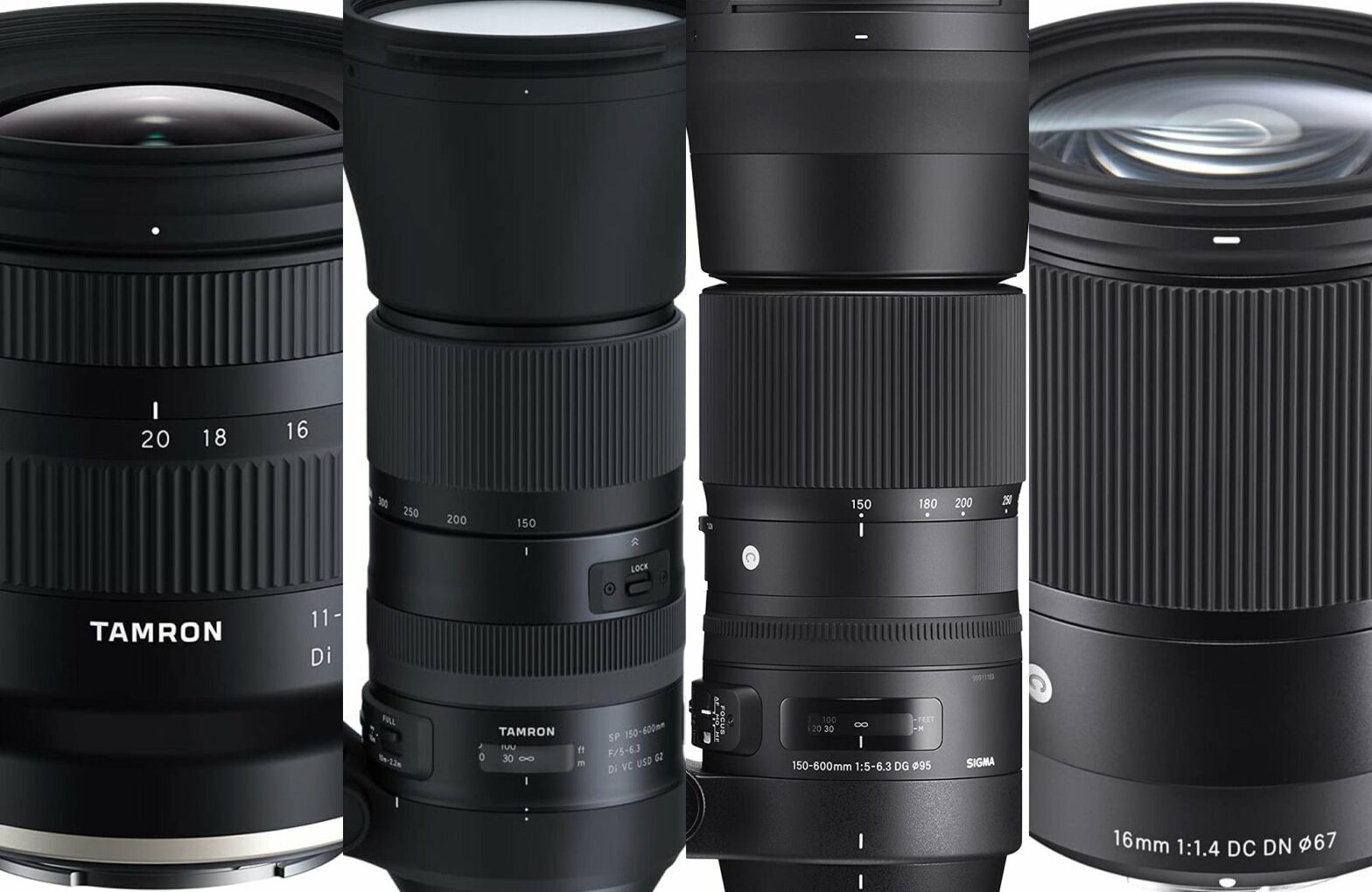
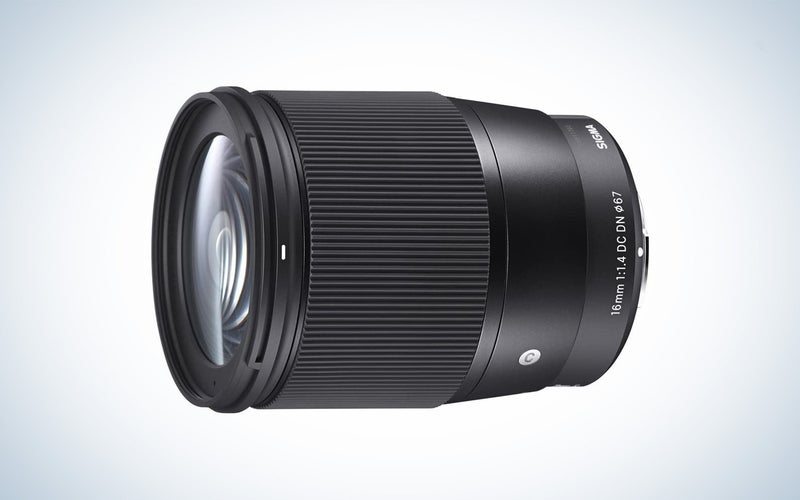
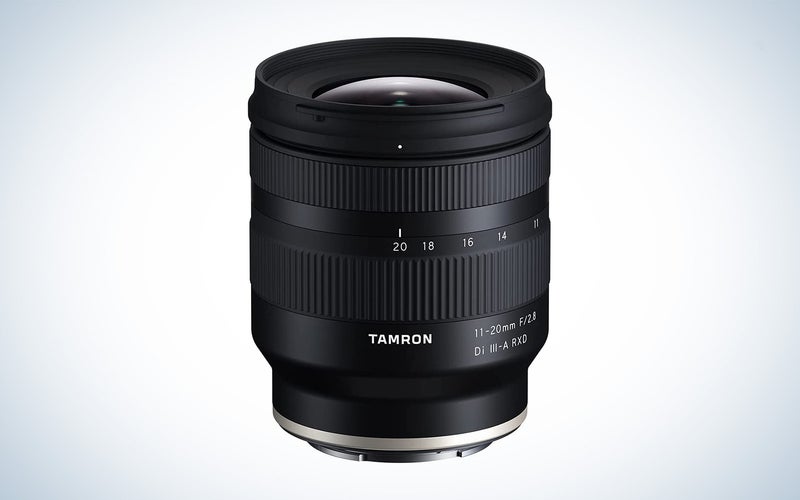
Sigma and Tamron lenses already offer lower-cost yet quality alternatives to Canon, Sony, and Nikon lenses. And right now, they are even more affordable during an early Black Friday sale on Amazon. If you’ve been considering getting a new lens to fill out your arsenal of gear or are a generous soul and want an exciting gift for a photographer, it’s a great time to do so.
A good wide-angle lens is something every photographer should have available. Designed for Sony APS-C photographers, this lens offers a 35mm equivalent focal length of 24mm. It provides an extremely fast f/1.4 maximum aperture for strong low-light performance, making it a great tool for capturing wedding receptions or night skies. The wide aperture also helps to create separation between your subject and the background and even results in some attractive bokeh. It’s one of the best APS-C wide-angle lenses you can get for your Sony camera, and this price makes it even more enticing.
Sony APS-C users sure have a good selection of affordable wide-angle lenses to choose from during this early Black Friday sale. This Tamron lens offers a 16-30mm equivalent focal length, which is an ideal range for real estate, landscape, astrophotography, and even event coverage. It offers a lot of sharpness and quality in a very compact body, so it won’t feel out of place on the smaller APS-C cameras. And it’s moisture-resistant, giving you peace of mind if you get caught in bad weather.
Additional Tamron lens deals:
Tamron SP 150-600mvm F/5-6.3 Di VC USD G2 for Nikon Digital SLR Cameras $1,199.00 (was $1,399.00)
Tamron 17-28mm f/2.8 Di III RXD for Sony Mirrorless Full Frame/APS-C E Mount $799.00 (was $899.00)
Tamron 150-500mm f/5-6.7 Di III VC VXD Lens for Full Frame Sony $1,299.00 (was $1,399.00)
Tamron SP 70-200mm F/2.8 Di VC G2 for Canon EF DSLR $1,199.00 (was $1,299.00)
Tamron 70-180mm F/2.8 Di III VXD for Sony Full Frame/APS-C E-Mount $1,099.00 (was $1,199.00)
Tamron SP 150-600mm F/5-6.3 Di VC USD G2 for Canon Digital SLR Cameras $1,199.00 (was $1,399.00)
Tamron 17-70mm f/2.8 Di III-A VC RXD Lens for Sony E APS-C $749.00 (was $799.00)
Tamron 18-400mm F/3.5-6.3 DI-II VC HLD All-In-One Zoom For Nikon APS-Cv Digital SLR Cameras $599.00 (was $649.00)
It was the summer of 2012, and Justin’s voice teacher in Charleston encouraged him to attend a summer program at The Performing Arts Institute… in Pennsylvania. Kelly, living in Pennsylvania, applied for a scholarship to that same summer program… and won.
And so, they met in Pennsylvania while auditioning for West Side Story. That’s where it all began… Justin as Tony and Kelly as Maria. 🙂 Through rehearsal upon rehearsal, they built a friendship that grew stronger as they found more and more commonality between them.
Fast forward to October 6th, 2019. The happiest day fulllll of celebration and joy and a *little* bit of rain but WHO NEEDS SUNSHINE when you’ve got radiance like theirs?!?!! Justin & Kelly are truly the type to dance in the rain together and find the beauty in any situation… and if you ask me, that’s one of the best ingredients a marriage can have. <3
Thank you Justin & Kelly for having me as your wedding photographer, for having the sun-shiniest, brightest smiles (what rain?!?!!!), and for making my job sooo fun!! I loved celebrating along with your incredible families and feel like the luckiest to have been the one to capture your day.
Enjoy a few of my favorites from this beautiful Farm at Eagles Ridge wedding full of so much love and be sure to read more of Justin & Kelly’s love story here! Xo
Vendor Credits: Photographer | Caroline Logan Photography Second Shooter | Vanessa Shenk Planner | Diana of Planned Perfection Venue | The Farm at Eagles Ridge Florals | Divine Florals DJ | 3 West Productions Rentals | Treasured Events Draping & Lighting | Shumaker PDT Makeup Artist | MKUP The Beauty Studio Wedding Gown | Pronovias // Elizabeth Johns Jewelry | Olive and Piper Bridesmaids Dresses | Jenny Yoo // Bella Bridesmaids Groom & Groomsmen Attire | Central PA Tuxedo Catering | Rettew’s Catering Cake | Lancaster Cupcake Ice Cream | Penny’s Ice Cream Invitations | Nancy Lavan
For Photographers: Love creamy skintones & soft colors? Learn to edit light & airy here!
Vermont Business Magazine This month, the Gifford Galley welcomes the work of Braintree resident, Lisa Allard. Photography has been a passionate hobby of Allard’s ever since she was a young girl growing up next to her grandparent’s farm in Coos County, NH.
Although she has participated in photography workshops, Allard is mostly self-taught and is continually improving her craft while respecting wildlife and nature. The majority of Allard’s wildlife photos are taken from her kayak.
“I’ve become very good at keeping a low profile and sneaking around to capture the best light and angles,” Allard said.
Allard chose the name, “Love Life Photography” to serve as a reminder that focusing on the beauty in life is to love life. All of Allard’s exhibited art is for sale.
Gifford is a community hospital in Randolph, Vt., with family health centers in Berlin, Bethel, Chelsea, Randolph, Rochester, and specialty services throughout central Vermont. A Federally Qualified Health Center and a Top 100 Critical Access Hospital in the country, Gifford is a full-service hospital with a 24-hour emergency department and inpatient unit; many surgical services; an adult day program; 49-unit independent living facility, and nursing home. Its mission is to improve individuals’ and community health by providing and assuring access to affordable, high-quality health care in Gifford’s service area.
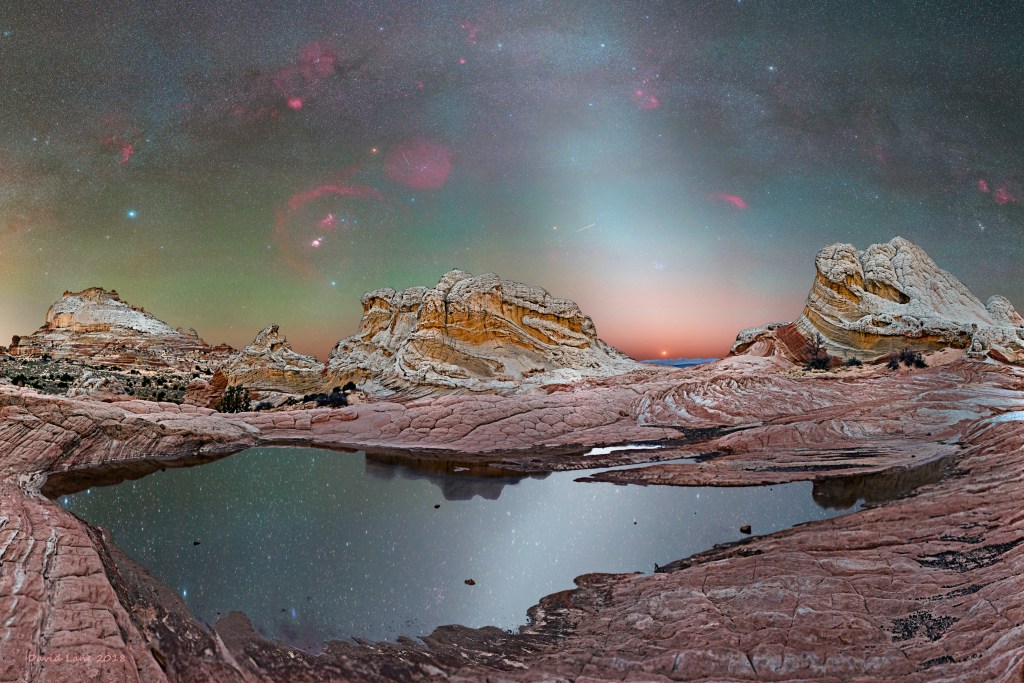
On a pleasant evening at White Pocket Arizona during the new moon in April 2018, the zodiacal light reappeared over the desert southwest. Venus, which had been burning brightly in the sky after sunset dropped to just over the horizon after astronomical dark. The strong wind of the previous day had died down to an occasional cool breeze. Some dust still lingered in the atmosphere as evidenced by the ruddy horizon, but the Zodiacal Light showed forth with great effect.
It was surprisingly pleasant for April in the Southwest. Temperatures drifted in the low 50s and there was just a bit of occasional wind. Oddly frogs chorused from an area below me and center-left in the image. It was had to imagine as the temperature continued to drop that a multitude frogs were singing a loud and one assumes bawdy barupppp over and over.
By the time the shot was over (30-40 minutes), the temperature had dropped enough that I pulled my coat tight around me and zipped it up over my face. Holding still in the low 40s was getting nippy. The frog band stilled as well and I was left with just a great night sky to contemplate and watch as Orion slipped below the horizon. I sighed, gathered up my gear and headed to back to Jimmy.
Despite having been hurried to get this enormous shot finished before Venus slipped from view, I managed to capture what even in the camera was an impressive image. This image is an astounding 80 images stitched together. 40 images of the sky with tracking and 40 images of the ground.
Shot at 85mm, f1.3, ISO 8000 and various exposures. 3rd pano of water in star focus.
Michael has been involved in the 360º world for over twelve years and counting.
She is a 360º professional who creates amazing VR videos and experiences. She has also supported the 360º community by working as the Vice President of the IVRPA (International Virtual Reality Professional Association) from 2017 to 2019.
She has contributed to over 100 cinematic VR projects, interactive XR, and worked as a 360 panoramic imaging technical expert. She also gives lectures and masterclasses for VR international conferences and events in several languages.
We don’t need to tell you that it’s worthwhile to enjoy her work by visiting Michael’s profile page. Don’t forget to watch in VR.