Marsel van Oosten: why scale is important

[ad_1]

June 29, 2022

In his latest column for AP, top nature photographer Marsel van Oosten explains the importance of scale in pictures


When I was in art school, back in the late ’80s, I came into contact with the work of Caspar David Friedrich. He was a 19th-century German Romantic landscape painter who was known for placing contemplative figures silhouetted against night skies, morning mists, barren trees or gothic ruins. His primary interest was the contemplation of nature.

This approach made such an impression on me that I started to introduce human elements into my landscape photography. At the time, very few landscape photographers did this, but it turns out that I was ahead of my time – scroll through Instagram and you’ll see that this has become the norm. Including a human or a wildlife element gives scale to the landscape.

The Grand Tsingys of Bemaraha National Park, Madagascar. Nikon Z 7, AF-S 14-24mm f/2.8, 1sec at f/11, ISO 100, FTZ mount adapter sense of scale with person against big rocks

The Grand Tsingys of Bemaraha National Park, Madagascar. Nikon Z 7, AF-S 14-24mm f/2.8, 1sec at f/11, ISO 100, FTZ mount adapter

Photographers often forget that viewers may not always know the location they have photographed, and may be unfamiliar with the scale of the rocks, trees or mountains.

I first became aware of this when I visited Arches National Park in Utah, USA. I love rock arches, so the park had been on my list for a long time and I had done extensive research. Near the top of my list was Turret Arch framed by North Window. I had seen a couple of photographs of this scene and decided I was going to try it differently and shoot it in winter, with snow.

In winter the park is more quiet and the light is much better. When I finally stood in front of North Window, I was blown away – what I thought was a small opening in a rock wall turned out to be massive. The reason for my misconception was that none of the images I had seen included a reference for scale. Seeing how big the window actually was in real life, I knew I had to include a human element to give a sense of scale.

Marsel van Oosten at work in the Tsingys of Madagascar

Marsel van Oosten at work in the Tsingys of Madagascar

Doing this instantly made the image much more impressive, and more original. Not only that, it made it easier for the viewer to connect to the image, and it added a sense of adventure – all improvements on what I had seen before.

A few years ago, I was contacted by Nikon to take some prototypes of the Z 7 to a destination of my choice in order to discover and show how sharp their new mirrorless camera system was. I decided to test the camera in the sharpest landscape I knew… the Tsingy de Bemaraha National Park in Madagascar. Tsingy is Malagasy for ‘where one cannot walk barefoot’ – that’s how sharp these unique forests of razor-sharp limestone pinnacles are.

Turret Arch framed by North Window, Arches National Park, Utah, USA. Nikon D3S, AF-S 24-70mm f/2.8, 1/320sec at f/11, ISO 200 sense of scale

Turret Arch framed by North Window, Arches National Park, Utah, USA. Nikon D3S, AF-S 24-70mm f/2.8, 1/320sec at f/11, ISO 200

I was aware that most people would not fully appreciate the size of this rugged landscape, so I decided to add a reference for scale: a climber. Not only did this result
in original images of this location but, without it, it would have been impossible to appreciate the grandeur of the landscape, and the image would have lacked the sense of adventure it has. During one of the CES trade shows in Las Vegas, Nikon used a 30ft wide enlargement of this image. Although I didn’t get to see it in person, Nikon sent me pictures that gave me a sense of how large they’d reproduced it.

As told to Steve Fairclough


Marsel van Oosten

Marsel van Oosten was born in The Netherlands and worked as an art director for 15 years. He switched careers to become a photographer and has since won Wildlife Photographer of the Year and Travel Photographer of the Year. He’s a regular contributor to National Geographic and runs nature photography tours around the world. Visit www.squiver.com

Further reading

Marsel van Oosten: how to pre-visualise a photograph

Marsel van Oosten: making the most of bad weather

Marsel van Oosten: why planning is important in photography

Follow AP on Facebook, Twitter, Instagram, and YouTube.

SubscribeSubscribe


[ad_2]

Control Your Consumption – Astroniklas

[ad_1]

When you’re planning to head out for astrophotography, one of the things in your check lists it to figure out your power consumption (or it should if you haven’t figured that out yet!). Some people rely on batteries, others again have a steady power supply from a plug in their homes/outdoor observatory sites, and finally some would rely on a power generator.

To figure out how much power your equipment consumes per hour, there’s a simply calculation method. If you know your Watt-hours and Volts (most astronomy equipment is powered by 12 Volts) to Ampere-hours you can use a simple formula to discover the amount. Supposedly your Watt-hours is 240 then we get;

\[Ah = \frac{Wh}{Volts} => \frac{240}{12} = 20Ah\]

Now, to convert how much time would that give us, create a simple list of all your equipment and how many Amperes each one of them consumes. In my case,

  • Mount (NEQ6 Pro): 4 Amp
  • Cooling Camera (ASI1600GT): 2 Amp
  • RCA Dew Heaters (1 Amp each): 2 Amp
  • Lakeside Focuser: 1 Amp
  • EAGLE Pro (Mini-PC + Power Management Unit): 1 Amp

That would give us a total of 10Ah. Supposedly I’m using a Duracell battery of 20Ah, then my power consumption would end up discharging my battery source after 2 hours (20 Ah / 10 Ah).

Instead, in my case I would then need a steady powersource for much longer than that. In average my observing sessions are no less than 3 hours (on mediocre nights) or even up to 4 or 5 hours when there are really beautiful night skies making it worthwhile to stay up longer.

A battery would be enough to just observe visually, but definetely wouldn’t take me a long way for astrophotography. And to make matters worse with batteries, they shouldn’t go below 20% of their total capacity if you want them to be long lived, or say goodbye to an expensive battery after just a few sessions!

I’ve decided that, for my own personal gain to buy a power generator that would provide me a reliable power source for many hours at end, without risking killing any expensive batteries, damage my equipment or to abandon a beautiful night sky. Additionally it gives me great independence from anything when it comes to sudden power outages, people around, or ending up running out on battery sources.

The downside is of course a solid power generator would become heavy to carry around (the one I’m looking at is 48 lbs) and the other downside is of course its loudness (~50 dB which corresponds to light rainfall) when its operating. You’ll also need a long cable to avoid having it too close to cause vibrations during your astrophotography session.

Ultimately nothing beats a steady power source offered by a wall outlet… But you can’t ask to have everything right?

[ad_2]

Photographer Cindy Sherman Joins International Center of Photography Board of Trustees

[ad_1]

The International Center of Photography (ICP) has announced the appointment of five new members to its board of trustees, including renowned photographer Cindy Sherman. Sherman will act as creative advisor for the center’s upcoming 50th anniversary in 2024.

Joining the board alongside Sherman are Uzodinma Iweala, chief executive of the Africa Center in Harlem; Toronto-based gallerist Jane Corkin; real estate developer and philanthropist Robert Fribourg, of New York; and Wall Street veteran Jonathan R. Furer.

In an email to the New York Times, Sherman said, “I sensed that the organization, in asking me to participate, wanted to branch out from its more traditional roots and be seen in a broader sense of how photography is being used today,” she said.

“Everyone with a smartphone can relate to photography,” she said, “much more so than even 25 years ago, and that is why it’s more relevant than ever and why more people should discover I.C.P.”

ICP’s new Executive Director (as of 2021) David E. Little told the NY Times, in an interview, that partnering with artists like Sherman and executives like Iweala (who is also a writer and filmmaker) would help the center extend its reach beyond documentary photography and into the fine art world. 

[ad_2]

The Benefits of Nature Photography In Your Home

[ad_1]

Benefits of Nature Photography in Your Home

Sure, a long hike or a weekend camping trip are great ways to unwind and escape reality for a little bit, but why bother with all the bugs or the blisters or the sunburn when you could bring nature to you? Imagine it — all that majesty and mystery and sunlight and water contained in your own personal portal hanging on your wall. All without ever leaving your home.

The driving rain on your windows can’t dampen the sunshine inside. Do you live in Arizona? Well, THIS is called snow. Imagine it falling gently in your living room. Whatever escape you’re looking for, you can have it — all it takes is the right hook to hang it on the wall. Of course there is no true replacement to being immersed in nature, but why limit yourself when you can have the best of both worlds?

Whether you’re looking for an excuse to bail on your next camping trip or not, displaying nature photography in your home can have a real impact on your overall health and mood. Nature photography has even been scientifically proven to have mental and physical health benefits. No more camping and an anxiety cure? Sounds like a dream come true.

A tree lined driveway of maple trees with green leaves on a foggy morning.

You can almost hear the hush of the cool morning fog enveloping this tree lined driveway near Snoqualmie, Washington. Fine Art Limited Edition of 100.

Fun Fact: Your Brain Doesn’t Know What’s Real

Apparently, your brain has the same reaction to looking at nature as it does to actually being in nature. While I feel a little guilty about playing this trick on my brain, what a cool shortcut to health and happiness, you know?

The fact of the matter is that people who live in cities and urban areas are 17% more likely to suffer psychological distress of some kind — anxiety, depression, the usual. You might be thinking you’re perfectly fine living your big city life, fulfilling your big city dreams. I’m sure you’re right. But like it or not, nature is absolutely mandatory in some capacity in order for our brains to function properly. We need it every once in a while to stay sane. Let’s face it, even New Yorkers — the definitive city-dwellers, if you will — live in a city that’s centerpiece is a huge park, meant to give them a much needed break from the high energy, high intensity lifestyle of the city.

There’s a reason why nature-based therapy is a real thing. Studies find that those who live in close proximity to nature have higher life satisfaction and a more positive outlook on life. Simply observing nature can improve productivity, concentration, and even limit the effects of stress, anxiety, and depression. Nature scenes nourish our brains in ways that the city can’t; real or photograph simply doesn’t matter — our brains respond to these stimuli in the same rejuvenating way.

Home On The Range

Fine Art Limited Edition of 100 by Aaron Reed

Study after study show that nature lowers our stress levels and helps us feel happier. Why do you think we try to take so many activities that could be enjoyed indoors and move them outdoors? Most of us would much rather walk through a park than walk on a treadmill. I can shop at a big grocery store, but I’m much happier at a weekend farmers market in the square on an autumn afternoon.

The point is, your brain thrives when it gets a regular dose of nature. And when you can’t get out into nature as much as you might like, you might as well do the next best thing and surround yourself with it inside. Filling your home with nature photography will remind your brain of all the things it finds calming, rejuvenating, and healing about the outside world and trigger the same mental boost you might get from a tree-lined jog through the park — your attitude, your focus, and even your overall mental health will dramatically improve.

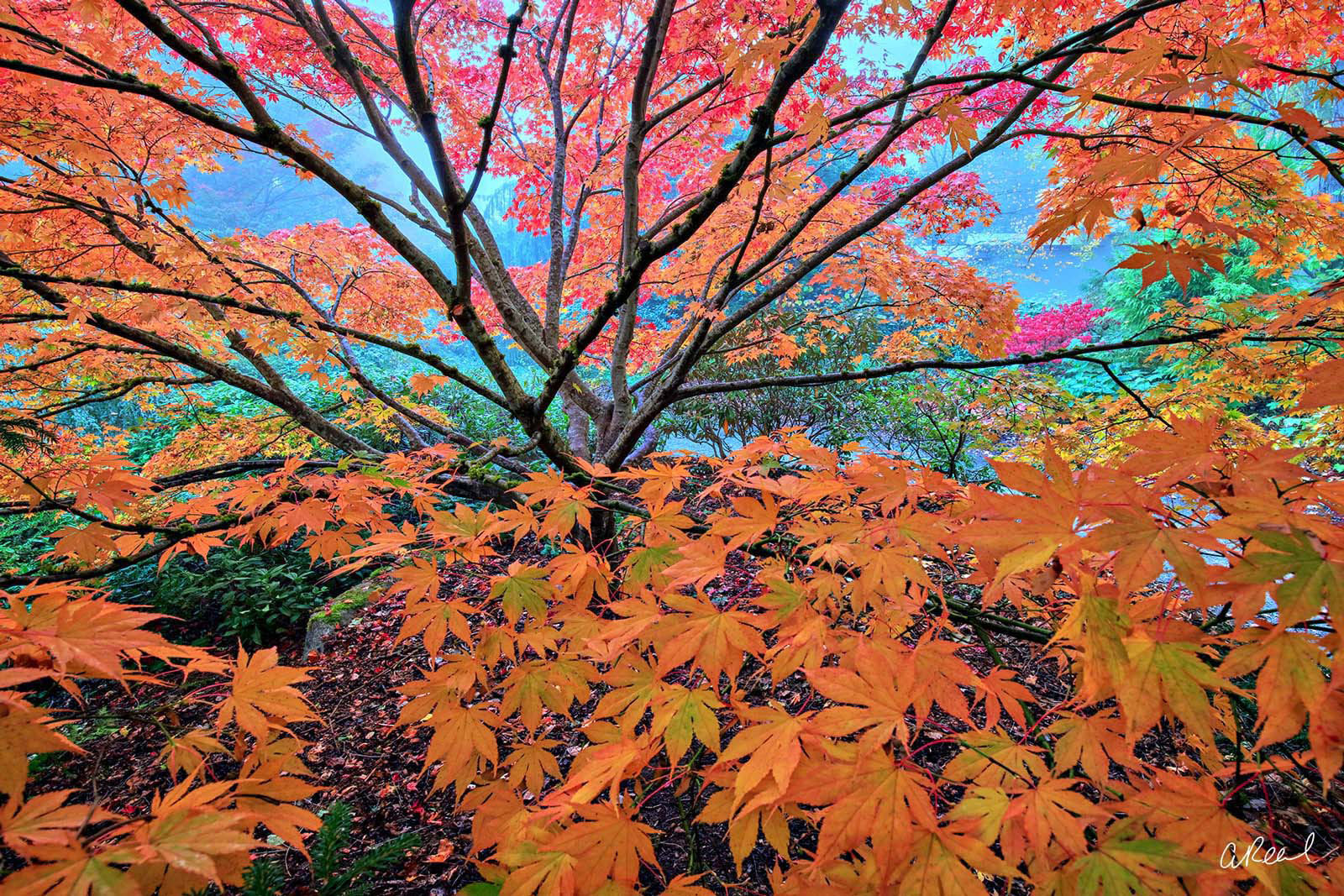
A maple tree photograph with large leaves in a garden on a foggy autumn morning.

A beautiful autumn morning blanketed by fog inside the Kubota garden in Seattle, Washington. Fine Art Limited Edition of 50.

Nature Literally Heals

Quick story time. In the early 1980s, a researcher visited a hospital in a small town in Pennsylvania. The patients in the wing he visited were all recovering from gallbladder surgery in identical rooms. The surgery was simple and most patients recovered in a week or two. However, the researcher started to wonder about what caused the “or two” part of the equation. What small differences made the recovery time vary from patient to patient?

The difference was this: some rooms on one side of the hospital faced a brick wall, while others had a view of a small stand of trees. Do you see where this is going? On average, the patients with the view of the lovely wall needed an extra day to recover before getting to go home. They were also more likely to be depressed during their stay and experienced more pain than their lucky, tree-viewing counterparts. Apart from the views, the rooms were identical. Their treatment was identical. The patients were all very similar. There was no explanation other than the differing views. The bottom line: the patients who had a view of nature literally recovered faster than those stuck looking at the brick wall.

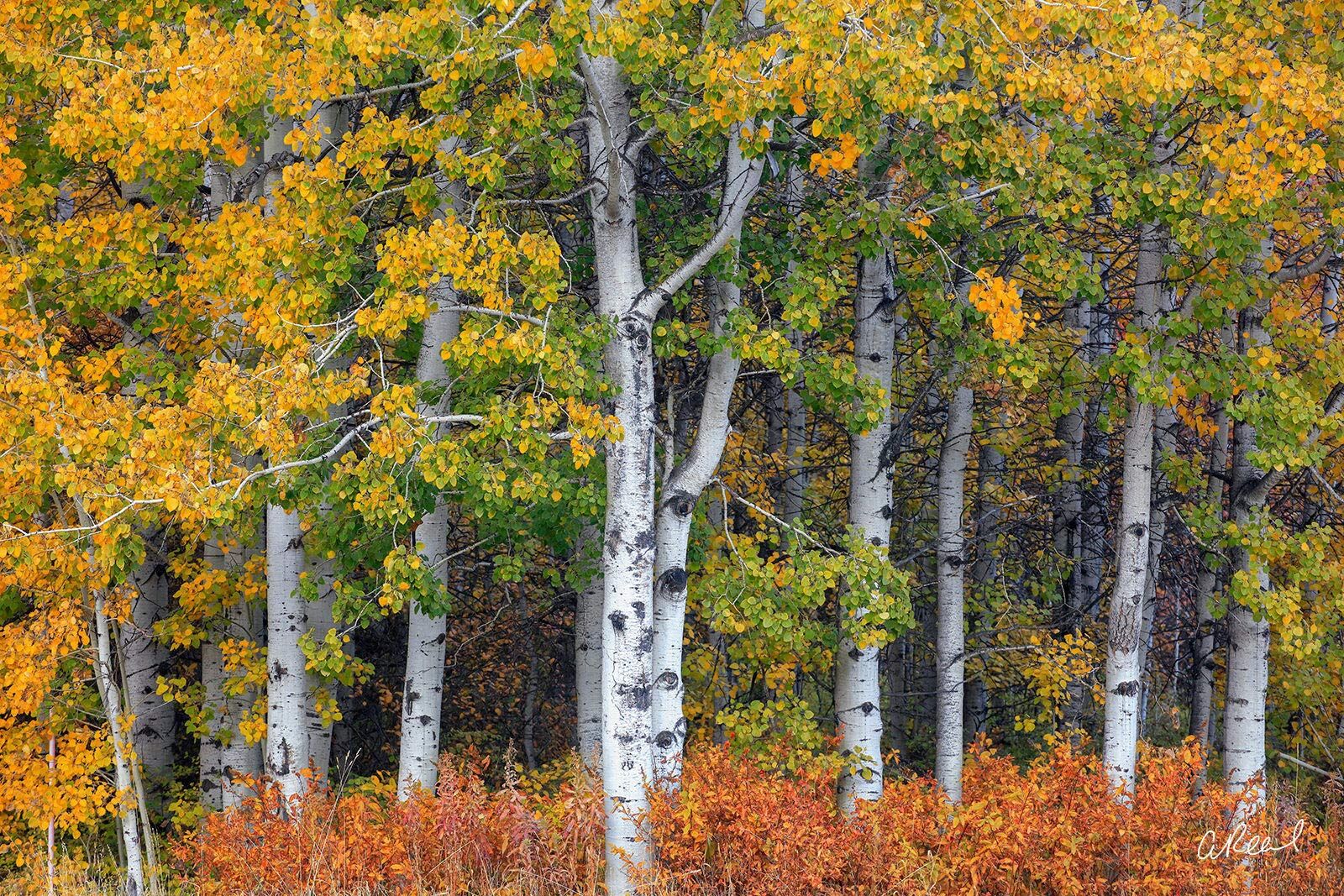
A photograph of five short aspen trees with yellow and green leaves.

A small patch of aspen trees displaying beautiful autumn foliage with red undergrowth located near Tumwater Canyon in Leavenworth, Washington. Fine Art Limited Edition of 50.

Continued studies have found that natural environments routinely speed up the body’s ability to heal; even adding houseplants to your life can speed up the process. As pretty as that Spider Plant on your coffee table is, a houseplant can’t make you feel like you live at the base of a picturesque mountain or remind you of the babble of a tumbling waterfall every morning when you wake up. Nature photography can.

If you still need further convincing, the International Journal of Health Geographics released a study that showed that nature images even provided viewers with protection from having a stroke. Similarly, in areas with fewer trees, residents had a higher risk of stroke mortality. So, looking at nature images can literally save your life. And who doesn’t want to live longer and healthier? You might even say that investing in nature photography is an important investment in your health. Who needs health insurance or a low sodium diet when you’ve got some nicely framed trees? I really have your best interests at heart, here.

The Golden Silence

Fine Art Limited Edition of 50 by Aaron Reed

All Jokes Aside

While I’m no scientist, I do experience the powerful impact of nature every single day when I head out to capture my next photograph. I know how nature makes me feel and I want to bring that to your home. I also believe in the long history of studies that have shown us the lasting impact of regularly viewing nature images and am proud to contribute to whatever benefits — health or otherwise — you might reap from owning my work.

More than anything, my goal is to show you views of our natural world in ways you’ve never seen them before. After all, displaying nature photography in your home gives you the opportunity to make believe you live anywhere in the world. And as we previously established, your brain can’t actually tell what’s real. So, if you fill your home with dramatic images of Iceland or the majestic mountains of Colorado… in a way, don’t you actually live there?

A field of trees with green leaves and a carpet of purple and blue flowers in the spring.

Elevate your home with Aaron Reed’s limited edition photography print, Wild Beauty, from his Amazing Tree Photography collection. Order yours today! Fine Art Limited Edition of 50.

SkyFire

Elevate your home with Aaron Reed’s limited edition photography print, Skyfire, from his Newest Work Photography collection. Order yours today! Fine Art Limited Edition of 50.

Colorblast

Transform your space with Aaron Reed’s limited edition photography print, Colorblast, from his Abstract Nature Photography collection. Order yours today! Fine Art Limited Edition of 50.

[ad_2]

Best star trackers for astrophotography 2022

[ad_1]


null


© Future
null

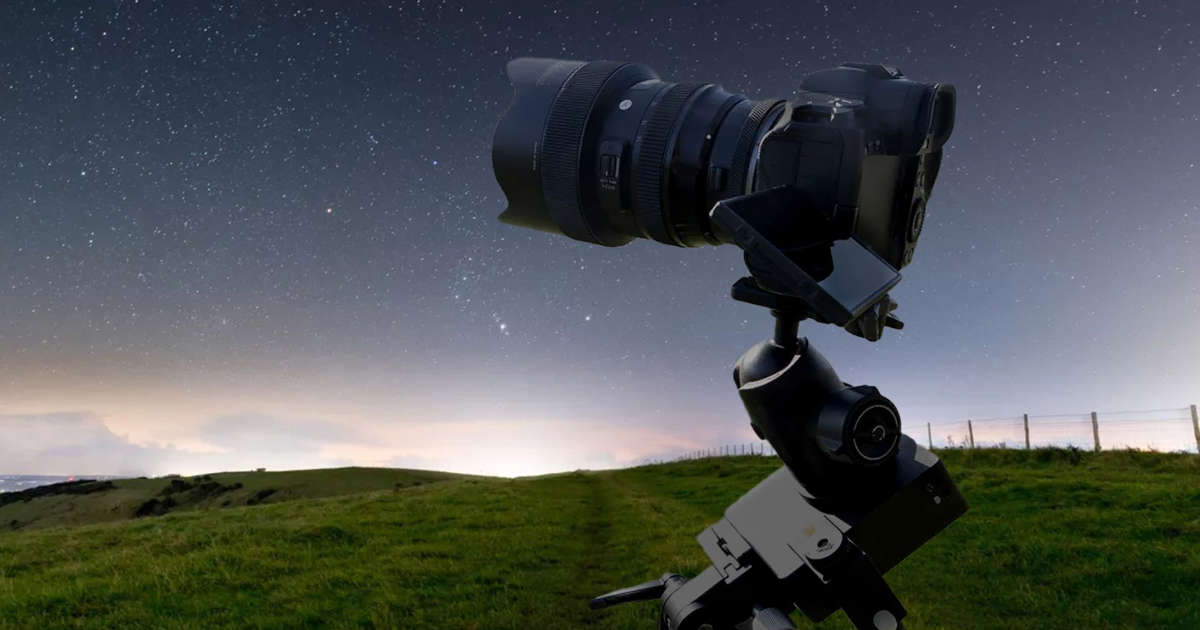
The best star trackers for astrophotography have changed the scene forever by counteracting the rotation of our planet. Until only a few years ago a long exposure of over about 10 seconds caused stars to blur. That made it very difficult to extract much data from deep-sky objects such as nebulae, but also from the Milky Way. Cue the invention of the star-tracker, which is basically a shrunken equatorial mount, but designed for cameras instead of telescopes.

Like an equatorial mount, a star tracker needs to be aligned (often with the help of a smartphone app) with the north celestial pole (the star Polaris) in the northern hemisphere or the south celestial pole in the southern hemisphere. It then keeps your camera in sync with Earth’s rotation. That way it counteracts the rotation of the Earth and keeps the target object still in a composition, thus allowing blur-free long exposures.

The best star trackers for astrophotography 2022

While most star trackers are a compromise between their own weight and their payload, the Benro Polaris is both super lightweight (at 3.3lbs / 1.5kg) and super-supportive, taking a mighty 15lbs/7kg of gear (the highest carrying capacity of any star tracker mount so far). It achieves that by using precise high torque motors and a waterproof IPX6 rating. That helps explain the very high price. It’s the first star tracker to offer built-in DSLR control and a built-in micro SD card slot. Remarkably, the Benro Polaris can even be controlled via the cellphone network. Its huge 2500 mAh battery can be recharged via USB-C while alignment is via any objects from a choice presented on a smartphone app. However advanced the best star trackers appear, there’s evidence from this electric tripod head that their days are numbered. 

The incessant creep of light pollution means it’s now almost inevitable that you’ll need to travel to find the darkest night skies possible. Even if you don’t travel internationally, finding dark skies often means hiking into backcountry areas away from other humans. That necessitates a star tracker that strikes the right balance between its own weight and what it can support. 

Cue the Sky-Watcher Star Adventurer Mini, affectionately known as SAM, which can take a payload of 3kg yet it is relatively easy to squeeze into a camera bag. It’s not the sleekest device ever, and nor is its SA Console app up to much. However, as we found during our Sky-Watcher Star Adventurer Mini review, once you get used to its foibles SAM is reliable and relatively easy to use. It’s possible to get accurate long-exposure images of up to about four minutes, which makes SAM a great compromise product. Accessories include a counterweight and declination bracket to increase the payload.

The priciest and one of the best star trackers around for astrophotographers is the iOptron SkyGuider Pro. Many star trackers are made for landscape photographers wanting to save on weight when out in the field searching for wide-angle compositions that include the night sky. But there are plenty of astrophotographers that only want to use telephoto lenses to capture light from distant deep sky objects. That means bigger payloads and longer exposures, which is what the iOptron SkyGuider Pro is designed for. 

Able to take about 11lbs / 5kg, it can support long lenses or even a small telescope, making this a product that in some ways behaves more like a motorized equatorial mount, though its wedge lacks a little precision. Another downside is its use of a counterweight to reach that higher capacity than average, which adds a further 3lbs/1.35kg to the product. Aligning using its electronic polar finderscope and iOptron Polar Scope app, like most of its rivals this star trackers also tracks the Sun, Moon and allows 1/2-speed motion time lapses at night.

Even smaller and more nimble than the SAM is the great value Move Shoot Move, a star tracker that’s suitable only for wide-angle lenses. That’s partly because of its limited payload of 6.6lbs / 3kg and partly, as we discovered in our Move Shoot Move star tracker review, because it’s just not the most accurate star tracker around. 

While that might sound like a deal-breaker, it’s actually a plus if you intend only to take wide-angle images of the Milky Way and starfields. For such photos a rough alignment with Polaris is all you need, something that can be done easily and quickly using an included green laser pointer. 

The Move Shoot Move isn’t going to accurately track Polaris for more than about two or three minutes (though the wider and lighter your lens the longer it will remain accurate enough). But if you have a reasonably fast wide-angle lens none of that is going to matter much. If you have a telephoto lens though, look elsewhere.

While iOptron’s SkyGuider Pro is aimed at deep sky photography, the pared-down and more compact iOptron SkyTracker Pro is aimed more at wide-angle nightscapes. Its payload capacity, at 6.6lbs/3kg, is a lot less than its stablemate and at 2.5lbs/1.1kg it also weighs less. As such it’s more suitable for those wanting to carry a star tracker in their camera bag during trips and travel. 

It has a wider appeal than just nightscapes since in addition to tracking objects in the night sky it can also follow the Sun, Moon and has a half speed for motion timelapses. As a bonus, its internal battery can run for 24 hours. Accessories include a counterweight and declination bracket to increase the payload.  

The Vixen Polarie isn’t for deep-sky astrophotography. In the world of star trackers, it’s always a trade-off between size and versatility, and the Polaris compact size means it can support a payload of just 2kg. Therefore, it is best used with not only wide-angle lenses but fairly lightweight models, though using a mirrorless camera body will give you more flexibility. Alignment is via a supplied compass, a built-in latitude meter and a polar sight hole, so you will have to know how to find Polaris and/or the south celestial pole. 

On hand to help are both red light illumination and the Vixen PF-L Assist app for smartphones. As well as long exposure astrophotography the Polaris can track the Moon and the Sun (the latter useful for solar eclipses) and its half-speed allows motion time-lapses at night. Its short two-hour battery life can be augmented by instead attaching a portable battery to its micro USB slot. Optional accessories include a counterweight to boost the payload to 6.5kg, a polar axis scope and a time-lapse adapter.

Best star trackers for astrophotography 2022: What to look for

However, star trackers — which sit between a tripod and a camera — are not all the same. They have varying weights and designs but also manage different payloads. While some are ideal for telephoto lenses pointed at specific targets, others can only handle wide-angle lenses for capturing the Milky Way. Both the maximum payload and the accuracy of star trackers vary. They are often fiddly and time-consuming, but at their best star trackers can deliver addictively good images.

As well as weighing your camera body and lens before making a purchase do remember to take into account the added weight of a couple of ball-head mounts and the load-bearing ability of your tripod. If in doubt, go for bigger capacity mounts because as a rule of thumb it’s best to have your rig’s total weight about half the capacity of the mount.

Here’s everything you need to know about the best star trackers available for astrophotography and night-scape photography.

How we test the best star trackers for astrophotography

In order to guarantee you’re getting honest, up-to-date recommendations on the best star trackers for astrophotography to buy here at Space.com we make sure to put every star tracker through a rigorous review to fully test each instrument. Each star tracker is reviewed based on a multitude of aspects, from its construction and design, to how well it functions as an imaging instrument and its performance in the field.

Each star tracker is carefully tested by either our expert staff or knowledgeable freelance contributors who know their subject areas in depth. This ensures fair reviewing is backed by personal, hands-on experience with each star tracker and is judged based on its price point, class and destined use.

We look at how easy it is to set up, whether the star tracker mounts are reliable and quiet if a star tracker comes with appropriate accessories and also make suggestions if a particular star tracker would benefit from any additional kit to give you the best astrophotography experience possible.

With complete editorial independence, Space.com are here to ensure you get the best buying advice on telescopes, whether you should purchase an instrument or not, making our buying guides and reviews reliable and transparent.

You May Be Also Interested in:

[ad_2]

Kenny & Becky | Caroline Logan Photography

[ad_1]

Fb-Button

They met in middle school… and according to Becky, she fell for him right away and “it took a bit of chasing for him to notice me, but once he did we were inseparable.”

And so their middle school relationship began. But when Becky’s family moved away, their relationship at the time couldn’t go the distance (they had *not* having their licenses to thank for that).

Years later, on Kenny’s 21st birthday, he texted Becky to say hello… completely out of the blue. They talked that entire night. A few days later, she was out with friends when she randomly saw Kenny’s face on a poster, advertising an upcoming event he’d be playing guitar at. Having just spoken with him, then seeing his face on that poster, she decided that was the sign she needed to go see him play.

As you can imagine, the rest is history… they hit it off and it was like no time had passed at all. <3

A few more years of dating later, and it was just before the holidays when Becky was slammed at work, managing three accounts from sun up to sun down. When Kenny got back from work, he told her he was surprising her with a dinner out to her favorite restaurant because he knew how stressful her week was. She was reluctant at first to go because of her workload, but Kenny managed to convince her. On the way to what she *thought* was the restaurant, Kenny pulled over and said he wanted to give her a Christmas gift. Just then, she noticed they’d stopped in front of their middle school. As they walked up to the school, Kenny started with “I’ve loved you since we were 13” and proceeded to get down on one knee and ask Becky to spend forever with him. To which she responded an “obviously yes” !!!

EVERYONE is counting down to this long awaited day in store, next summer at The Farm at Eagles Ridge and I’m so honored to be the one to document it all!! For now, enjoy a few of my favorites from their engagement session! Xo


For Photographers: Love creamy skintones & soft colors? Learn to edit light & airy here!


[ad_2]

Andre Donawa – Portrait of a Photographer

[ad_1]

Blue Water Ridge 2

Blue Water Ridge

For many nature and landscape photographers, the need to travel to distant exotic locations is paramount to the process of being able to create a diverse body of work that has a lasting impact, surprise, and depth. Surely trips to Iceland, Patagonia, Tibet, the USA National Parks, Greenland, the Faroes, and Indonesia can yield some incredible photographs; however, what if your home is a 167-square mile island and you choose to never leave your island for photography?

Cousteau’s influence on Andre’s work is quite prevalent not only in subject but also in how “exploratory” it feels to the viewer.

Do you think you can muster what it takes to produce a body of work that is compelling, personally expressive, interesting, and creative? The subject of today’s essay, Andre Donawa, based on the island of Barbados – a country with a population of just 287,000, has set out to do just that – create a body of interesting landscape photography solely from his home island.

Andre’s photography origin story is not unlike many of our own – in 2012, he picked up the camera to take some photographs of food for his family restaurant and the magic of pressing the shutter just overtook him like a virus. Armed with a degree in biology, Andre revisited local haunts on his island with a fresh perspective through the camera. His early inspiration as a photographer was Jacques Cousteau, the famous oceanic explorer, filmmaker, and co-inventor of the modern-age SCUBA diving systems. Cousteau’s influence on Andre’s work is quite prevalent not only in subject but also in how “exploratory” it feels to the viewer. When I first came across Andre’s work, I was instantly transported to Barbados and visually invited to feast on the peculiarities of his discoveries on the coast and in the water of his island. To be perfectly frank, I was quite surprised I had not discovered his work sooner. Andre’s work is filled with personal expression and conveys a unique take on a place he has become quite familiar with.

Frangipanni Skies

Frangipani Skies

Certainly, a photographer can gain a tremendous advantage through the intimacy of place. Andre is no exception to this idea; however, I think below the surface (pun intended), there’s more to discover in his work. Through his imagery, I see a passionate familiarity with the subject that enriches his photographs and exudes creativity and conveys a subtle playfulness. I strongly believe that revisiting familiar locations and subjects repeatedly, while potentially boring on the surface, can force a photographer to develop a long-term relationship that will eventually yield more creative work that feels personal and expressive to the photographer (and viewer!)

The advantage of this approach is that one never truly gets tired of making images, and there is always a new challenge to explore with a familiar friend in the landscape. I have done this myself with mountain and autumn photography in Colorado, and I never grow tired of engaging with these places every single year with fresh eyes. Andre’s approach is one to take note of. I encourage other photographers to implement something similar in their own work – either through revisiting the same locations or by photographing the same subjects. The results will come over time.

Through his imagery, I see a passionate familiarity with the subject that enriches his photographs and exudes creativity and conveys a subtle playfulness.

Magic In The Mud

Magic in the Mud

One aspect of Andre’s work that I have come to personally enjoy as a viewer is his wave photography, which seems to convey a multitude and range of emotions and states of being, from happy, excited, nervous, and curious. It is hard to believe that photographing waves and wave patterns from your home island can express such a wide range of emotions and feelings, but Andre has pulled it off! I’ve also come to enjoy his more intimate work that showcases interesting smaller scenes found on his coast, including stairs that seem to lead to nowhere, to a shoreline filled with a wonderful colour story and juxtaposition of the subject.

I would be remiss not to talk about two of his images that immediately struck me. The first is a visual power ballad of complexity and emotional impact showcasing massive crashing waves over a smaller wave. I was dumbfounded upon first seeing the photograph. The second is a very fascinating image of an oceanic sunset or sunrise that features waves and a wonderful colour palette.

The Great Wave 2

The Great Wave

Waves Of Summer

Waves of Summer

These unique and expressive images are generally only obtainable when a photographer has a very good understanding of his or her subject and has an energetic attitude towards it. I highly encourage you to think about what subjects or situations create the same in your own photography and to focus more of your energy and attention on that thing because the result will undoubtedly be an improvement in the overall impact and quality of your work. The trick is that it takes time and commitment to keep going back repeatedly, but the payoff is monumental, in my opinion.

If Andre’s work interests you, I encourage you to take a look at his book, Edge of Bim, which features photographs all captured from his island of Barbados over a 3-year period.

Water SelfieIf Andre’s work interests you, I encourage you to take a look at his book, Edge of Bim, which features photographs all captured from his island of Barbados over a 3-year period.

These are the types of personal projects that inspire me, and I hope that it does you as well.

If you enjoyed this article and want to listen to my conversations with other great artists, consider subscribing to my podcast, “F-Stop Collaborate and Listen,” on your favourite podcatching application.

Do you know someone you feel has yet to be discovered and should be featured here? Send me an e-mail – I look forward to hearing from you.

[ad_2]

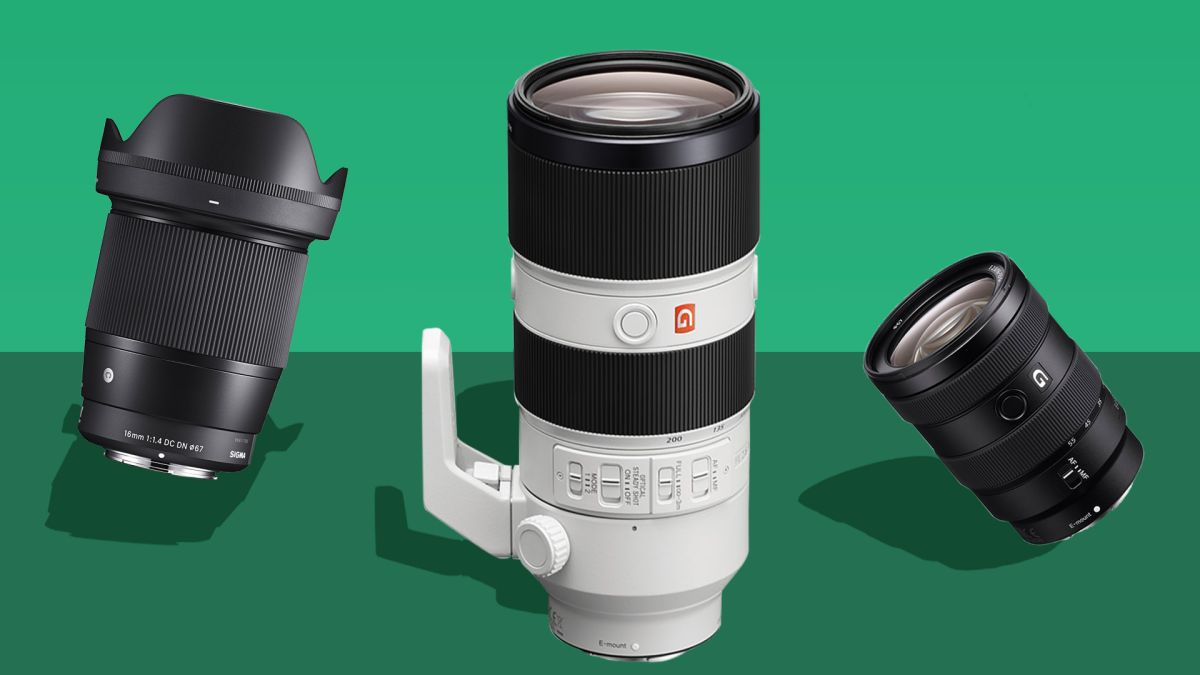
I’m a Sony fan and these are the Black Friday lens deals that are on my radar

[ad_1]

November is here, which means the best Black Friday camera deals are now ramping up. But you don’t need to limit your attention to cameras – because plenty of lenses will also see some big discounts over the next few weeks. 

Photography isn’t a cheap hobby or career at the best of times, so finding some great discounts can make all the difference, particularly when we’re going through a cost of living crisis. 

[ad_2]

Interview With Nature Photographer Fabiano Dossantos

[ad_1]

Fabiano Dossantos is a Brazil-born nature photographer currently living in Boston, Massachusetts – USA. In his words about nature photography “I’ve Always loved nature and being outside. Birds, animals, beaches, mountains, forests are an attraction to my eyes. Over the years, I realized that this love for nature, made a perfect marriage with my love for photography. The sunrise and sunset are a divine painting. Photographing nature is a kind of connection with our creator. I am a religious person, and that’s how I fell when I am photographing Nature.”

Thanks, Fabiano for accepting our invitation. Please read on…

Nature Photography by Fabiano Dossantos

#1 Few words about you?

My name is Fabiano Lacerda Dos Santos. I am 48 years old, married and I have two children. I was born in Brazil, in the city of Criciuma, state of Santa Catarina (south, near Argentina). Since i was a child i have always lived in an environment where family members worked in the construction industry. Today I live in Boston, Massachusetts – USA. I have a company that provides services in the construction area.

#2 How did you develop your interest in photography?

My mother has always been passionate for photography. She was a seamstress, but in her spare time, she liked to photograph me and my sister. She was always positioning us correctly, so that, the photo had a good composition. When I was 8 years old, an uncle came to live with my family. He was a professional photographer, and turned his own bedroom into a Darkroom Lab. That’s when my interest in photography started to spark.

For me photography was “magic”, where a piece of paper that was deposited on a tray containing liquids, which I didn’t know what it was, soon turned into an image. This was very fascinating to me. Since then, photography has always been something I enjoyed doing.

Nature Photography by Fabiano Dossantos

Nature Photography by Fabiano Dossantos

Nature Photography by Fabiano Dossantos

#3 How did you get interested in nature photography?

I’ve Always loved nature and being outside. Birds, animals, beaches, mountains, forests are an attraction to my eyes. Over the years, I realized that this love for nature, made a perfect marriage with my love for photography.

The sunrise and sunset are a divine painting. Photographing nature is a kind of connection with our creator. I am a religious person, and that’s how I fell when I am photographing Nature.

#4 What is that catches your eyes to produce such wonderful photographs?

The color, the shadow, glow, the combination of light and colors. Sometimes, I like to photograph what goes unnoticed, what not all eyes perceive. I like to see a beauty where it didn’t exist before the photo.

Nature Photography by Fabiano Dossantos

Nature Photography by Fabiano Dossantos

Nature Photography by Fabiano Dossantos

#5 Could you please share your post-processing techniques?

For every photo, a different situation. I don’t have a strict line of post-processing techniques. Most of my photos are edited in Lightroom. I always try to lower the highlights and shadows and increase white, sometimes color saturation for vibrant colors. That’s all, nothing too special.

#6 Your favorite photographers?

Sebastiao Salgado and Serge Ramelli

Nature Photography by Fabiano Dossantos

Nature Photography by Fabiano Dossantos

Nature Photography by Fabiano Dossantos

#7 One thing you have learned through photography, you would want to share with our readers?

I learned that photography is magic, is Art. We are not only photographers, but Artists, we create Art with what is already an Art. A different way to transform a moment in life into an image.

#8 What is the best compliment you received so far?

To be honest, it’s very gratifying to receive compliments, but the ones that cheer me up the most are when someone says: ” This photo looks like an Art painting”, or ” You should work for a magazine”.

Nature Photography by Fabiano Dossantos

Nature Photography by Fabiano Dossantos

Nature Photography by Fabiano Dossantos

#9 Any favorite photography books?

Photography essentials: A visual Guide. By Serge Ramelli.

#10 What’s your personal motto?

Beauty can be in all things. Transform beauty into Art, the Art of recording a moment in life that will never be repeated.

Nature Photography by Fabiano Dossantos

Nature Photography by Fabiano Dossantos

Nature Photography by Fabiano Dossantos

#11 Other than photography, what are your hobbies and interests?

I like to cook. Just like photography, I think cooking is an open window to invention. I also like to hike, travel and visit new places, but also to return to places already visited that attract me for their beauty.

#12 Thanks again for providing 121 Clicks with this opportunity to interview you. Any final thoughts for our readers?

Photograph everything that you think is beautiful. Your way of seeing the world is peculiar, is your way, not mine. Try to make something peculiar, something that is yours in a new scene created by you, by your angles, your compositions, because this moment will not be repeated. You have the power in your hands to freeze this moment forever.

Nature Photography by Fabiano Dossantos

Nature Photography by Fabiano Dossantos

Nature Photography by Fabiano Dossantos

Nature Photography by Fabiano Dossantos

Copyrights:
All the pictures in this post are copyrighted Fabiano Dossantos. Their reproduction, even in part, is forbidden without the explicit approval of the rightful owners.

[ad_2]

Kenyan wins wildlife photography award

[ad_1]

 2022 Mkapa Awards photo. (Courtesy)

Anthony Onyango is the 2022 Mkapa Awards Conservation Heroes winner. He will take home a grand prize award of $5,000 (Sh607,000), and a large, specially-commissioned stone elephant sculpture.

The winner was announced at a ceremony and exhibition held at the Kenya National Museum in Nairobi last week.

This year’s competition, which was organised by African Wildlife Foundation and Nature’s Best Photography attracted 9,500 entries from 57 countries including entrants from 16 African countries.

The competing categories include: African Conservation Heroes, Coexistence and Conflict, African Wildlife at Risk, Fragile Wilderness, African Wildlife Behavior, African Wildlife Portraits, Africa’s Backyard Wildlife, Art in Nature, Creative Digital, Mobile, Africa in Motion/Video, and two Youth Photographers of the Year, one inside Africa and one international.

Each of the category winners will receive $1,000 (Sh121,000) and a stone elephant sculpture.

The 77 prints and four videos shortlisted for various prizes will travel to other global locations throughout the year. In addition, all winners’ photographs will be displayed in large-format prints and high-definition video, along with Highly Honoured finalists at the museum in Nairobi through February 2023.

AWF chief executive Kaddu Sebunya said the competition and other strategic partnerships will help define and refine the African conservation agenda for development through these voices.

The awards are named in honour of the late former Tanzanian President, H.E. Benjamin Mkapa, for his dedication to conservation education throughout Africa, and his impactful support of AWF programmes across the continent.

“Nature photography goes beyond just taking a picture but informing and inspiring people to protect nature. It is truly an honour to be among the winners this year and it is a testament that we Africans have what it takes to emerge among the best,” Onyango said after receiving the award.


Related Topics

[ad_2]