Transform your landscapes with square format

[ad_1]

May 16, 2022

Why compose your landscape images in a square format? Three top photographers with different approaches share their creative reasons with Claire Gillo


How to: Square Format Landscape Photography

Jonathan Chritchley

Jonathan Chritchley is a fine art photographer whose many prestigious clients including Ralph Lauren and Vogue. He is known for his artistic approach to seascapes, sailing and wildlife. Jonathan is the founder and owner of Ocean Capture, which specialises in luxury photography tours. Visit www.jonathanchritchley.com, www.oceancapture.com and follow on Instagram @jonathanchritchley and @oceancapture.

Jonathan Chritchley is lucky enough to reside in the glorious warm climate of the South of France, however he was born in the UK in the sprawling urban suburbs of Wimbledon in London. At the age of 14 Jonathan moved to a small sailing town called Lymington on the south coast of England and it was here the photographer became infatuated by the water. ‘The water has always been very close,’ he says. ‘The sea is very important to me.’

Torii, Japan. black and white minimal square format landscape

Torii, Japan. 10 secs at f/11, ISO 100

Jonathan doesn’t tie himself to one genre of photography, and his work crosses from seascapes, to wildlife (mainly horses) and sailing boats. Most of his images however are united by the water, a black & white finish and a square image crop. Shooting in square is something Jonathan feels comfortable with as he comes from a film background. ‘I used to work with a Hasselblad 6×6 square format film,’ he says. ‘Once I got into digital I was using a 35mm format but it didn’t quite feel right.’

Jonathan continues to explain that at first the purist in him felt like it would be fake and dishonest to mess around with the aspect ratio of his images. After struggling for a while Jonathan listened to his gut and started to crop his digital images to square. ‘As a photographer you have to follow your preferences and those strong feelings of what you personally like into your photography.’

Jonathan takes his square format images on his Nikon D850 and for the time being he is very happy with his set-up. ‘I’m not really interested in going mirrorless at the moment,’ he states. ‘I like big, heavy cameras.’ For Jonathan when he’s precariously standing on a moving boat or trying to steady himself as he tracks a moving horse he finds having a heavy camera body balances him.

black and white stormy scene square format landscape

Gathering Storm, France. 25 secs at f/18, ISO 100

‘It weighs me down in a good way,’ he says. Jonathan says he has three Nikon camera bodies and they get a good smashing about. ‘They’re bulletproof!’ he jokes. As for lenses Jonathan has a range of Zeiss and Nikon brands in his collection. ‘I always carry with me the Nikon 24-70mm f/2.8. It’s fantastic – I love it.’ He finds this lens particularly useful for shooting moving matter such as sailing boats and horses. Jonathan also highlights his fixed Zeiss Distagon 21mm F2.8 from his collection for taking his seascapes. ‘It’s quite old now,’ he says, ‘but it’s still brilliant.’

If you’re interested in shooting square format images yourself Jonathan leaves our interview with some great advice. ‘Start by cropping your existing images square and learn from that,’ he counsels. ‘On a rainy day go through your back catalogue and move the square crop around in the frame. Start to see how you can place things effectively in the frame.’

ice moon greenland square format landscape

Ice Moon, Disko Bay, Greenland. 1/640sec at f/13, ISO 100

For those with cameras that cannot shoot square Jonathan advises to frame your compositions wider. ‘Some people like to compose in portrait format, and chop off the top and bottom of the image, and some like to compose in a landscape orientation, which is what I tend to do. Either way works,’ he continues. ‘It’s a case of leaving enough space, because if you’re going to chop the sides off then you want to make sure there’s nothing crucial left out of your composition.’

lone cypress

Lone Cypress, California. 30 secs at f/11, ISO 100

Jonathan’s top 3 tips:

  1. Crop your existing pictures square to see if you like it and to find out what works.
  2. If your camera has an in-camera square format feature, set it up.
  3. Shoot wider than you normally would to allow you to crop in square.

Beata Moore

Beata Moore is a photographer and writer living in Kingston-upon-Thames, England. She is the author of five coffee-table books and two visitor guidebooks. Currently she is working on her eighth book, Photographing Surrey and Sussex, for fotoVUE publishers, which will be available next year. Find out more at beatamoore.co.uk and follow on Instagram @moorebeata, FaceBook @BeataMoorePhotography and Twitter @BeaM00RE.

Beata Moore is inspired by the sea, geology, nature, and architecture. ‘I like to observe light, colour, lines and patterns in the landscapes,’ she says. Beata has always had a keen interest in nature, and attained a postgraduate degree in botany. ‘At first, many of my photographs showed the natural world, especially trees. To this day I am still enchanted by the timeless beauty of the trees,’ she continues. ‘However, soon into my photographic career I established a preference for seascapes and waterscapes. I am particularly drawn to the subtleties of smaller details of landscape providing me with endless patterns, shapes and textures.’

dunes isle of harris square format landscape

Dunes, Isle of Harris. 1/40sec at f/8, ISO 100

Having learnt her craft with film cameras, both 35mm and medium format, she now works exclusively with digital. ‘Last year I switched from Canon DSLRs to Canon mirrorless bodies,’ she tells us. ‘Most of my lenses are Canon, from a wideangle to a 400mm. My Canon EOS RP with the RF 70-200mm f4 L IS USM lens is my lightest and most favourite set-up at the moment.

The RF 70-200mm lens isolates key elements within the landscape well, and most importantly it has great centre sharpness. It nicely flattens the perspective and opens up a world of endless patterns and shapes that are hard to notice with wider lenses.’

large sea wave crashing east sussex

The wild sea from her project ‘Sea Fury’. Taken at Newhaven, East Sussex. 1/4000sec at f/9, ISO 500

Growing up, Beata found there were always cameras around at home. ‘My father’s old Pentacon Six was my very first camera I used as a teenager. It was a cumbersome camera made in East Germany in the ’70s. Mastering film loading took me ages, and it was so heavy that I constantly complained! Nevertheless, I loved seeing the world in what felt like three-dimensional glass of the waist-level viewfinder. Framing the image was exciting – seeing sharp 6×6 squares with plenty of details, was just pure joy.’

When it comes to shooting square with digital Beata prefers not to take the shot square in camera but rather alter this at the editing stage. ‘Cropping at the post production stage gives me more flexibility and occasionally, new ideas regarding the crop,’ she tells us. ‘Also, sporadically, I create two images from just one frame.’ She continues to describe how this can be useful for exhibiting two images with similar colours and feel, or for creating diptychs. Beata often exhibits her images in galleries and she finds the square format to not only work well as a stand-alone image but also in a set of two or three.

camber sands square format landscape

Camber Sands, East Sussex. The black & white finish brings out the textured grass. 1/1000sec at f/8, ISO 320

Beata finds the square format fits in better with her approach to photography as it captures intimate landscapes, less literal scenes, and the abstracts that she often shoots. ‘It also hugs images giving them this neatly “boxed” feeling,’ she says. ‘The way we look at squares is different from rectangular images, as all the sides of a square have an equal weighting, so our eye moves around the frame in a circular motion, rather than linear,’ she continues.

‘Squares require a little bit more effort and often more simplicity when composing, so be sure to concentrate on the main subject and its placement. Remember that square is not an ideal format for everything, however, and even when the preference is strong, it may not be suitable for all our photographs.’

Sand Ripples, Scotland. 6.2 secs at f/22, ISO 100

Beata’s top 3 tips:

  1. When creating square images, a sense of order and harmony is very important, so simplify your composition.
  2. Square formats are ideal for central placement, but also for placement near any edge of the frame, so be bold with your composition.
  3. Don’t be afraid of using negative space around the subject – it can improve the image significantly.

Lea Tippett

Lea Tippett is a landscape photographer and Sigma ambassador based in the South West of the UK. He has much experience photographing this part of the world as well as travelling further afield to many places including Scotland, Ireland, and Wales. Find out more at www.leatippett.com and follow on Instagram @lea.tippett and Facebook @Lea Tippett Landscape Photographer. Throughout 2022 Lea is running a range of Sigma Masterclass workshops. Find out more at bit.ly/3LGbOCC

Lea Tippett started his photographic journey in the early days of digital and has since grown with the technology and medium. Trying his hand at whatever came his way to begin, Lea found he was no good at taking portraits but was pulled towards the landscape genre and nature. It was from there his practice evolved. ‘I’m very fortunate as I’ve been an ambassador for Sigma for over ten years now,’ Lea tells us. ‘I’ve always stuck with the Sigma cameras and lenses as well.’

bow fiddle rock just after sunset square format landscape

Taken at Bow Fiddle Rock Portnockie Scotland just after sunset. 250 secs at f/11, ISO 6

Currently Lea shoots on a Sigma fp and fp L camera bodies, and has in his bag a range of Sigma lenses including his number one choice for his landscapes, a Sigma Art 14-24mm f/2.8 DG DN. ‘It’s a lovely lens,’ he tells us. ‘It’s nice and bright and sharp at the corners as well…. But obviously I cut off the corners anyway!’ he laughs. For Lea he likes to compose and shoot his square images in camera.

‘I do this rather than processing, purely because I can,’ he says. ‘It’s more convenient as I can see what I’ve got on screen rather than having to chop and change the image around after.’ To hunt for the ideal composition before Lea even gets his camera out, he uses a square plastic window. ‘I’m a bit of an old fuddy-duddy!’ he laughs.

llyn padarn

Taken at Llyn Padarn in North Wales. 5 secs at f/13, ISO 100

‘I cut myself a little plastic square window, which I take around with me. People must look at me and think what the hell’s that guy doing?’ he laughs again. ‘In all seriousness though, it’s easy because you can take the square in your camera bag, pop it out and place it in front of you, and see straight away how an image will work. I also use my iPhone to do this, which I’ve set to square.’

For Lea, his journey to shoot square was something he tried simply because he was inspired to do so. ‘Some of my favourite photographers shoot that way,’ he says. ‘Photographers like Bruce Percy in particular. I’ve got a lot of time for his work. His work is like poetry – it’s more than just a photograph.’ As for his own practice, Lea finds the square format to be more compositionally forgiving. ‘As far as where you place the subject, you don’t necessarily have to work to the rules,’ he reveals.

luskentyre beach isle of harris

Taken on beautiful Luskentyre Beach on the Isle of Harris in the Outer Hebrides Scotland. 30 secs at f/11, ISO 100

‘The rules are far more relaxed. I also find square images have more of an artistic appeal, and this retro look, which is something I like.’ Lea also finds it appealing that his square landscape scenes separates him in what is a highly competitive industry. ‘A few years back, I realised my photography was similar to everybody else. I was taking images 3:2, which is fine, but I wanted my work to be set away from the norm.

‘I wanted to develop and be known for my own look. I’m not saying I’m the only one who shoots square – far from it – just that fewer people tend to, which is another appeal for me.’

tory island square format landscape

Taken on Tory Island off the Donegal coast in Ireland showing the headland named the key. 30 secs at f/13, ISO 100

Lea’s top 3 tips:

  1. Start by practising. Set your mobile phone to square and have a go.
  2. If you can set your camera to shoot square then do so. You can see your compositions as you shoot.
  3. Take a small light square frame around with you. This could simply be made from a piece of cardboard or plastic.
burnham on sea

Taken at Burnham on Sea in Somerset showing the nine-legged wooden lighthouse at sunset. 30 secs at f/11, ISO 100


Further reading:

How to take the minimalist approach to landscapes

Beginners guide to Landscape Photography

Intimate Spring: landscape photography with a difference

Follow AP on Facebook, Twitter, Instagram, and YouTube.

SubscribeSubscribe


[ad_2]

Celestron Power Tank 17 – Astroniklas

[ad_1]


Jan 10

Maintaining batteries can be tricky if the weather doesn’t permit us from practicing our hobby over extended periods of time. 2021 was an exceptionally bad year for astronomy. Wildfires, wet winter with lots of precipitation and snow in the mountains. Unfortunately deep cycle batteries need to be taken care of and not allow them discharge below 20% of their capacity. It should be enough letting them charge over a couple of hours once a month. Unfortunately, just like many other users, I forgot to follow that routine, ending up with a dead battery. The replacement process is easy when you follow this YouTube guide below from another fellow astronomer.

I ended up buying the Duracell (DURDC12-20NB) battery instead which made it of course an upgrade.

Celestron Power Tank 17 and its original battery on the left


The fascination of star gazing had already started during the very first years of my childhood. I was looking up at the night sky with my grandfather every summer night, studying constellations, the phases of the moon cycle, counting satellite passages and by using his binoculars to discover globular clusters of stars. Equipped with star maps from his home-library I was gradually discovering more and more of this fascinating world we call universe.
Even though years went by, the interest and fascination of cosmos had never left me… I found myself occupied with many other things before astronomy finally became my main hobby in recent years.

I was born in Stockholm, Sweden 1979 and grew for the most part of my childhood years in Greece. Later I’ve studied physics at Lund’s university and was hoping to continue with astronomy. At my free time I was an active amateur astronomer in South Sweden, Lund. At some point I was also appointed as chief of observatory for the Tycho Brahe Astronomy Society in Lund.

Circumstances in life led me to move with my family to California. Today I’m working as a sofrware developer within the aviation industry and weather systems for airports. During my off-time, I spend most of my time with my wife Melissa and our daughters.

My main hobbies are astronomy, astrophotography, game development and I was also a member of several astronomy societies in south Sweden but time was never enough to continue being an active member.

This blog is dedicated to my family (Melissa, Vanita and Lena Grace), our friends and to all of you who share the same fascination towards the beauty of this science and all the mysteries yet to be revealed by our constant discoveries!


[ad_2]

30 Hauntingly Beautiful Abandoned Places Shared By This Reddit Community

[ad_1]


Here are the 30 hauntingly beautiful abandoned places shared by this Reddit community. There is a Reddit community called Abandoned Everything, which is more than 1.9 million followers. This page shares “High quality images of abandoned things and places.” You can follow them for more haunting and surprising photos.

Scroll down and enjoy yourself. All photos are linked and lead to the sources from which they were taken. Please feel free to explore further works of these photographers on their collections or their personal sites.

#1 Railroad tracks in forest

Beautiful Abandoned Places

Image Source: u/spacejockey8

#2 Jet Graveyard

Beautiful Abandoned Places

Image Source: u/SHeePMaN11

#3 I was shunned from r/cozyplaces for this and told I’d be welcomed here. Sintra, Portugal

Beautiful Abandoned Places

Image Source: u/Ainnzod

#4 Found this beautiful tree growing inside an abandoned silo while I was exploring

Beautiful Abandoned Places

Image Source: u/runswithjello

#5 SS City of Adelaide, wrecked off the coast of Magnetic Island

Beautiful Abandoned Places

Image Source: u/[deleted]

#6 Abandoned Gothic church in Portugal

Beautiful Abandoned Places

Image Source: u/DrFetusRN

#7 MS World Discoverer was a german expedition cruise ship. It hit a uncharted reef in the sandfly passage, Solomon Islands 29. April 2000

Beautiful Abandoned Places

Image Source: u/hsangnaes

#8 Old tanks left underwater

Beautiful Abandoned Places

Image Source: u/zem204

#9 Abandoned house in the Republic of Karelia, Russia

Beautiful Abandoned Places

Image Source: u/iam_nobody

#10 Electric car company lot left to rot after bankruptcy

Beautiful Abandoned Places

Image Source: u/WideEyes369

#11 Abandoned Rail Bridge in Taiwan

Beautiful Abandoned Places

Image Source: u/BenTokin

#12 This Hotel In Europe

Beautiful Abandoned Places

Image Source: u/mtlgrems

#13 Abandoned temple in the jungle

Beautiful Abandoned Places

Image Source: u/[deleted]

#14 The Wyndclyffe Mansion

Beautiful Abandoned Places

Image Source: u/RIPJ4WZ

#15 Captured Japanese mini submarine in the Aleutian Islands, 1943 and 2021

Beautiful Abandoned Places

Image Source: u/hi_im_mom

#16 Tiny Red Car Deserted On A Tiny Isle…

Beautiful Abandoned Places

Image Source: u/Dr_Zol_Epstein_III

#17 This House In Nova Scotia, Canada

Beautiful Abandoned Places

Image Source: u/mtlgrems

#18 An abandoned magical place

Beautiful Abandoned Places

Image Source: u/LikkleFreakle

#19 Over 2,500 retired MTA subway cars have been dumped into the Atlantic Ocean to create artificial reefs for fish

Beautiful Abandoned Places

Image Source: u/cstocksv

#20 Escalators stopped in time, nature takes over it

Beautiful Abandoned Places

Image Source: u/brokenbonessociety

#21 Long abandoned RR track

Beautiful Abandoned Places

Image Source: u/morganmonroe81

#22 For more than 20 years, these handsome ships have been standing and slowly decaying under the influence of time. The only water they see is rain falling from the sky

Beautiful Abandoned Places

Image Source: u/Scientiaetnatura065

#23 Abandoned Library

Beautiful Abandoned Places

Image Source: u/morganmonroe81

#24 Forgotten Treehouse in Redmond, Washington

Beautiful Abandoned Places

Image Source: u/sausagespolish

#25 Vacant hotel at a wonderful lake

Beautiful Abandoned Places

Image Source: u/explorationofdecay

#26 Beautiful abandoned castle in France [OC] [Symphony of Decay]

Beautiful Abandoned Places

Image Source: u/SymphonyOfDecay

#27 Abandoned church in middle of forest

Beautiful Abandoned Places

Image Source: u/freewill-lastwish

#28 The last abandoned house that sits on an eroding island…

Beautiful Abandoned Places

Image Source: u/animalcrossingnews

#29 Inside an abandoned apartment building in Vorkuta, a city located north of the Arctic Circle in the Komi Republic, Russia

Beautiful Abandoned Places

Image Source: u/Silverfrost5549

#30 Cracked and faded statue of cosmonaut Vladimir Komarov, the first person to die in a space flight, at an abandoned children’s camp outside Moscow

Beautiful Abandoned Places

Image Source: u/ParnsipPeartree

Related Articles:


[ad_2]

2021 Most Wanted Photography For Sale Online

[ad_1]

A Decade Long Journey

Looking back on 2021, I can’t help but to remind myself how fortunate I am being able to continue to build my landscape photography business in the midst of a global pandemic. At the end of 2020 I wrote “How I Sold A Half Million In Prints During A Pandemic” after surpasing that incredible milestone for the year. In 2021, for the 9th year in a row, I increased my online print sales by more than 20%, after selling a quarter million in prints the last 3 months of the year alone, all from my home office. It’s a dream come true to be honest, but not one that came to fruition easily.

I share my successes in an attempt to inspire others. I am personally inspired by stories of growth & struggle but more importantly of the successes on the other side. Ten years ago selling prints was nothing more than a wish to me. If I can do this, you can too, but you’re going to need to put in work.

Some think I am lucky, or that I have found some magic “trick” to this level of success selling my work, but the fact is that when it comes to selling photography prints online I simply grind harder than everyone else. Every day, all day, I hustle. I stay hungry. You know what they say about a closed mouth….

Giving Back To People & The Planet

It’s not all work, as I spend a considerable amount of time giving back as well. I worked directly with over 20 photographers last year through my business mentoring plan and have provided the information and motivation to others that have helped build entire online photography businesses from scratch. My very last “selling fine art photography” workshop is coming up this May and at the time of this writing there are still a few seats left.

In 2021, my donations to give back to nature helped plant close to 20,000 trees and created over 1900 days of work for villagers in impoverished countries around the world. I am honored and humbled by the hundreds of collectors each year who collect and display my work in their homes and offices around the world.

Without further delay, I present you with the list of my top selling landscape photography prints of 2021!

Top Fine Art Nature Photography Prints of 2021

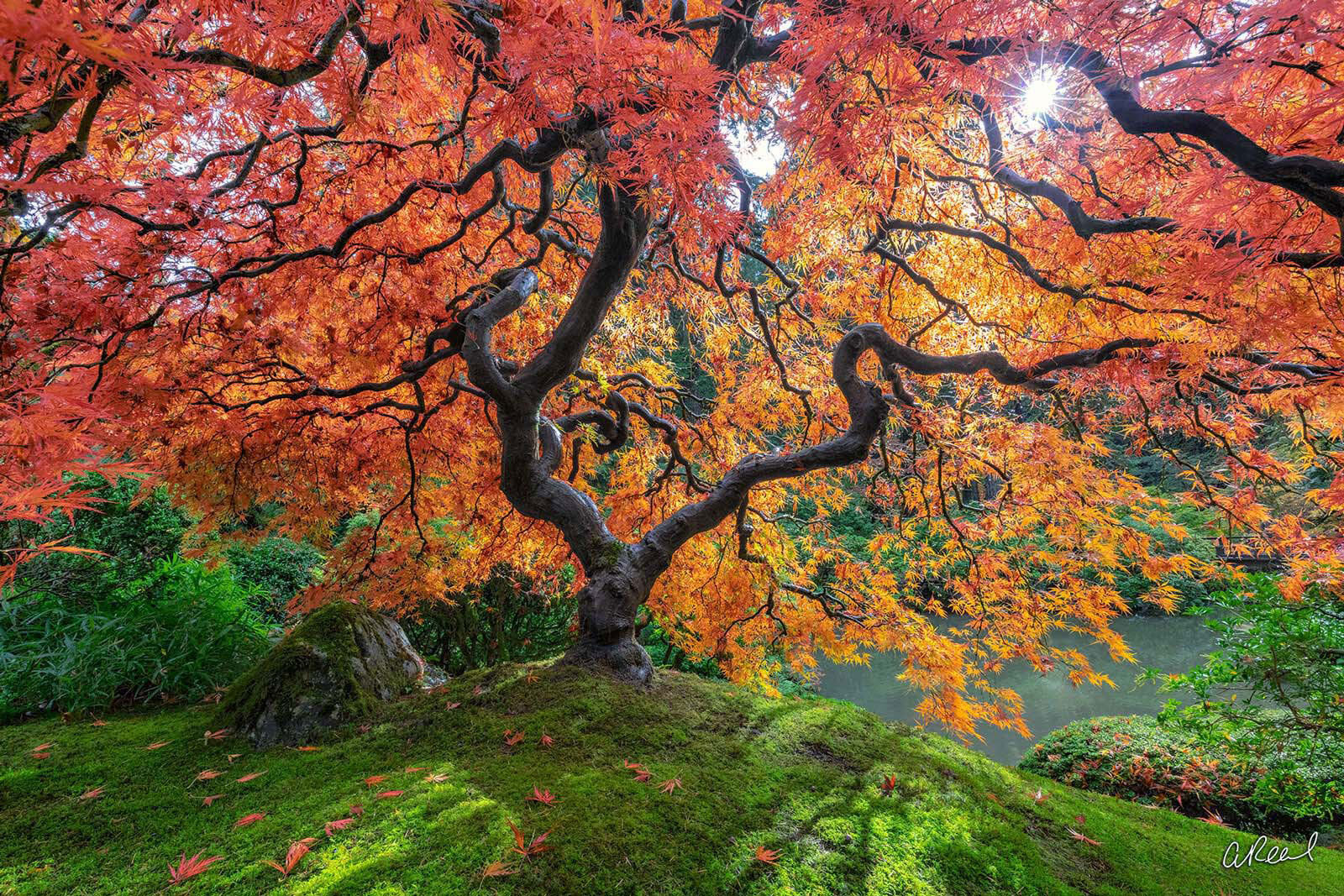
1. Heavens Gate – Portland Japanese Garden

Heaven's Gate | Japanese Maple Tree Photograph for Sale by Aaron Reed

A legendary Japanese maple at the height of its autumn spendor sits on a hillside inside the Japanese garden in Portland, Oregon. Large, framed & unframed wall art prints for sale. Fine Art Limited Edition of 100.

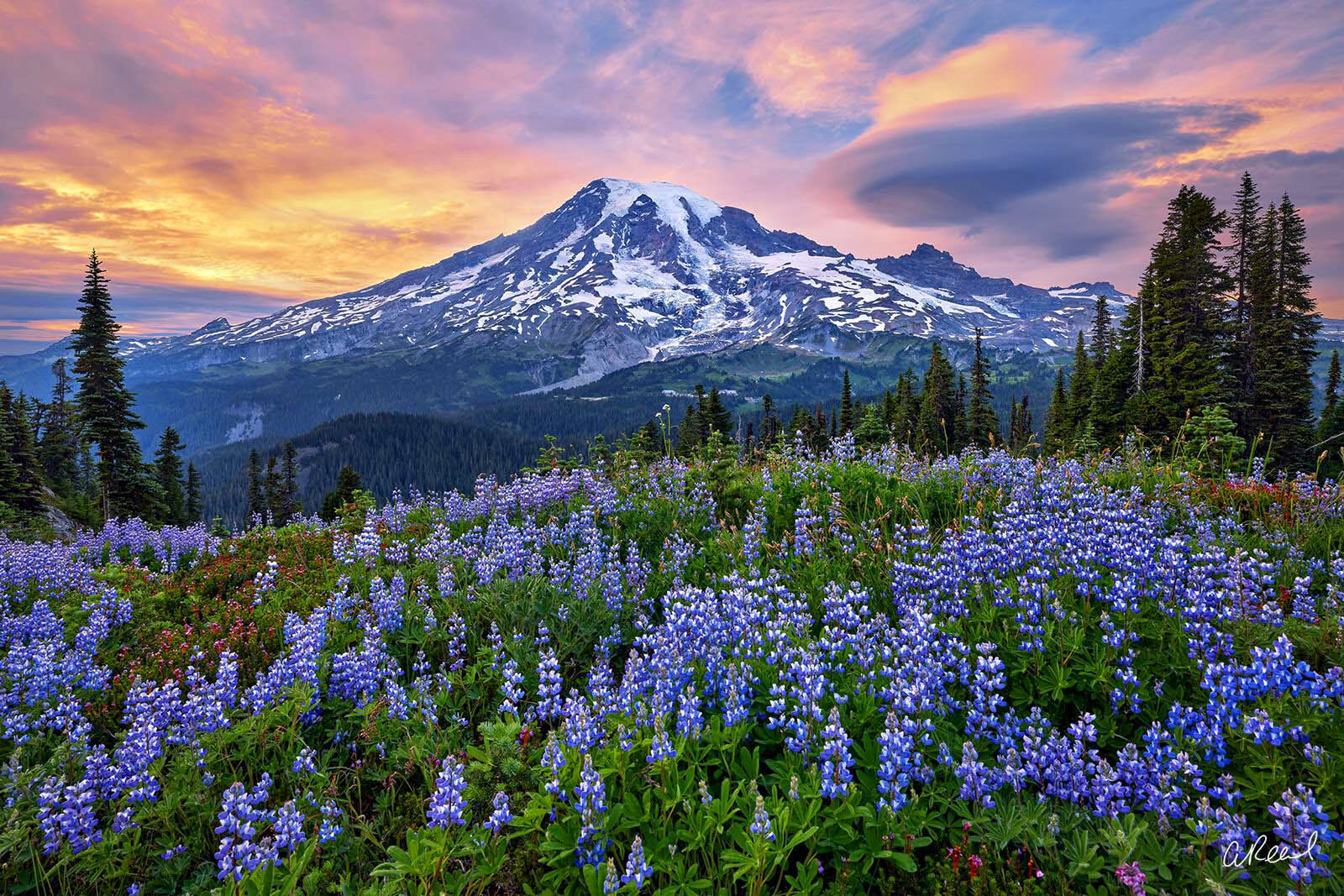
2. On Earth As In Is In Heaven – Mount Rainier National Park

On Earth, As It Is In Heaven | Mountain Photography | Aaron Reed

Elevate your home with Aaron Reed’s limited edition photography print, On Earth As It Is In Heaven, from his Newest Work Photography collection. Order yours today! Fine Art Limited Edition of 100.

3. Let There Be Light – Kirkjufell, Iceland

Oceans Treasures | Iceland Landscape Photography | Aaron Reed

Transform your space with Aaron Reed’s limited edition photography print, Let There Be Light, from his Iceland Nature Photography collection. Order yours today! Fine Art Limited Edition of 50.

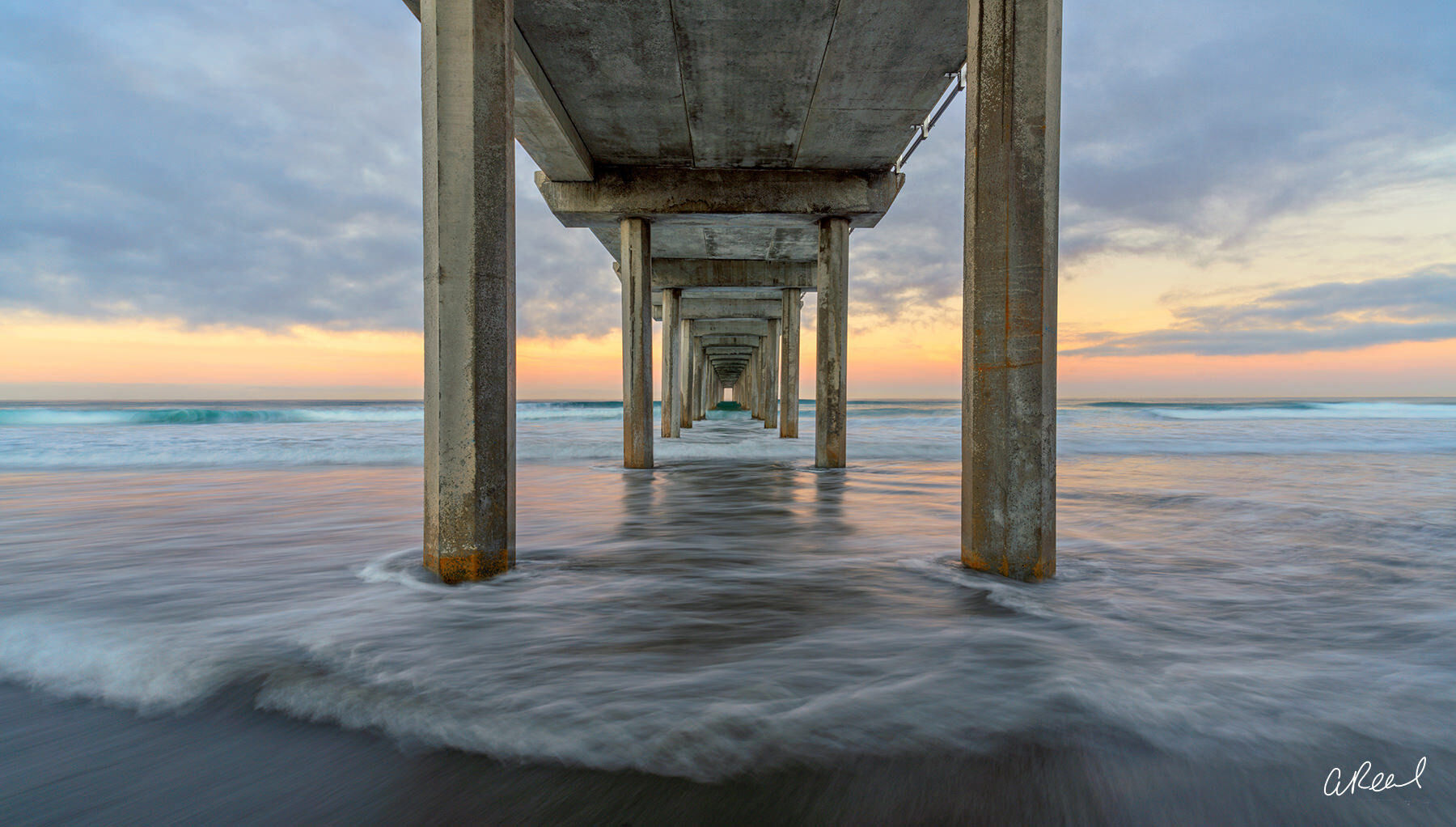
4. Out To Sea – La Jolla, California

Out To Sea Pano

Transform your space with Aaron Reed’s luxury fine art photography print, Out To Sea, from his Panoramic Wall Art collection. Order yours today! Fine Art Limited Edition of 100.

5. Tunnel Vision – North Bend, Washington

Tunnel Vision | Tree Photography | Aaron Reed

A long tree lined driveway boasting fiery reds of autumn welcomes visitors in the town of North Bend, Washington. Large, framed & unframed wall art prints for sale. Fine Art Limited Edition of 50.

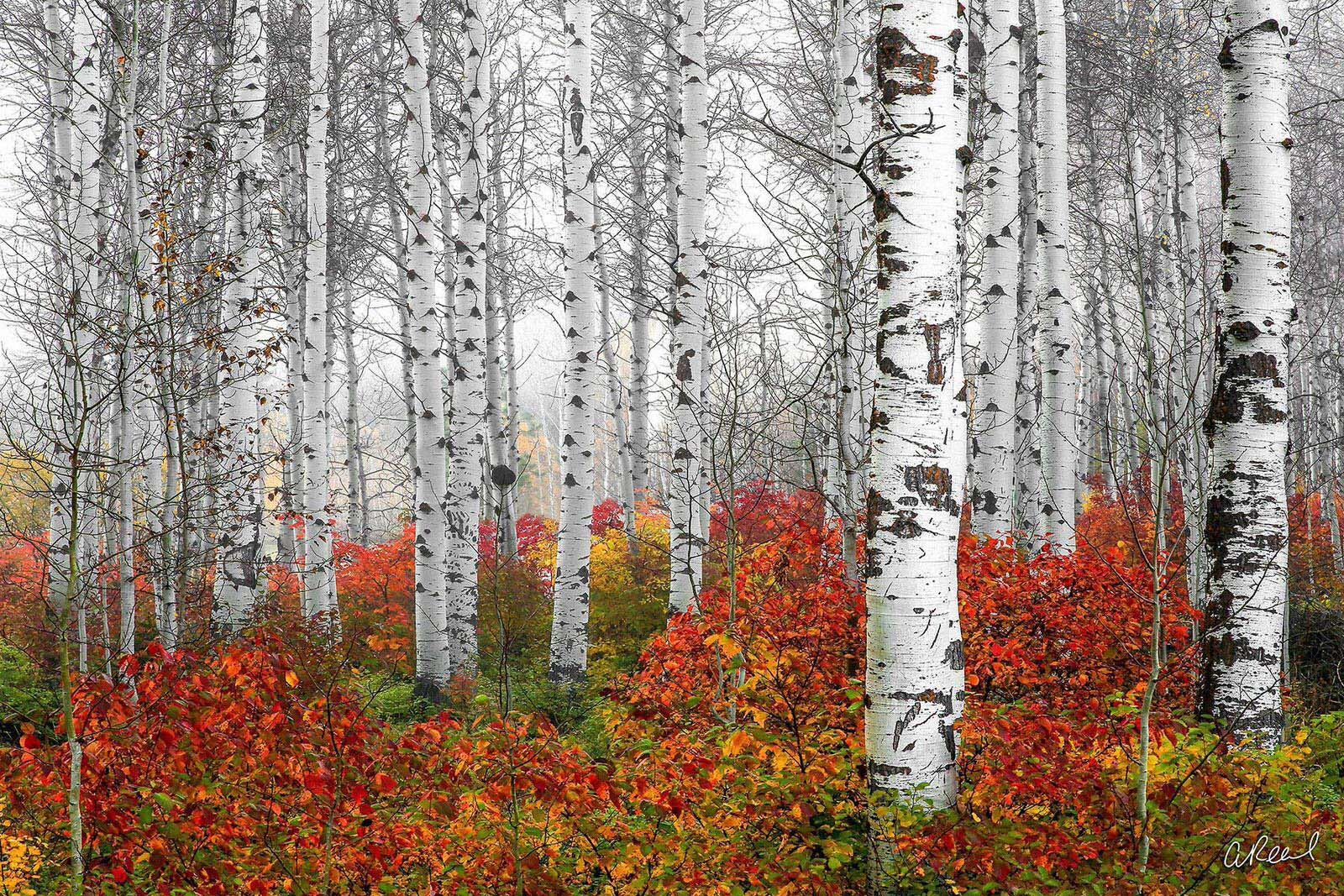
6. Echoes Of Fall – Leavenworth, Washington

Echoes of Fall | White Aspen Trees in Fog With Red Ground Foliage | Tree Photography for Sale by Aaron Reed

Stark white aspen trees blanketed by fog and contrasted by autumn undergrowth in this small aspen grove near Leavenworth, Washington. Large, framed & unframed wall art prints for sale. Fine Art Limited Edition of 100.

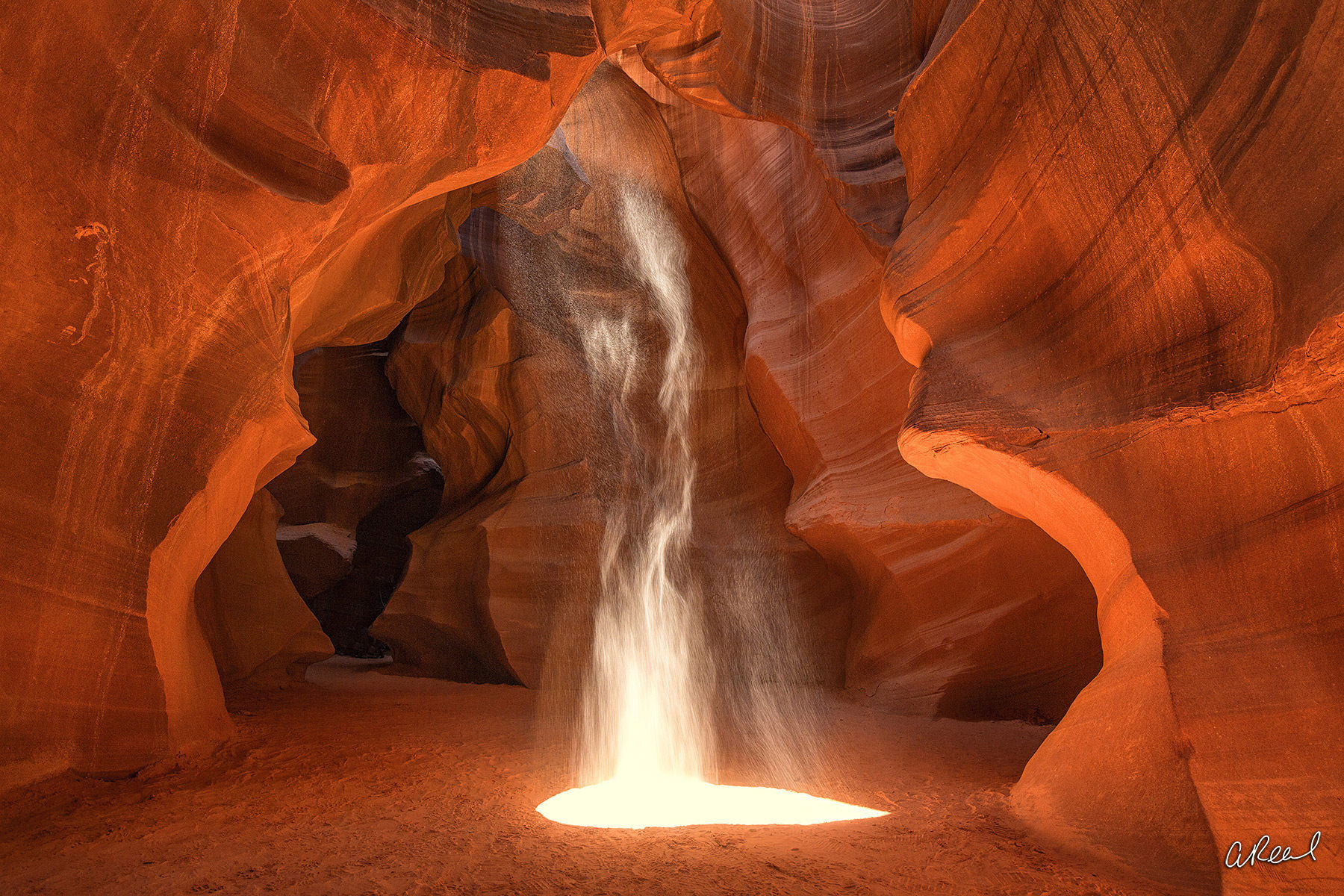
7. ShapeShifter – Antelope Canyon, Arizona

Shapeshifter | Beam of Light Shining Into a Canyon | Fine Art Photography for Sale by Aaron Reed

Create a window into nature with Aaron Reed’s limited edition photography print, ShapeShifter, from his American Southwest Photography collection. Order yours today! Fine Art Limited Edition of 100

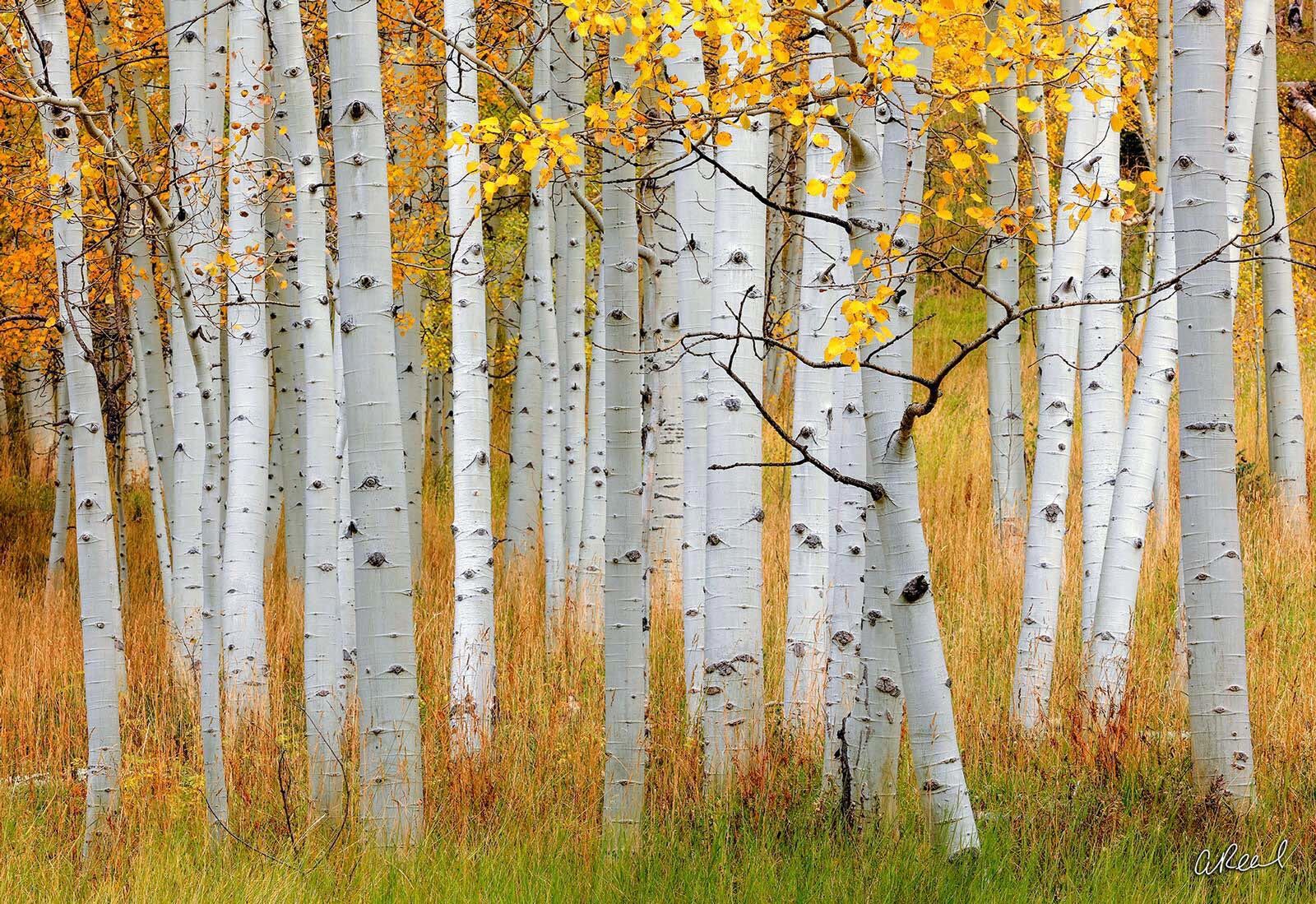
8. Colorado Gold – Aspen, Colorado

A Photograph of Young, Small Aspen Trees Growing in a Field of Golden Grass in Autumn | Tree Photography for Sale by Aaron Reed

A young stand of stark white aspen trees grows from golden grasses inside the Maroon Bells area in Aspen, Colorado. Large, framed & unframed wall art prints for sale. Fine Art Limited Edition of 50.

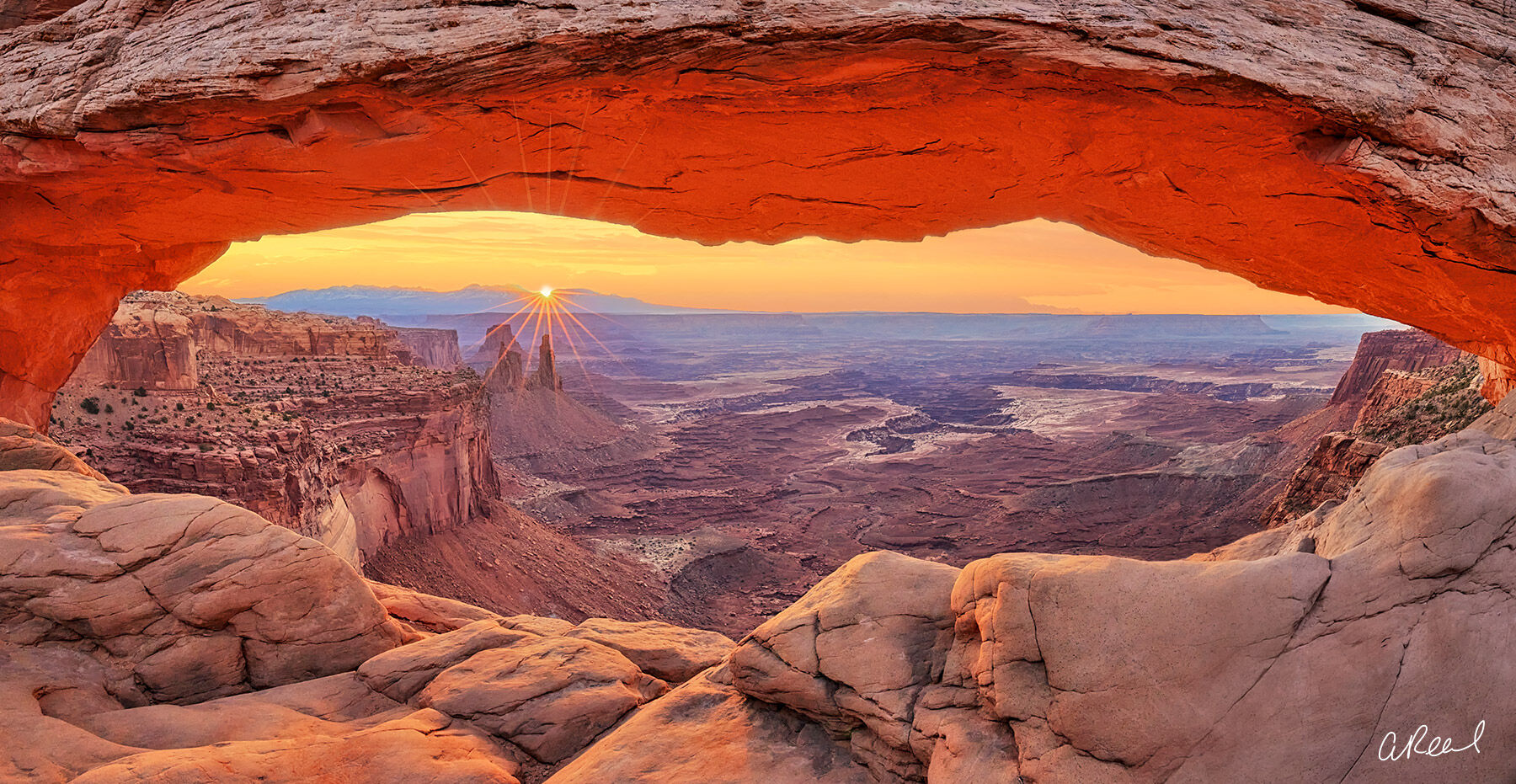
9. The Window – Mesa Arch, Utah

The Window
Transform your space with Aaron Reed’s luxury fine art photography print, The Window, from his Panoramic Wall Art collection. Order yours today! Fine Art Limited Edition of 100

10. Infinite Worlds – Lost In Iceland

Infinite | Abstract Photography | Aaron Reed

Transform your space with Aaron Reed’s limited edition photography print, Infinite Worlds, from his Abstract Nature Photography collection. Order yours today! Fine Art Limited Edition of 50.

Up & Coming For 2022

Like many of you I spent the majority of 2021 in the safety of my home. With a young, at risk child at home, the safety of my family came before everything else. I only made it out to shoot a handful of times but one of those times was a very rewarding and fruitful trip to Iceland in between waves. That trip yielded a handful of images that have already began to sell well and will be top contenders for next years list. You can see a few of them below. Thank you for taking the time to read this post allowing you to share my successes of 2021. I wish you all the very best in 2022 in life and in business!

The Empire | Iceland Landscape Photography | Aaron Reed

Transform your space with Aaron Reed’s limited edition photography print, The Empire, from his Iceland Nature Photography collection. Order yours today! Fine Art Limited Edition of 50.

Diamonds In The Sky | Iceland Landscape Photography | Aaron Reed

Transform your space with Aaron Reed’s limited edition photography print, Diamonds In The Sky, from his Iceland Nature Photography collection. Order yours today! Fine Art Limited Edition of 100.

Oceans Treasures

Transform your space with Aaron Reed’s limited edition photography print, Ocean’s Treasures, from his Iceland Nature Photography collection. Order yours today! Fine Art Limited Edition of 50.

SeaSnakes

Transform your space with Aaron Reed’s limited edition photography print, SeaSnakes, from his Abstract Nature Photography collection. Order yours today! Fine Art Limited Edition of 50.

[ad_2]

How To Take Amazing Photos of the Blood Beaver Moon and Meteor Showers

[ad_1]

With November’s Beaver full moon approaching and several meteor showers being active this month, skygazers have plenty to look forward to. But for the astrophotography enthusiasts, what is the best way to go about taking pictures of these events?

Newsweek spoke to award-winning Hungarian astrophotographer Rafael Schmall who provided some of his top tips for imaging and preserving the full moon and meteor showers.

Full moons are a lunar phase that occurs roughly once every month when our natural satellite is located opposite the sun in space, with the Earth in between.

Technically, the moon turns full only at a specific moment—which this month will be 6:02 a.m. Eastern Time on November 8. But the moon will appear full to most observers for the entire evening of November 7-8.

The first thing Schmall does before taking images of the full moon is check out The Photographer’s Ephemeris desktop web app, which contains several free features, although registration is required.

This app is a planning tool that enables you to plan the natural light of the sun and moon for outdoor photography purposes.

Schmall told Newsweek he recommends using the app to plan where and when the moon will rise or set in your location. Once you know this you can think about planning what the foreground of your picture will be to add some interesting features to the image.

Around sunrise or sunset is a particularly good time to observe the moon because it may appear larger than it really is and have an orange hue. This is due to a phenomenon known as the “moon illusion,” which can be explained by a trick of the mind.

In terms of equipment, Schmall said he recommends using DSLR or mirrorless cameras, but some bridge cameras with powerful zoom lenses are also capable of shooting the rising or setting moon.


The big exclamation mark moon. This image is composed of several pictures taken every 30 seconds with a Samyang 135mm lens on a Canon 6D camera. Rafael Schmall


© Rafael Schmall
The big exclamation mark moon. This image is composed of several pictures taken every 30 seconds with a Samyang 135mm lens on a Canon 6D camera. Rafael Schmall

Bridge cameras are cameras that fill the gap between simple point-and-shoot cameras and those with interchangeable lenses, such as DSLRs and mirrorless. They tend to be similar in size and weight to the smallest DSLRs but are not equipped with interchangeable lenses.

For full moon pictures, Schmall said he uses a DSLR with a Samyang 135mm, aperture f2 lens. But he sometimes uses a 200-500mm lens, which is also good for capturing the full moon. A light but strong “travel” tripod is also necessary, according to Schmall.

The photographer said taking a pictures of the full moon does not require a full aperture because it is bright.

“I usually take pictures of it at f8. There are older telephoto lenses that work at f8-f11 and you can take good shots with them too,” Schmall said. “A wider aperture is necessary when there is a moonrise or moonset because then it may not be as bright.”


Super Buck Moon in the summer of 2022 imaged with a 135mm telephoto lens. Every shot in this image was taken with shorter exposure and shorter exposure. Rafael Schmall


© Rafael Schmall
Super Buck Moon in the summer of 2022 imaged with a 135mm telephoto lens. Every shot in this image was taken with shorter exposure and shorter exposure. Rafael Schmall

“The ISO sensitivity can be changed, but if the moon is very bright, it is worth staying around ISO100. For moonrise sequences, it can be ISO800 or ISO1600.”

To create a “moon-trail” image—one in which a series of shots of our natural satellite are stacked next to each other—the camera needs to take a photo roughly every three minutes without the tripod moving, Schmall said.

In order to ensure that the tripod does not move, the photographer recommends using a wireless application that enables you to control your camera remotely—ideally with the capability to adjust exposure time—or a programmable remote.

As the full moon rises, the sky becomes darker and our natural satellite become brighter, so you will need to adjust the exposure time—from longer to shorter.

To align the photos for the moon-trail image easily, Schmall uses a free online program called Startrails. But for those with the relevant knowledge, the same effect can be achieved with Photoshop using blending mode.


A bright meteor from a timelapse scene. This image was taken using a Canon 6D camera equipped with a Samyang 24mm f1.4 lens. Rafael Schmall


© Rafael Schmall
A bright meteor from a timelapse scene. This image was taken using a Canon 6D camera equipped with a Samyang 24mm f1.4 lens. Rafael Schmall

Capturing images of meteor showers is somewhat trickier, given the fleeting nature of shooting stars, according to Schmall. But it is still possible.

Meteor showers are celestial events that occur when the Earth passes through streams of cosmic debris left behind by comets and, in some rare cases, asteroids. During these events, numerous meteors can be seen streaking across the sky, appearing to originate from a single point—known as the radiant.

Meteors—colloquially referred to as shooting stars—are the streaks of light we see in the sky when tiny fragments of space debris burn up in the Earth’s atmosphere at high speed.

“To capture a meteor shower, you need hundreds, or thousands of images to capture some meteors—or the brighter ones,” Schmall told Newsweek.

Unlike taking pictures of the full moon, snapping pictures of meteors requires a dark sky. The light from even just a quarter moon reduces the visibility of meteors significantly.


Perseid meteors. This image was created using images taken with a Sigma 8mm f3.5 fisheye lens on a Canon 6D and edited with photoshop. Rafael Schmall


© Rafael Schmall
Perseid meteors. This image was created using images taken with a Sigma 8mm f3.5 fisheye lens on a Canon 6D and edited with photoshop. Rafael Schmall

Schmall recommends using a short exposure time when imaging meteors, ideally with a wide aperture lens (f2-2.8) and low ISO settings. But it is possible to capture meteors with longer exposure times and higher ISO settings.

For capturing meteors during a shower, the camera must be in continuous shooting mode with locked shutter release in order to capture the unpredictable shooting stars, Schmall said.

The photographer recommends using a battery grip or a dummy battery because the camera will gather hundreds of photos over a period of several hours.

This month, the Orionid meteor shower is still active until November 22, although it has already passed its period of maximum activity, according to the American Meteor Society.

Meanwhile, the Northern Taurid meteor shower, will reach its peak on the night of November 11-12, although the moon will be fairly bright, likely significantly hampering observations.

Another opportunity to see meteors is the Leonid shower, which peaks later in the month on the night of November 17-18—when the moon will only be 36 percent full—and is active for almost all of November.

Related Articles

Start your unlimited Newsweek trial

[ad_2]

Observation building, new photography blind to open Saturday at Wheeler | Decatur

[ad_1]

The renovated observation building and new photography blind at Wheeler National Wildlife Refuge will open Saturday after almost eight months of construction.

Get Unlimited Access

$3 for 3 Months

Subscribe Now

After the initial selected subscription period your subscription rate will auto renew at $12.00 per month.


[ad_2]

15 Most photo-worthy spots in !

[ad_1]

Coeur d’Alene (/ˌkɔːr dəˈleɪn/ KOR də-LAYN; French: Cœur d’Alêne, lit. ‘Heart of an Awl’ [kœʁ d‿a.lɛn]) is a city and the county seat of Kootenai County, Idaho, United States. It is the largest city in North Idaho and the principal city of the Coeur d’Alene Metropolitan Statistical Area. In 2020, the United States Census Bureau estimated the city’s population at 53,354. Coeur d’Alene is a satellite city of Spokane, which is located about thirty miles (50 km) to the west in the state of Washington. The two cities are the key components of the Spokane–Coeur d’Alene Combined Statistical Area, of which Coeur d’Alene is the third-largest city (after Spokane and its largest suburb, Spokane Valley). The city is situated on the north shore of the 25-mile (40 km) long Lake Coeur d’Alene and to the west of the Coeur d’Alene Mountains. Locally, Coeur d’Alene is known as the “Lake City,” or simply called by its initials, “CDA.

In you will find some beautiful attractions that you just cannot miss! Places like Lake Coeur D’alene, North Idaho Centennial Trail, and Harriman State Park and many more. Continue reading to know more.


© Provided by Microsoft Travel (Alan Nick Getty Image)


Enjoy outdoor activities, on land and water, and a crazy golf game.


© Provided by Microsoft Travel (Step2626 Getty Image)
Enjoy outdoor activities, on land and water, and a crazy golf game.

This lake, which is 26 miles long, is the second-largest in northern Idaho. Thus, it is a natural playground complemented by parks, campgrounds, beaches, trails, and recreational areas. The lake also has well-maintained boat launches, along with rentals of jet skis, sailboats, and other watercraft. You can do all these within a beautiful setting that offers magnificent mountain views.


North Idaho Centennial Trail is a point-to-point trail that features beautiful scenery since it houses a lake.


© Provided by Microsoft Travel (Wikimedia Image)
North Idaho Centennial Trail is a point-to-point trail that features beautiful scenery since it houses a lake.

North Idaho Centennial Trail, located in Idaho, is a multi-use trail where it is accessible all year-round. It is a point-to-point trail where visitors could admire the beauty of nature as it houses a lake. The trail is also ideal for other outdoor activities aside from walking such as cycling.


Harriman State Park lies within a 16,000 acre in Idaho, United States.


© Provided by Microsoft Travel (Johnandersonphoto Getty Image)
Harriman State Park lies within a 16,000 acre in Idaho, United States.

Harriman State Park has 22 miles of mountain biking, hiking trails, horseback riding trails with gorgeous views of the beautiful mountains. The world’s largest waterfowl species are commonly seen in this park. Winter events are very famous in this park, they include snowshoeing, skiing, fat biking. Good wildlife and fishing with beautiful picnic spots can be enjoyed in this park. The parking fee is very reasonable and worth it.


Timberline Adventures offers the ultimate outdoor experience in Coeur d'Alene which one should not miss.


© Provided by Microsoft Travel (Wikimedia Image)
Timberline Adventures offers the ultimate outdoor experience in Coeur d’Alene which one should not miss.

Timberline Adventures offers the ultimate outdoor experience in Coeur d’Alene, with 7 lines, 3 sky bridges, and out-of-this-world views. A van will pick you up and bring you to Timberline. The land overlooking Beauty Bay is located 12 miles east of downtown. The Yamaha Viking will be just that: a Yamaha Viking. A zip line canopy tour guide. With the assistance of a guide, you may reach the top of the canopy.


An excellent place to stay on a vacation to Coeur d'Alene.


© Provided by Microsoft Travel (UCG Getty Image)
An excellent place to stay on a vacation to Coeur d’Alene.

The Best Western Coeur d’Alene Inn is located in Idaho, United States. The hotel provides 122 well-furnished rooms at affordable prices. The inn is close to the river and is just 3 km from Kootenai Clinic Hospital Medicine and Coeur d’Alene Golf Course. The hotel has an indoor pool, sports bar, free internet access, and an on-site restaurant offering delightful cuisines. You can also enjoy horseback riding, fishing, and boating.


Hiawatha Trail is known to be one of the most stunning trails in the country which offers breathtaking views.


© Provided by Microsoft Travel (Pinimg Image)
Hiawatha Trail is known to be one of the most stunning trails in the country which offers breathtaking views.

Hiawatha Trail, located in Idaho, is the perfect trail for those who love cycling as it features a smooth asphalt trail. Visitors would surely love the trail as it also offers stunning views of nature and evokes a calming atmosphere or feeling. The trail passes by the Bitterroot mountains and also features picnic stops for those who want to take a rest.


One-stop destination for kayaks and stand-up paddle rentals and sales.


© Provided by Microsoft Travel (Donald_gruener Getty Image)
One-stop destination for kayaks and stand-up paddle rentals and sales.

Kayak Coeur D’Alene is located at Coeur d’Alene, Idaho. With multiple lakes around the city, North Idaho is the best place for kayaking. Kayak Coeur d’Alene rents kayaks, paddle boats, and float tubes. On order, the items are delivered to the vacation houses around the lake. Orders can be confirmed through emails or calls. The pickup facility of the rented equipment is also available at the end of the tour. While kayaking one can come across local wildlife of Idaho such as moose, bear, coyote, mountain goat, and bald eagles.


Avid readers should check out the Coeur d'Alene Public Library where it houses diverse collections of books.


© Provided by Microsoft Travel (Education Images Getty Image)
Avid readers should check out the Coeur d’Alene Public Library where it houses diverse collections of books.

Coeur d’Alene Public Library, located in Idaho, is a reader’s dream come true as it is home to numerous books. It is known for its excellent library services and is committed to providing free and equal access to resources to promote lifelong learning. Visitors could easily spend hours at the library reading as the library’s atmosphere is peaceful and is conducive for learning and reading.


A small museum that exhibits the rich history of the Coeur d'Alene Region.


© Provided by Microsoft Travel (Wikimedia Image)
A small museum that exhibits the rich history of the Coeur d’Alene Region.

Museum of North Idaho is located in Coeur d’Alene, Idaho, United States. It is a great place that reveals the history of Northern Idaho through photographs and artifacts. It showcases the features of Coeur d’Alene Tribe, the history of railroad, steamboats, recreation, and forest service in the area. Museum also has a great collection of regional books.


Explore the high-quality work of native artists at The Art Spirit Gallery.


© Provided by Microsoft Travel (Chrisdorney Getty Image)
Explore the high-quality work of native artists at The Art Spirit Gallery.

The Art Spirit Gallery is a fine art and craft gallery situated in Idaho. It features high-quality, original work by local artists. The 4,000 square foot gallery showcases artists with a unique voice and dedication to craft, materials, observation, and creativity. Also, the opening reception and Downtown Art Walks are undoubtedly enjoyable.


Visit the one-of-a-kind Flamingo Motel where it is known for weird but cute flamingo sculptures on its lawn.


© Provided by Microsoft Travel (Roger Hutchings Getty Image)
Visit the one-of-a-kind Flamingo Motel where it is known for weird but cute flamingo sculptures on its lawn.

Flamingo Motel, located in Idaho, is the perfect place to stay when you are in the city. It is famous for the quality of its accommodations wherein they offer interesting furnishings and linens per room. Not only do they have good quality rooms but also offer cheaper accommodations compared to others.


Coeur d'Alene Parasail is a parasailing adventure located in Idaho, United States.


© Provided by Microsoft Travel (Wikimedia Image)
Coeur d’Alene Parasail is a parasailing adventure located in Idaho, United States.

Coeur d’Alene Parasail gives the chance of flying hundreds of feet over the lake and gives stunning views of Coeur d’Alene. This is fun and safe and landings and take-offs can be done from the boat. This adventure gives a calm and smooth experience to all who are not afraid of heights.


Coeur d'Alene Inn Best Western offers one of the best accommodations in the city.


© Provided by Microsoft Travel (Iceportal Image)
Coeur d’Alene Inn Best Western offers one of the best accommodations in the city.

Visitors looking for great accommodations or places to stay should definitely try out the Coeur D’alene Inn Best Western. It is an inn located in Idaho where it features 122 well-maintained rooms at an affordable rate per night. The inn also has different amenities and facilities such as an indoor pool and a breakfast buffet.


Coeur d'Alene Masonic Temple is considered to be a historical place known for its stunning architecture.


© Provided by Microsoft Travel (Wikimedia Image)
Coeur d’Alene Masonic Temple is considered to be a historical place known for its stunning architecture.

Visitors will surely love admiring and taking pictures of the Coeur d’Alene Masonic Temple which features one-of-a-kind architecture. The design of the building includes terra cotta and iron ornamentation which makes it more beautiful. There are also available exhibits inside where visitors could learn more about the building.


Devin Galleries is one of America's leading fine art galleries, and it's located in a gorgeous resort neighborhood.


© Provided by Microsoft Travel (Bing Image)
Devin Galleries is one of America’s leading fine art galleries, and it’s located in a gorgeous resort neighborhood.

Devin Galleries, one of America’s best fine art galleries, is located in the lovely resort village of Coeur d’Alene, Idaho. Original paintings, bronze and stone sculpture, modern art glass, limited edition prints, wood, and ceramic vessels, jewelry, and more may be found at the downtown Coeur d’Alene gallery, which spans almost 7,000 square feet.

Visit to book a budget friendly trip!

BOOK NOW

[ad_2]

Image Doctor: The critiques! – Australian Photography

[ad_1]

A regular part of Australian Photography magazine for more than a decade, the Image Doctors, photo educator Saima Morel and professional photographer Anthony McKee, can give constructive feedback on your images, with a selection of their favourite submissions appearing in print in AP mag every month.

If you want feedback on your images (it’s free!), you can find out the details for submission here. Our winner each month will receive a fantastic prize thanks to our amazing sponsors SanDisk. 

This month’s winner

TITLE: Self Portrait
PHOTOGRAPHER: Tiago De Almeida
DETAILS: Nikon D5500, 18-200mm lens @ 28mm. 1/100s @ f5, ISO 400.

Image: Tiago De Almeida

Tiago made this image while exploring Rembrandt lighting with a “soft box” lighting kit.

“I had never tried self portrait photography as I was never comfortable in front of the camera, but have been inspired by street portrait photographer Lee Jeffries. I used a remote trigger and experimented with different lighting, then I edited the image in Lightroom, really going for strong textures.”

Self portraiture is a good exercise for any photographer, in part because you can be in the head of both the photographer and the subject at the same time (and it lets you explore ideas you might not be ready to try yet with a real subject). 

All up, I do like this image; the lighting is very good, the background works well and the model looks reasonable too. The one thing that I would like to improve though, is the cropping of the image – you  have cropped into the woollen beanie both at the top and the right of the frame, but both crops seem timid. Personally, I would like to see more cropping at the top of the image, but no cropping on the right – you could almost afford to shoot a little wider and then crop to square. Nonetheless, well done.

Anthony’s Tip: Try shooting portraits in the horizontal and then cropping to square; the square form can give images a really strong look.

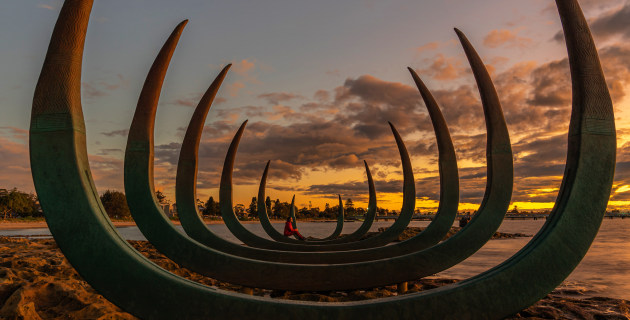
TITLE: Sunset at Kamay Botany Bay National Park
PHOTOGRAPHER: Denny Christian
DETAILS: Sony A7 II, Sigma 28-70mm f/2.8 lens @ 28mm. 4s @ f7.1, ISO 50.

Image: Denny Christian

Denny did not give us much information about this image, aside from “Post processing in Lightroom with a bit adjustment in colour, and cropped to make pic look more symmetry”. What we do know though, (from Denny’s 2599 Instagram posts) is that Denny enjoys photographing Sydney and its many National Parks.

I love the use of symmetry in this image, and your use of a model in the red jacket. What I do have a problem with though, is that the model is competing for attention from that large area of blue sky in the top left of the picture.

There are two ways I would have changed this image; at the time I of making the photo I would have moved the model a little closer to the camera so they were not so distant in the frame. By way of improving the image after the event though, I would crop the image down to a 16 x 9 ratio, keeping most of the foreground and losing some of the sky. This will enhance the graphic nature of the sculpture and the model will look more significant in the frame.

Anthony’s Tip: If in doubt, explore your crop options. Removing some bright sky or eliminating a distracting object from the edge of your frame can often improve an image.

TITLE: Sugarloaf
PHOTOGRAPHER: Dani Maver
DETAILS: Sony A7 III, 24-70mm f/2.8 lens @ 26mm. 1/160s @ f4, ISO 100.

Image: Dani Maver
Image: Dani Maver

Dani made this image at Sugarloaf reservoir in Christmas Hills, near Melbourne. “I have been taking photos for about a year and I’m trying to teach myself how to look at light. I went to the reservoir intending to take photos of sunrise and hot air balloons, but over my shoulder I saw the light reflecting off the guard rail of the dam wall. I have ‘enhanced’ the warmth of the reflection and increased the contrast in post”.

Dani, you are heading in the right direction! Learning how to see light and if it “hard” or “soft”, knowing how it affects the subject and ultimately how you can work or even manipulate this light will make you a better photographer, but it takes time. I once asked my mentor how long it takes to understand light and he said ten years. I reminded him of this comment a few years later and he revised the number up –
“it takes a lifetime!”.

As for this image, I think you have gone a little too wide here. If you crop in on the dam and eliminate the left of the frame you will make this image more graphic – and interesting.

Anthony’s tip: Remember, less can be more – crop in and let others guess what they are looking at.

TITLE: The Waterfront
PHOTOGRAPHER: Susan Shanta
DETAILS: Olympus E-M5 Mk III, 14-24mm lens @ 26mm. 1/500s @ f8, ISO 200.

Image: Susan Shanta
Image: Susan Shanta

Susan recently discovered the waterfront at Geelong. “As I walked around the long boardwalk, it felt like I was walking on water. Being a bay within a bay, the water is calm and reflective. A mild but cloudy day lent itself to the amazing cloud reflections on the glassy surface of the water.

The boardwalk sits flush with the water so I could get down lower and shoot across the surface. The posts of the water gives the impression of a scar in the middle holding the sky and water together. With a touch of yellow in the buoy to the right, being the contrast splash of colour complimenting.”

Hey Susan, this is a great image, and your synopsis above covers it well. There are a couple of things that you might have done differently though. Many people apply the “Rule of Thirds” to EVERY image, but there are occasions when placing the horizon line is perfectly acceptable, particularly when working with pure reflections and such a strong dividing line.

You can still crop this image so that the boardwalk is in the middle of the frame and it will look very strong. Also, if you are using Lightroom or Adobe Camera RAW, try using a Gradient mask along with the Dehaze tool (along with a little increase in the exposure); this will help add life to the reflection!

Anthony’s tip: Dehaze is one of the most useful mask adjustments in Lightroom and ACR. Use it prudently as a Mask option to add life to otherwise flat areas on an image. 

TITLE: Sun, Moon and Stars
PHOTOGRAPHER:  Rod Coysh
DETAILS: Pentax KP, 18-55mm lens @ 18mm. 30s @ f3.5, ISO 3200.

Image: Rodney Coysh
Image: Rodney Coysh

Rod made this image at Whiskey Bay in the Wilson’s Promontory using his Pentax KP on a tripod and one single 30 second exposure. Post processing was done using the Pentax Digital Camera Utility 5 from a RAW image. As Rod comments – “The light from a new moon can be seen in the upper right hand corner of the image, with the after glow of a sunset in the bottom right hand corner”.

Astrophotography is challenging because we are asking our cameras to do something that we ourselves are not that good at – seeing in the dark. We can see the camera’s struggle in the “noise” of the picture (the graininess) and also the hint of star trails.

Some people buy ‘fast’ f1.4 and f1.8 lenses for astrophotography, but another option is to work with what you have, and actually reduce the noise by using a lower ISO (like ISO 200) and then use the Bulb mode on your camera to create a 10 minute exposure. The noise will be significantly reduced but you will also get longer star trails, and that might make the image more interesting.

One other thing that I would try if you were shooting this image again would be to put the camera into the vertical so that you can make more of the beach in the foreground. Otherwise, good effort.

Anthony’s Tip: If you are struggling in low light, don’t be scared to put the camera onto a solid tripod, drop the ISO down and explore alternate options.


[ad_2]

Asia-Pacific’s Largest Photography Fair Will Host Its Inaugural New York Edition Next Fall

[ad_1]

Photofairs, Asia’s largest photography fair, will make its debut in New York next year.

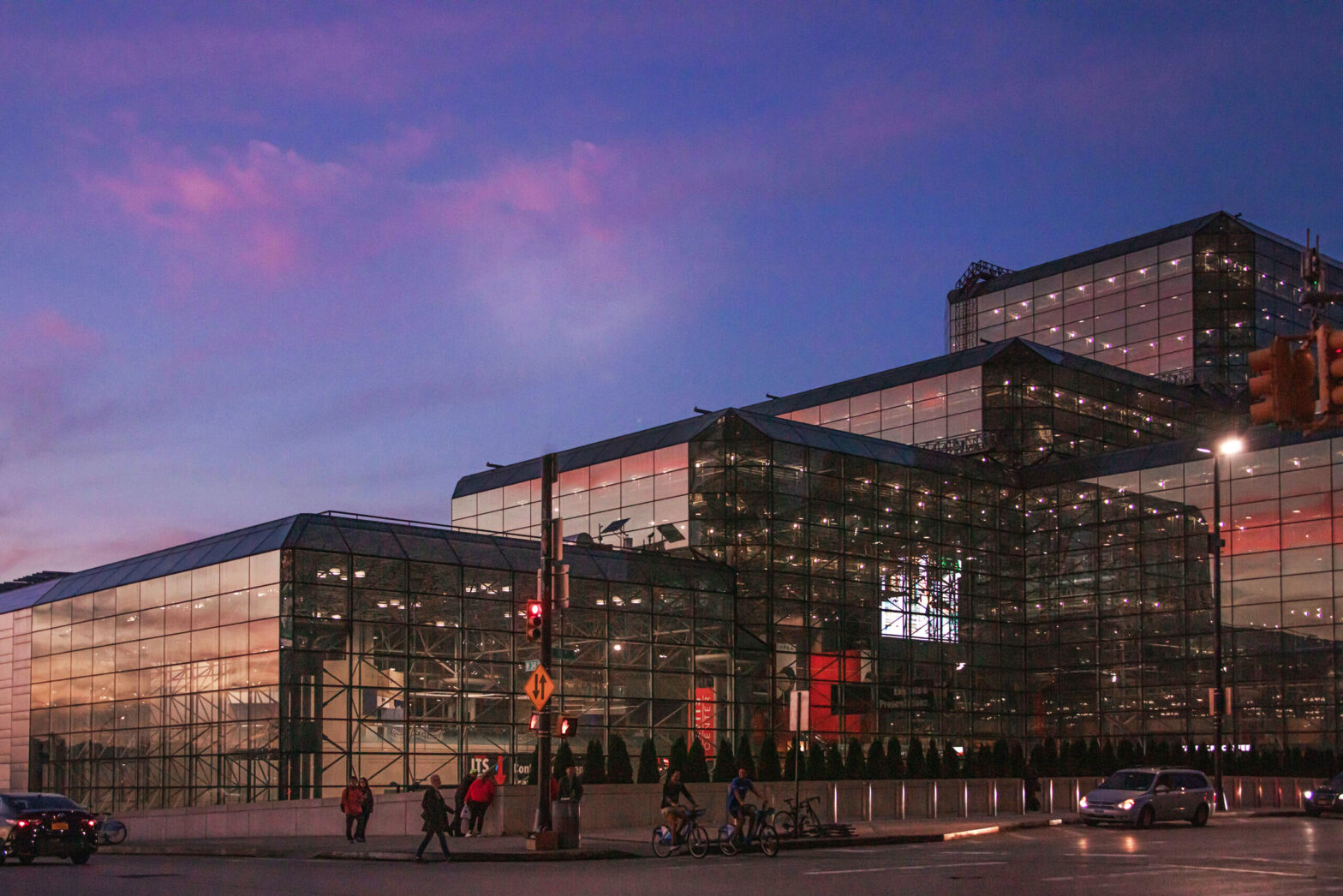
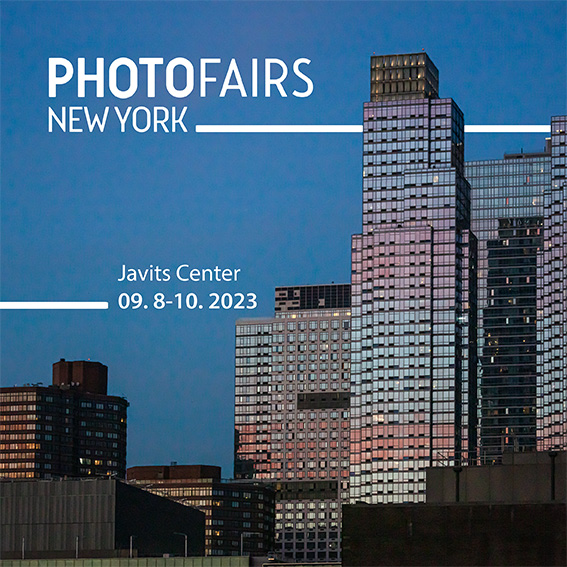
Event organizer Creo has announced the first Photofairs New York will take place from September 8–10, 2023 at the Javits Center, just next door to the Armory Show. Held in partnership with Angus Montgomery Arts, the fair will showcase photography, film, and virtual reality works, spotlighting about 100 international galleries. Exhibitor applications are now open.

“We have great admiration for the Armory Show and its long-standing track record,” Creo CEO Scott Gray told Artnet News. “Bringing the unique offerings of the two fairs together under one roof will be mutually beneficial.” The Javits Center, he said, is “a purpose-built exhibition center well suited to the requirements of galleries and visitors alike.”

According to Jeff Rosenheim, the Metropolitan Museum of Art’s photography curator, the city itself is likely to be receptive. “New York’s enthusiasm for photography is almost unbounded,” he noted in Creo’s press release. “This will bring new energy to the fall season in New York.”

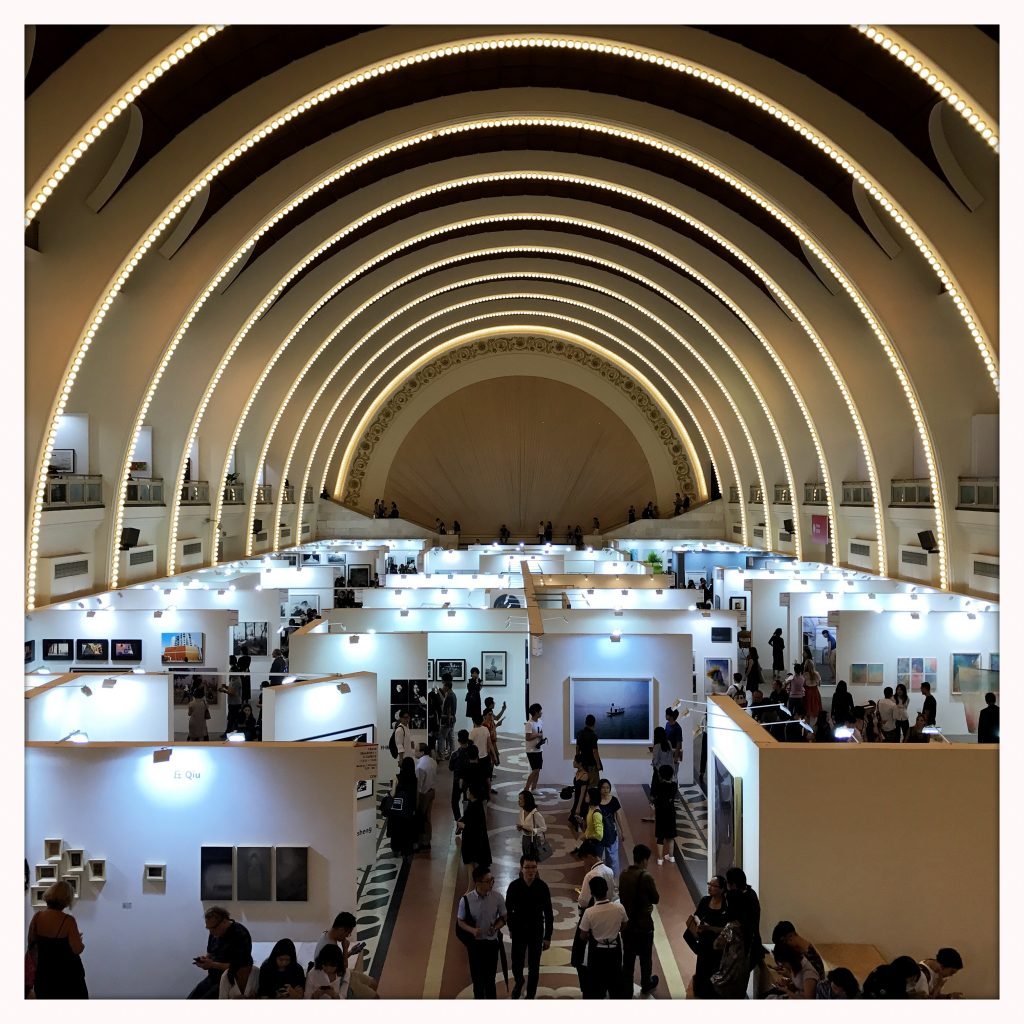
The 2017 edition of Photofairs Shanghai at the Shanghai Exhibition Centre. Photo by Simon Song/South China Morning Post via Getty Images

Gray founded Creo in 2007 as the World Photography Organization, a company whose roster now encompasses the Sony World Photography Awards, Sony Future Filmmaker Awards, and Photo London. He currently also serves as CEO of Angus Montgomery Arts, which oversees India Art Fair, Taipei Dangdai, and Art Düsseldorf, among other fairs.

“Creo has since grown in scope, furthering its mission of developing meaningful opportunities for creatives and expanding the reach of its cultural activities to film and contemporary art,” Gray explained.

In 2014, Creo launched the now-signature Photofairs Shanghai. Between 2017 and 2019, the group tried hosting two rounds of a San Francisco edition, but gave up after learning it cost more than $1 million to produce.

Photofairs New York will organize exhibitors into four sections. “Galleries” will encompass all exhibitors chosen by Creo’s Selection Committee, comprising of international galleries, and the fair’s Advisory Group of international collectors—who will also cultivate an audience of buyers for the event. International fair partner Meta Media Group will expand the fair’s global footprint.

Photo courtesy of Photofairs New York.

Meanwhile, the “Platform” section will hold space for booths by galleries that have logged less than eight years in the business and artists aged under 35. “Screen” will showcase galleries working in new technologies such as VR and NFTs. “Film” will focus on moving image as a medium.

Since photography has gone from a technically specialized skill to a widely embraced medium, Gray reflected, “I believe there is demand for a new fair in photo-based works and new technologies, which really reflects current market trends and explores how we interact with digital culture.” Creo is looking to further embrace experimental practices and seminal photographers alike—and catch both seasoned and emerging collectors.


More Trending Stories:

In a ‘Once-in-a-Lifetime’ Discovery, Swedish Archaeologists Have Unearthed a Cache of Viking Silver That Still Looks Brand New

Sarah Biffin, the Celebrated Victorian Miniaturist Born Without Hands, Is Now Receiving Her First Major Show in 100 Years

Disgraced Antiques Dealer Subhash Kapoor Handed a 10-Year Jail Sentence by an Indian Court

It Took Eight Years, an Army of Engineers, and 1,600 Pounds of Chains to Bring Artist Charles Gaines’s Profound Meditation on America to Life. Now, It’s Here

‘I’ll Have Terrific Shows Posthumously,’ Hedda Sterne Said. She Was Right—and Now the Late Artist Is Getting the Recognition She Deserved


Click Here to See Our Latest Artnet Auctions, Live Now

Follow Artnet News on Facebook:


Want to stay ahead of the art world? Subscribe to our newsletter to get the breaking news, eye-opening interviews, and incisive critical takes that drive the conversation forward.

[ad_2]

Review: The Photography of Maura Z—An Ode to Gray

[ad_1]
Over the past 20 years, with advances made in digital and phone cameras, many of us feel the best way to capture a scene is by taking a color photo. Most of us are led to believe that color photography not only provides better detail, but also helps capture the mood of a particular scene. But in the latest exhibition, Creation and Re-Creation in Shades of Gray at Everybody’s Coffee, Maura Z shows us how details as well as moods can better come to life in photography using various shades of gray.

This is Maura Z’s first solo exhibition and on display are 44 digital prints. All the images were captured with her digital camera and then later re-created through Photoshop where she stripped the photos to their barest poetic essence while also creating negative and positive space within her images.

Maura Z, Life Cycle
Maura Z, Life Cycle. Digital print. Photo courtesy of the artist.

Although there is a muted quality to her work, the viewer is easily drawn to her images due to her mastery in composition—she effectively balances the amount of detail and space as well as highlights and shadows. The details in her photos are in many ways more vivid due to the absence of color—perhaps because our brain isn’t processing or being distracted by colors, we are forced to see the stark details within each image. Maura’s use of grey tones creates an ambience that evokes various moods that bring to mind the quote by the French author, André Gide, who once said, “The color of truth is gray.”

A number of her works act as visual haikus that create meditative moments. A good example of this is Daily Reflection (Portofino, Italy), that shows a body of water shimmering against the reflection of the sun. The dark tones of the water add a sense of depth and mystery to this scene. Another work that fits this mode is Life Cycle where we see a dying water lily. In this shot we are reminded of the natural decay that exists within nature while also making us aware that we are all taking part in the cycle of life and death.

Maura Z, Grassburst,
Maura Z, Grassburst. Digital print. Photo courtesy of the artist.

There is also a whimsical aspect to her works, such as in Faeries’ Wings and Bubblies. When viewing these works, we cannot help but experience a sense of joy and a lightness of being. These works draw us into a state of mindfulness, inviting us to be in the present moment. These works not only allow us to appreciate the magic that exists within nature, but even more, to appreciate the subtle details that nature offers.

Maura’s works also express the majesty of various landscapes, such as in The Tree of Life, that shows a robust tree spreading its branches outward and upward toward the sky. And some of her images capture the raw energy of nature such as in Before the Deluge where we see foreboding clouds that gather before a storm or in Freshwater Collisions where we can feel the powerful movement of water.

Maura Z, Bubblies
Maura Z, Bubblies. Digital print. Photo courtesy of the artist.

Equally intriguing are a couple of her works that at first glance seem to be abstract without an immediate association with the physical world. She achieves this through her use of perspective, movement and light—transforming something ordinary into an unexpected and unrecognizable image.

“I want my work to remind people that they should stop and look around them and take the time to appreciate the beauty on this planet,” said Maura.  She also added, “Hopefully, someone’s perspective might change on how they see the world when looking at my work.”

What makes Maura Z’s work stand out is her unique combination of mechanical execution when taking a photo and her creative eye when re-creating photos through Photoshop. She also exhibits traits that other great photographers share such as having a sharp eye for detail, capturing a fleeting moment in time, and creating a mood that resonates within the viewer.

Creation and Re-Creation in Shades of Gray will be on display through January 5, 2023. Everybody’s Coffee is located at 935 W. Wilson. Hours: Monday thru Friday, 7am–2pm; and Saturday and Sunday, 8am–3pm. For more info, visit their website or call 773-303-6220.

Did you enjoy this post and our coverage of Chicago’s arts scene? Please consider supporting Third Coast Review’s arts and culture coverage by making a donation by PayPal. Choose the amount that works best for you, and know how much we appreciate your support!

[ad_2]