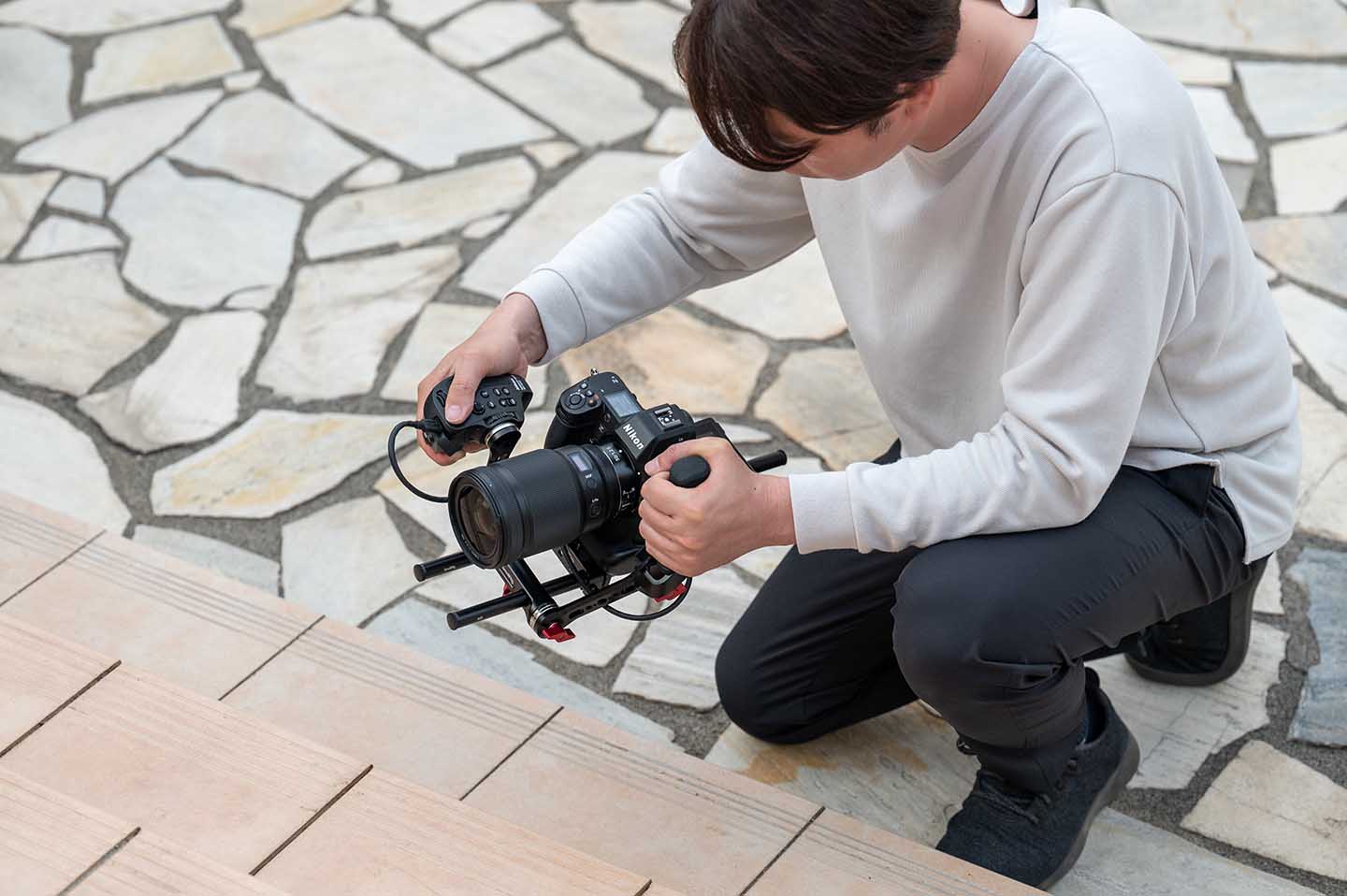
Nikon has announced the Remote Grip MC-N10, price tag £439 / €519, a new lightweight grip aimed at videographers and filmmakers.
The grip weighs just 310g (including two AA batteries inside) and can deliver 12 hours of operation on those two batteries.
The grip connects to your Nikon camera via USB-C and allows access to all of the main video settings via comparable buttons on the body of the MC-N10 grip. These include all the functions normally controlled by your camera’s direct controls, as well as settings assigned to its dials and Fn buttons.
What’s more, an ARRI standard rosette fitting allows you to make quick adjustments to position.
The Remote Grip MC-N10 is compatible with the Nikon Z9, Nikon Z7 II and Nikon 6 II. Z9 users will need to install new firmware to use the grip.
The winning photo of Scenic Utah’s “Off the Beaten Path” category features Ostler Lake in the Uinta Mountains. (Spencer Sullivan)
Estimated read time: 3-4 minutes
SALT LAKE CITY — The Beehive State has long been lauded as a top destination for its outdoor opportunities and surreal natural beauty.
Earlier this month, seven photographs that encapsulate Utah’s best features rose above a field of more than 700 to win the first annual Scenic Utah Photo Contest.
Scenic Utah, a statewide nonprofit advocating for the protection of the state’s scenic resources, launched the contest to celebrate Utah’s “natural beauty, its historic rural character and our unparalleled – and increasingly threatened – scenic vistas and skylines,” a release from the organization said.
The photo contest featured 734 submissions, all gunning for a top spot in one of the seven available photo categories:
Off the Beaten Path
Scenic Night Skies
My Rural Roots
Town, City and State Parks
Visual Pollution We Wish Would Go Away
Community Character
Audience Favorite
“These winning images highlight Utah’s extraordinary scenic resources and the importance of protecting them,” said Ralph Becker, former Salt Lake City mayor and chairman of the board at Scenic Utah.
Below are the winners from each category of the contest.
Off the Beaten Path
This category features pictures from “remote or hard-to-reach places in our beautiful state,” according to Scenic Utah’s website.
“We know and love Delicate Arch, but we’re looking for the lesser known.”
The winning photo of the “Off the Beaten Path” category features Ostler Lake in the Uinta Mountains. (Photo: Spencer Sullivan)
This picture — titled “Ostler Lake” by Spencer Sullivan — is certainly off the beaten path, as Ostler Lake is only accessible by backpacking into the Uintas.
Scenic Night Skies
Scenic Night Skies is the category for “astrophotography of all types,” according to Scenic Utah, which continued, “Long exposures or quick shots of the stars with captivating silhouettes — and everything in between.”
This photo, titled “Magic Bus,” certainly fits the prompt, featuring a breathtaking view of a clear night sky. (Photo: Dave Koch)
One could say that the stars aligned for “Magic Bus,” Dave Koch’s incredible shot of a starry night that many Utahns have come to admire.
My Rural Roots
While Silicon Slopes and the Salt Lake Valley explode, Utahns can still take solace in the more rural, wild parts of the state.
This barn in Newton, Cache County, certainly captures the rural spirit of the state. (Photo: Hans Christian Ettengruber)
Hans Christian Ettengruber perfectly captured the essence of the rural category in “Barn with Yellow Flowers,” which could make the most seasoned city-dweller daydream about spending a day in the yellow meadows surrounding the barn.
Town, City and State Parks
This category takes us all the way down to Sand Hollow State Park in Washington County, just north of the Arizona border.
This image shows a beautiful rainbow over Sand Hollow Reservoir in Washington County. (Photo: Nathan Hanson)
Nathan Hansons’s shot, “Rainbow in Sand Hollow,” also paints a picture of how quickly the weather can change in the desert.
Visual Pollution We Wish Would Go Away
With the rapidly growing nature of the state, this category pays homage to the visual impediments that Utahns are seeing more of these days.
This image shows power lines in the foreground, obscuring the view of mountains in the background. (Photo: Steve Wise)
“High Power Interference,” by Steve Wise, perfectly depicts the juxtaposition of Utah’s development industry and scenic beauty.
Community Character
From Cache Valley to the red desert of southern Utah, the Beehive State is full of communities overflowing with character.
This image of a sign that says “Westside” won the Community Character category of the photo contest. (Photo: Kirk Anderson)
Kirk Anderson’s “Westside Sign” looks like something out of an old western movie and creatively showcases the character found throughout Utah.
Audience Favorite
Of course, the people of Utah should also have a say in what they deem their favorite photograph.
When it came down to it, Utahns decided on Shauna Hart’s “The Boys are Back.”
“The Boys are Back” shows bison roaming the grounds of Antelope Island. (Photo: Shauna Hart)
The dramatic image showcases the wild nature of the state that is admired by so many.
×
Photos
Related stories
Most recent State of Utah stories
Logan Stefanich is a reporter with KSL.com, covering southern Utah communities, education, business and military news.
We may earn revenue from the products available on this page and participate in affiliate programs. Learn more ›
Sigma and Tamron lenses already offer lower-cost yet quality alternatives to Canon, Sony, and Nikon lenses. And right now, they are even more affordable during an early Black Friday sale on Amazon. If you’ve been considering getting a new lens to fill out your arsenal of gear or are a generous soul and want an exciting gift for a photographer, it’s a great time to do so.
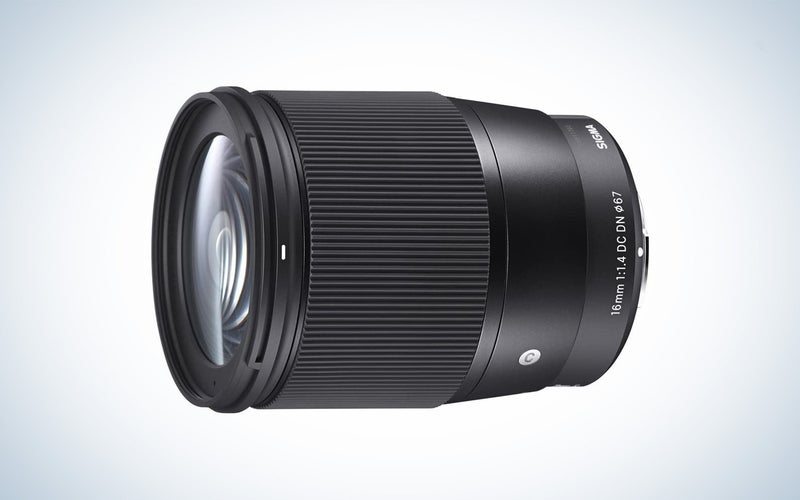
A good wide-angle lens is something every photographer should have available. Designed for Sony APS-C photographers, this lens offers a 35mm equivalent focal length of 24mm. It provides an extremely fast f/1.4 maximum aperture for strong low-light performance, making it a great tool for capturing wedding receptions or night skies. The wide aperture also helps to create separation between your subject and the background and even results in some attractive bokeh. It’s one of the best APS-C wide-angle lenses you can get for your Sony camera, and this price makes it even more enticing.
Sony APS-C users sure have a good selection of affordable wide-angle lenses to choose from during this early Black Friday sale. This Tamron lens offers a 16-30mm equivalent focal length, which is an ideal range for real estate, landscape, astrophotography, and even event coverage. It offers a lot of sharpness and quality in a very compact body, so it won’t feel out of place on the smaller APS-C cameras. And it’s moisture-resistant, giving you peace of mind if you get caught in bad weather.
Additional Tamron lens deals:
Tamron SP 150-600mvm F/5-6.3 Di VC USD G2 for Nikon Digital SLR Cameras $1,199.00 (was $1,399.00)
Tamron 17-28mm f/2.8 Di III RXD for Sony Mirrorless Full Frame/APS-C E Mount $799.00 (was $899.00)
Tamron 150-500mm f/5-6.7 Di III VC VXD Lens for Full Frame Sony $1,299.00 (was $1,399.00)
Tamron SP 70-200mm F/2.8 Di VC G2 for Canon EF DSLR $1,199.00 (was $1,299.00)
Tamron 70-180mm F/2.8 Di III VXD for Sony Full Frame/APS-C E-Mount $1,099.00 (was $1,199.00)
Tamron SP 150-600mm F/5-6.3 Di VC USD G2 for Canon Digital SLR Cameras $1,199.00 (was $1,399.00)
Tamron 17-70mm f/2.8 Di III-A VC RXD Lens for Sony E APS-C $749.00 (was $799.00)
Tamron 18-400mm F/3.5-6.3 DI-II VC HLD All-In-One Zoom For Nikon APS-Cv Digital SLR Cameras $599.00 (was $649.00)
It was the summer of 2012, and Justin’s voice teacher in Charleston encouraged him to attend a summer program at The Performing Arts Institute… in Pennsylvania. Kelly, living in Pennsylvania, applied for a scholarship to that same summer program… and won.
And so, they met in Pennsylvania while auditioning for West Side Story. That’s where it all began… Justin as Tony and Kelly as Maria. 🙂 Through rehearsal upon rehearsal, they built a friendship that grew stronger as they found more and more commonality between them.
Fast forward to October 6th, 2019. The happiest day fulllll of celebration and joy and a *little* bit of rain but WHO NEEDS SUNSHINE when you’ve got radiance like theirs?!?!! Justin & Kelly are truly the type to dance in the rain together and find the beauty in any situation… and if you ask me, that’s one of the best ingredients a marriage can have. <3
Thank you Justin & Kelly for having me as your wedding photographer, for having the sun-shiniest, brightest smiles (what rain?!?!!!), and for making my job sooo fun!! I loved celebrating along with your incredible families and feel like the luckiest to have been the one to capture your day.
Enjoy a few of my favorites from this beautiful Farm at Eagles Ridge wedding full of so much love and be sure to read more of Justin & Kelly’s love story here! Xo
Vendor Credits: Photographer | Caroline Logan Photography Second Shooter | Vanessa Shenk Planner | Diana of Planned Perfection Venue | The Farm at Eagles Ridge Florals | Divine Florals DJ | 3 West Productions Rentals | Treasured Events Draping & Lighting | Shumaker PDT Makeup Artist | MKUP The Beauty Studio Wedding Gown | Pronovias // Elizabeth Johns Jewelry | Olive and Piper Bridesmaids Dresses | Jenny Yoo // Bella Bridesmaids Groom & Groomsmen Attire | Central PA Tuxedo Catering | Rettew’s Catering Cake | Lancaster Cupcake Ice Cream | Penny’s Ice Cream Invitations | Nancy Lavan
For Photographers: Love creamy skintones & soft colors? Learn to edit light & airy here!
Vermont Business Magazine This month, the Gifford Galley welcomes the work of Braintree resident, Lisa Allard. Photography has been a passionate hobby of Allard’s ever since she was a young girl growing up next to her grandparent’s farm in Coos County, NH.
Although she has participated in photography workshops, Allard is mostly self-taught and is continually improving her craft while respecting wildlife and nature. The majority of Allard’s wildlife photos are taken from her kayak.
“I’ve become very good at keeping a low profile and sneaking around to capture the best light and angles,” Allard said.
Allard chose the name, “Love Life Photography” to serve as a reminder that focusing on the beauty in life is to love life. All of Allard’s exhibited art is for sale.
Gifford is a community hospital in Randolph, Vt., with family health centers in Berlin, Bethel, Chelsea, Randolph, Rochester, and specialty services throughout central Vermont. A Federally Qualified Health Center and a Top 100 Critical Access Hospital in the country, Gifford is a full-service hospital with a 24-hour emergency department and inpatient unit; many surgical services; an adult day program; 49-unit independent living facility, and nursing home. Its mission is to improve individuals’ and community health by providing and assuring access to affordable, high-quality health care in Gifford’s service area.
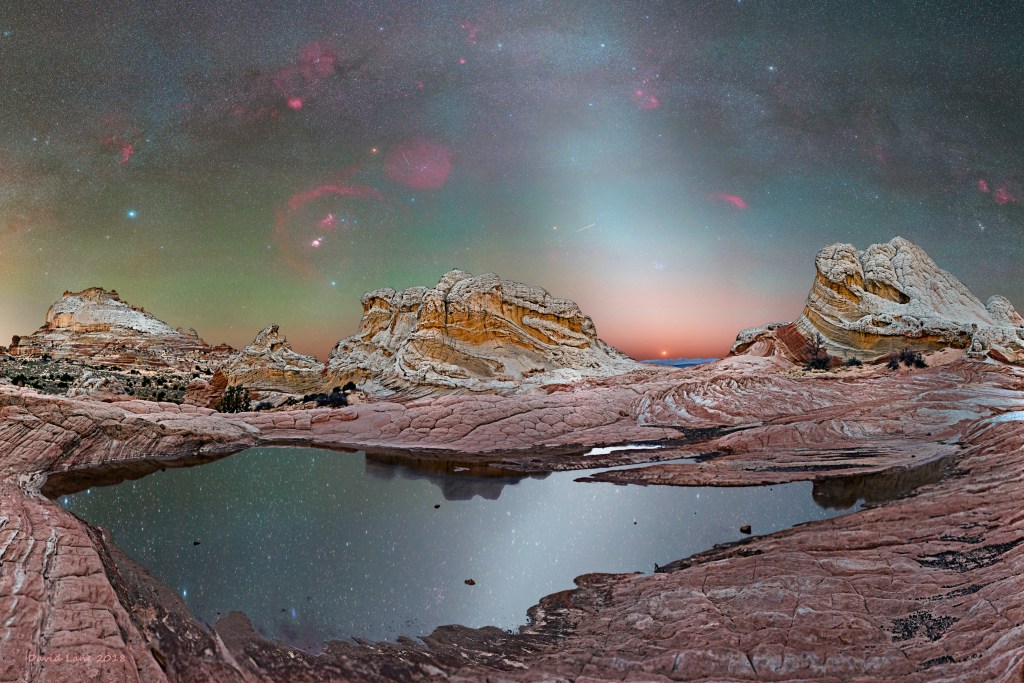
On a pleasant evening at White Pocket Arizona during the new moon in April 2018, the zodiacal light reappeared over the desert southwest. Venus, which had been burning brightly in the sky after sunset dropped to just over the horizon after astronomical dark. The strong wind of the previous day had died down to an occasional cool breeze. Some dust still lingered in the atmosphere as evidenced by the ruddy horizon, but the Zodiacal Light showed forth with great effect.
It was surprisingly pleasant for April in the Southwest. Temperatures drifted in the low 50s and there was just a bit of occasional wind. Oddly frogs chorused from an area below me and center-left in the image. It was had to imagine as the temperature continued to drop that a multitude frogs were singing a loud and one assumes bawdy barupppp over and over.
By the time the shot was over (30-40 minutes), the temperature had dropped enough that I pulled my coat tight around me and zipped it up over my face. Holding still in the low 40s was getting nippy. The frog band stilled as well and I was left with just a great night sky to contemplate and watch as Orion slipped below the horizon. I sighed, gathered up my gear and headed to back to Jimmy.
Despite having been hurried to get this enormous shot finished before Venus slipped from view, I managed to capture what even in the camera was an impressive image. This image is an astounding 80 images stitched together. 40 images of the sky with tracking and 40 images of the ground.
Shot at 85mm, f1.3, ISO 8000 and various exposures. 3rd pano of water in star focus.
Michael has been involved in the 360º world for over twelve years and counting.
She is a 360º professional who creates amazing VR videos and experiences. She has also supported the 360º community by working as the Vice President of the IVRPA (International Virtual Reality Professional Association) from 2017 to 2019.
She has contributed to over 100 cinematic VR projects, interactive XR, and worked as a 360 panoramic imaging technical expert. She also gives lectures and masterclasses for VR international conferences and events in several languages.
We don’t need to tell you that it’s worthwhile to enjoy her work by visiting Michael’s profile page. Don’t forget to watch in VR.
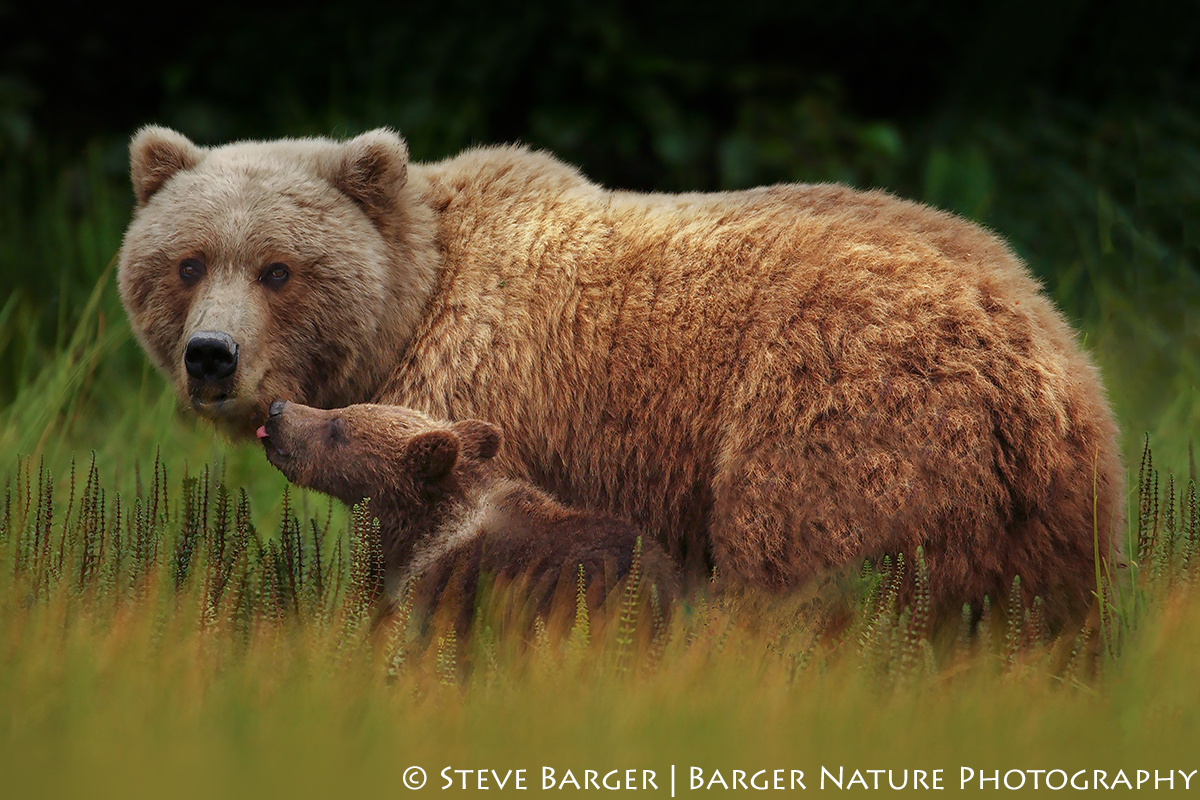
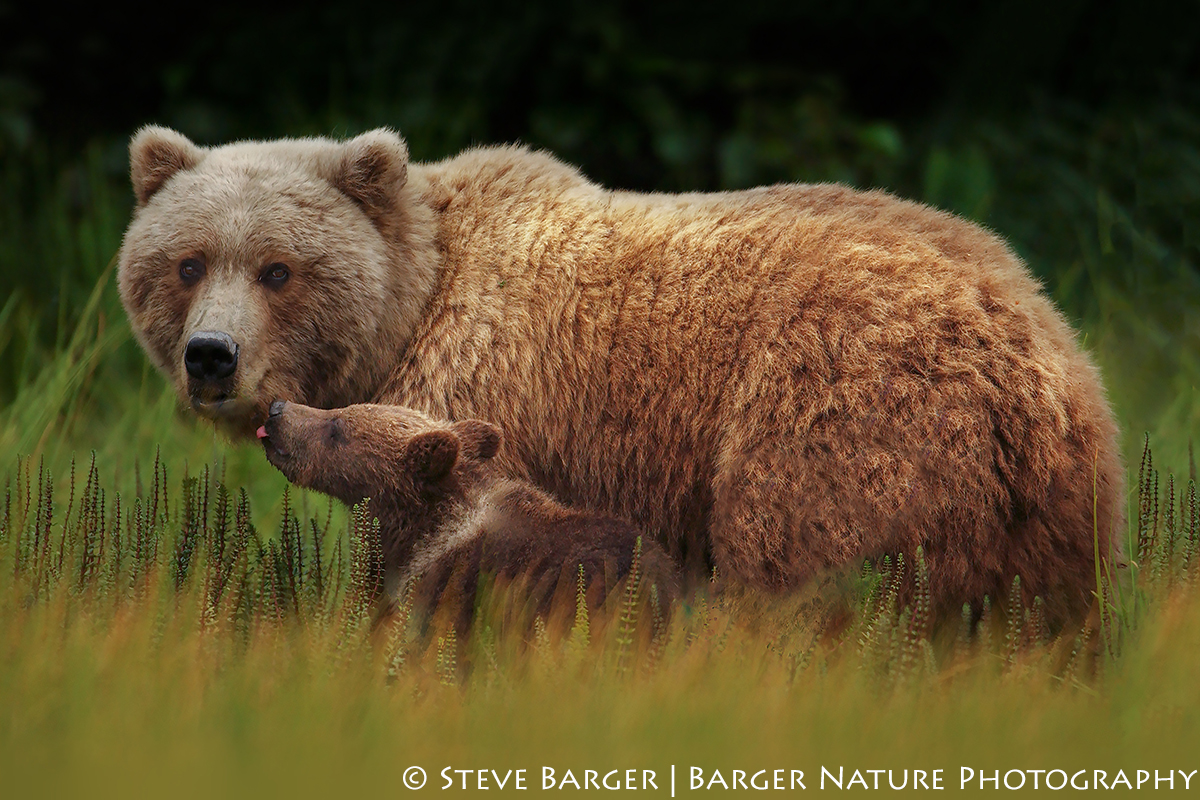
A tender moment between grizzly bear mother and her cub-of-the-year in Lake Clark National Park Alaska. I had spent several days observing this mother and her cub from a distance before they felt comfortable with my presence and moved closer for me to take image. Even at that, I was still 75 yards from them requiring the reach of a 1000mm lens to get the shot.
Spring in Lake Clark National Park is synonymous with coastal brown bear mothers and their cubs. Lake Clark is a remote national park located along the western coast of Alaska’s Cook Inlet, which can only be accessed by either boat or plane. There are no roads connecting Lake Clark with the rest of Alaska. Due to its location, Lake Clark provides an abundant supply of food for wildlife such as the brown or grizzly bear, Ursus arctos horribilis.
Most of us are familiar with grizzly bears that inhabit areas in the interior of North America such as Yellowstone National Park. These bears have a distinctive shoulder hump, long curved claws, and a wide face with a dish-faced profile. Their fur has a grizzled appearance, hence the name grizzly bear. These bears, when they inhabit the coastal areas, such as Lake Clark National Park, are referred to as coastal brown bears, colloquial nomenclature for a brown bear that lives in the coastal regions of southern Alaska. These bears are a population of the mainland brown or grizzly sub-species. They are quite large in size with weights ranging between 700 and 1100 pounds.
The Lake Clark area has an abundant supply of food for these bears. At low tide, some bears hunt for clams along the shore. The tall grassy areas between the shoreline of Cook Inlet and the forest also provide a source of food including small rodents and the grass itself. The bears gorge themselves with salmon in the fall as the salmon swim up the numerous streams to spawn.
The image in this post was taken in the spring. This mother bear had recently left her den in the forest behind her for the grassy area along the shoreline where the food supply is not only plentiful, but it is easier for her to protect her young cub. Cubs learn by watching and repeating the actions of their mother. A good portion of their communication is done by touching. For example, if a cub is hungry and wants to nurse, it will touch its mother’s face with its nose.
I had spent several days watching, at a safe distance, this mother and cub grazing in the grasses. I was careful to give them plenty of space so as not to stress them. They were very relaxed with my presence knowing that I did not pose a threat. On this particular day, both mother and cub were walking on a trail a hundred feet in front of me. The cub had been exploring the grasses and had fallen behind. Suddenly, realizing this he began to run toward her. At this moment, I realized that something special was about to happen. As the cub approached her, I followed the cub’s approach through the camera viewfinder. When the cub was beside her, she turned to look at the cub. At this point, the cub was close enough that they touched faces and the cub gave her a kiss and I took this image.
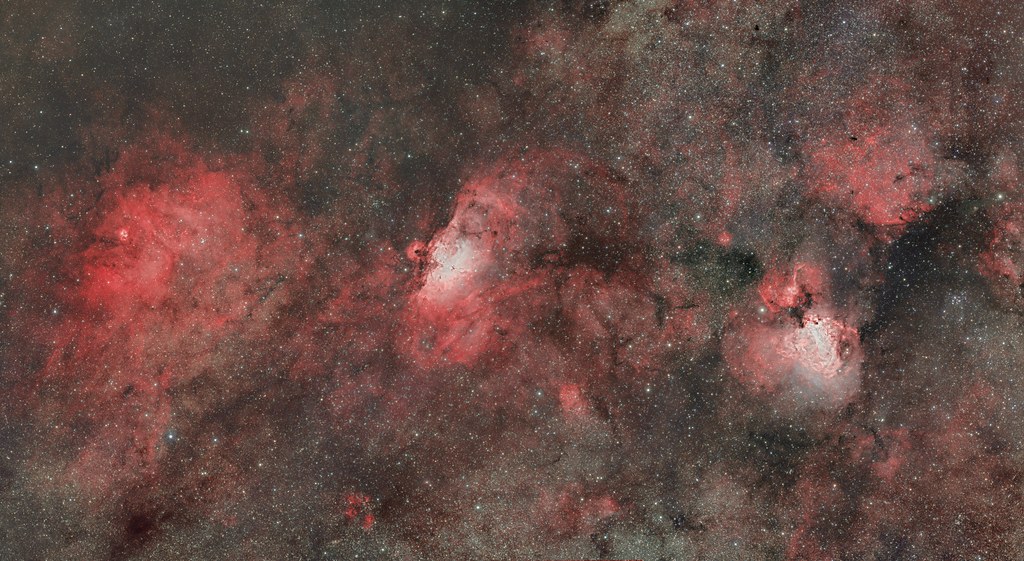
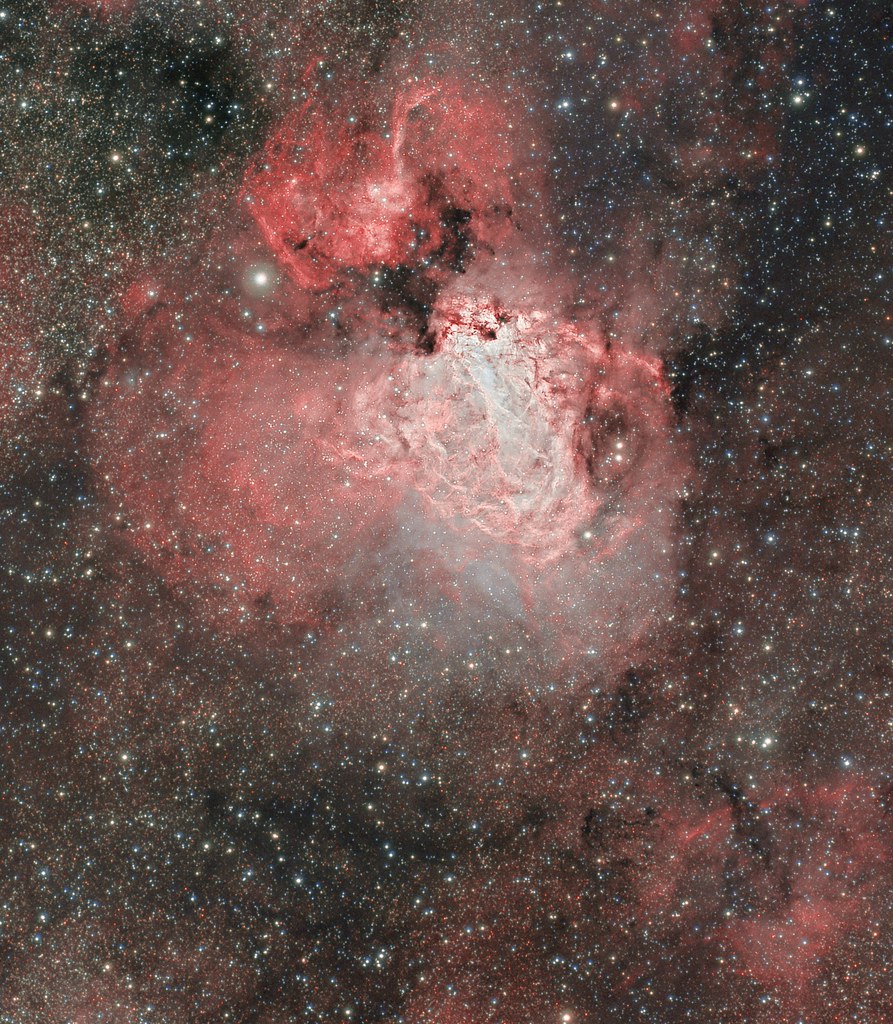
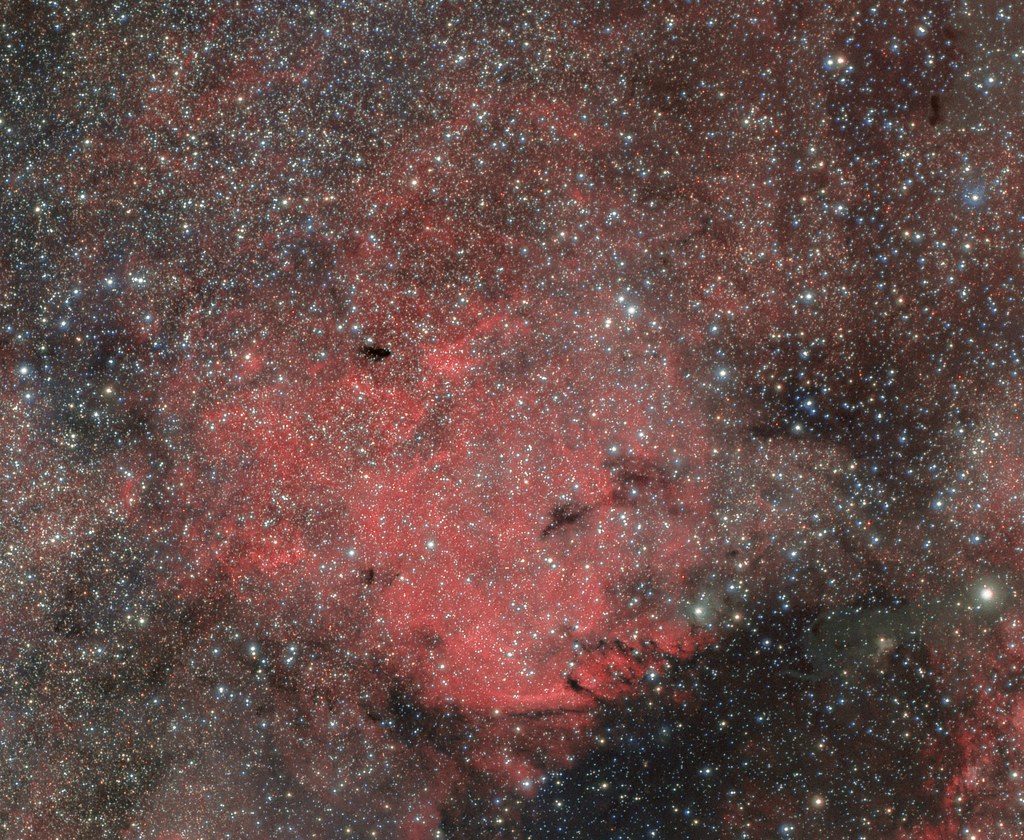
This is a 3 panel wide field mosaic of NGC6604, M16 and M17 in H-alpha, OIII and RGB. Also in the same field of view are M18 and IC4701, along with a view more open star clusters and nebulas. It was my main project on my astrotrip to Namibia this year and I spent the first 5 nights collecting the data for this. The end result is a highly detailed image of 20378 x 11160 pixels which contains a lot of very interesting objects and detailed features.
Click to view the full resolution version of the image
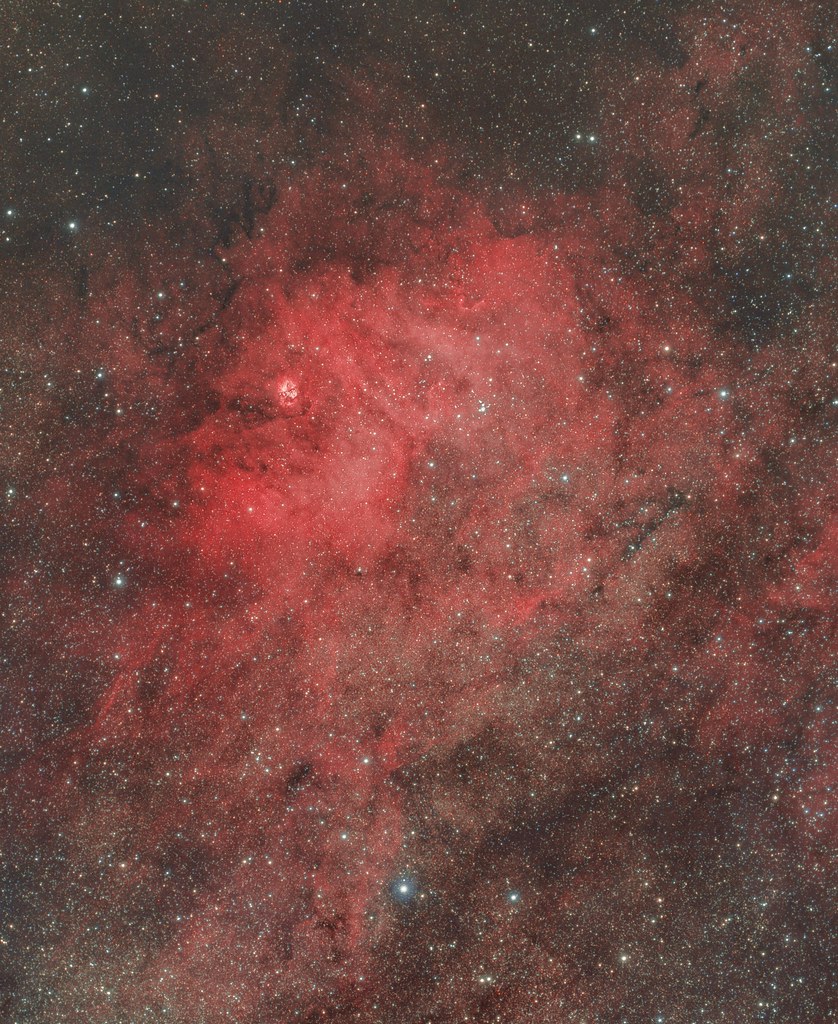
NGC6604 and Sh2-54 NGC 6604 is an open star cluster in the constellation Serpens. The associated nebula is a cloud of glowing hydrogen gas which known as SH2-54.
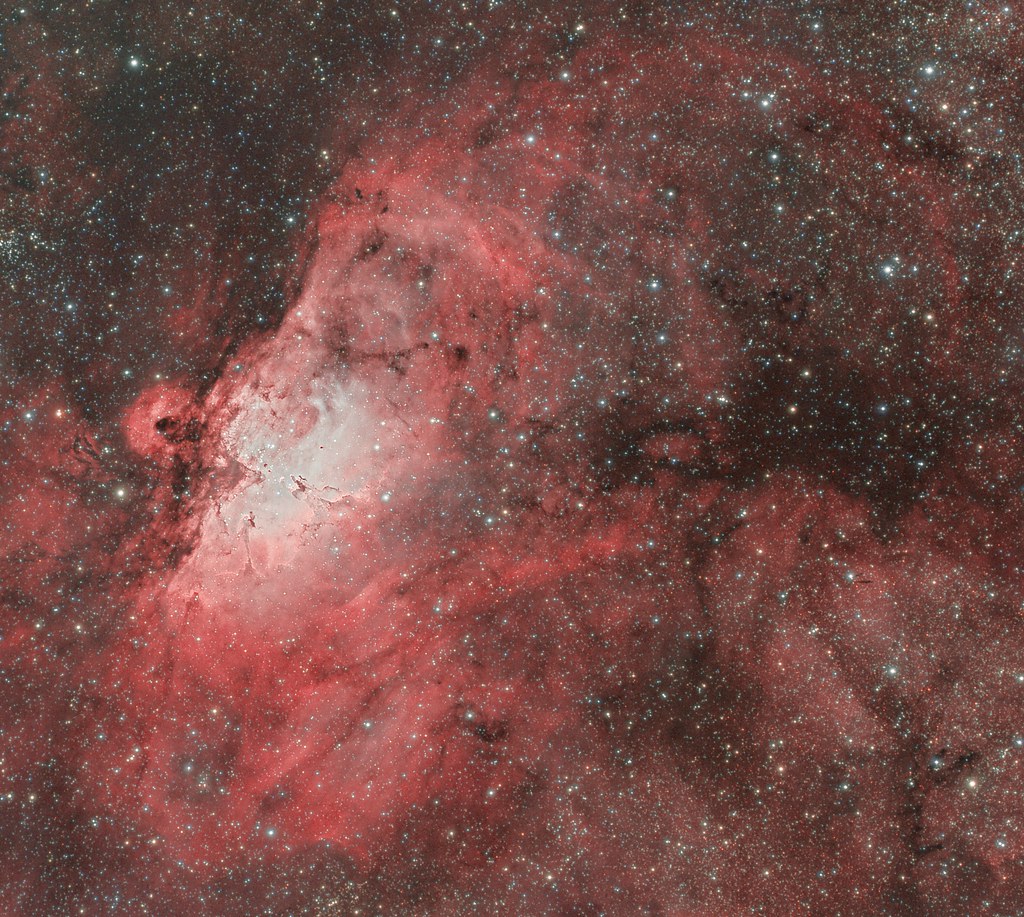
M16 The Eagle Nebula, also known as the Star Queen Nebula, IC4703 and NGC6611 is a very famous emission nebula surrounding a young open star cluster. It became famous because of the iconic Hubble image of the so called ‘Pillars of Creation’ which is a region of gass where intense star formation is happening.
When you look in more detail into the center of the nebula, at the region around the Pilars of Creation you can discover more interesting features. Just at the base of the Pilars of Creation you can see Herbig-Haro object 216. (the more pinkish feature that is just beneath the 2nd pilar) Within M16 you can also see some beautiful Bok Globules that really seem to be ‘floating’ there.
M17 The Omega Nebula or Swan Nebula is another famous HII region. This one lies in the constellation of Sagittarius at a distance of around 5,000 light-years from earth. M17 is actually considered to be one fo the brightest and most massive star-forming regions of our galaxy. Open star cluster NGC 6618 lies embedded in the nebulosity and is heating up the gases of the nebula.
M17 shows some very interesting features in it’s nebulosity. There seems to be a ‘blow out’ to the left where you can see 3 shockwaves in the gass if you look careful. Furthermore the OIII part is extending quite far to the lower left. Further down in the lower left corner there are a few very thin OIII ‘whisps’ (which remind me of veil nebula). I found out that there seems to be a Supernova Remnant behind M17, so this could be filaments belonging to that structure. It is called G16.05-0.57. The HII region next to that however, seems to also be associated with a SNR, G015.1-01.6 so this could also be from that source. At least it’s quite clear that it is a SNR.
IC4701 Above M17 and M18 you can see another emission nebula which is IC4701. This fov also contains some interesting (not so) dark nebulas.
Throughout the whole field of view you can find more very interesting HII regions and dark clouds
Processing I calibrated the RGB data in Astro Pixel Processor and NB data in PixInsight. Mosaic registration of all the panels for all channels was done using Astro Pixel Processor. I then took these results and processed them in PixInsight. There I used a combination of PixelMath and LRGBCombination on the non-linear Ha and OIII frames to create a ‘natural’ bi-color for which I used a max(Ha, OIII) for the luminance. I then used a max from Ha, OIII and the CIE-L component of the real RGB image as Luminance for the SHO-AIP script. I used the real RGB, Ha, OIII and the resulting Luminance in this script to get a natural HaOIIIRGB image. As a final step I used a Luminance mask to combine the bi-color image with the HaOIIIRGB image. In all this I did of course all kinds of processing to get the frames in the right state to use in the different channel combination methods. One thing worth noting is that you should be very careful (or just avoid) using LinearFit to level images before combination. In this case this resulted in very unnatural cores every time I did so. Also, one can argue it doesn’t make sense in some cases to assume a same level of signal in different channels. Manual HistogramTransformation and other processes give you far greater control over the result in every step.
Acquisition details Image taken with monochrome Nikon D600 on a APM107/700 with Riccardi reducer and modified Nikon D600 on a TS Quadruplet 480/80, mounted on Fornax 51 and guided with MGEN.
Panel I – NGC6604 Ha 29x12min ISO400 OIII 13x12min ISO400 RGB 27x12min ISO400
Panel II – M16 Ha 24x12min ISO400 OIII 16x12min ISO400 RGB 23x12min ISO400
Panel III – M17 Ha 25x12min ISO400 OIII 16x12min ISO400 RGB 35x12min ISO400
Taking photos is one of the best ways to preserve memories. You can capture special moments using a camera and keep them for a long time. In addition, you can use various pieces of equipment to take photos, like your smartphone, a film camera, or a polaroid. So, it’s easy and accessible to take pictures.
If you prefer photos with a classic look, vintage polaroid camera’s are perfect for you. It’s a photography device that prints the image as soon as you print it. If you’re unfamiliar with this type of camera, you may not know how to operate it.
To help you out, this post will discuss how polaroids work and how to take the best photos with them. Keep on reading to learn more.
How A Polaroid Camera Works
A polaroid camera requires a particular film to print images. You must load a negative film pack inside the equipment to take pictures. The film is light-sensitive, so it reacts to the light of the subject you’re capturing.
Once you snap a photo, the camera lens will direct all the light toward the film in one direction. A chemical reaction will then occur on the surface of the silver compounds on the film. Afterward, the camera will eject the picture while the image you took starts to become visible. After the film sets, the negative will turn from gray to a colored picture.
How To Take The Best Photos With Polaroid Cameras
Since polaroid cameras print your picture after you take it, you have limited means to edit or retake an image you don’t like. Below are a number of tips you may follow to take the best photos with polaroids:
1) Know Your Lighting
The output of a polaroid camera is quite different from other photography equipment. For one, it may look grainier than the ones from more advanced tools like a DSLR camera. Also, its settings may be more limited than other tools. This means you have fewer options to manipulate your picture. For instance, you may be unable to change the color of your subjects or adjust the lighting on the photo.
So, if you want to take great images using a polaroid camera, you must pay attention to your lighting. Sometimes, you can use the camera’s flash to illuminate your subject. But your picture may look too dark in low-light locations despite using it. Hence, you should find a light source whenever you want to capture images.
For example, you can pose your subject near a window or a light to ensure they would appear clearly on your polaroid. You should avoid blocking the illumination to avoid casting a shadow on your subject too. Alternatively, you can opt to take pictures during the day to ensure the result won’t look dim.
Overall, understanding how lighting works can significantly improve your polaroid shots. Practicing and learning how to use it to your advantage is helpful.
2) Pay Attention To Subject Composition
Your subject can influence how your photos turn out. If they’re not framed well, you may end up with underwhelming results. Henceforth, if you wish to take the best photos, you can learn how to compose your subject and environment.
For instance, if you’re taking a person’s portrait, you can make their background more dynamic by moving objects around. You may ask them to move around to find the best angle. And you can try changing your poses if you’re taking a self-portrait or for any other purpose.
On the flip side, you can adjust the placement of different objects when taking still pictures to produce dynamic results. Before taking the shot, you must check whether everything is inside the camera frame. If you hastily capture an image without checking the viewfinder, the picture may look like it was cut out or incomplete.
You can take pictures from a farther angle if you’re trying to capture multiple subjects. Doing so will increase your depth of field and allow you to experiment with your photo composition.
3) Choose The Right Film
The quality of your polaroid film can also influence how your photos will turn out. Case in point, an expired one may add light leaks to your pictures. The colors on expired film may not appear as bright as new rolls.
Thus, if you want to take impressive analog images, you should use a good film. Nowadays, you can purchase various ones that produce different results. For instance, if you want to take pictures that have a vintage feel, you can use a black-and-white film roll. On the other hand, if you want images showing bright colors, you can opt for newer polaroid films.
You must store your film correctly, as external factors like heat can affect how your outputs turn out. For example, sun exposure may wash out the colors or make your pictures look more yellow. To avoid this, you can store unused films in a dark and cool place.
Final Thoughts
Polaroid photography adds a nostalgic feel to your pictures. You can keep your photographs for a long time since using a polaroid camera prints your images immediately. If you wish to take dynamic pictures, it’s helpful to learn lighting tricks and compose your subjects well. This way, you can ensure your output will look impressive.