OWC, has announced the launch of the OWC Atlas Pro and Ultra CFexpress 4.0 memory cards. These groundbreaking cards offer double the speed of CFexpress 2.0 memory cards and the unique capability of upgrading previous generation Atlas 2.0 memory cards to the new CFA (Compact Flash Association) CFexpress 4.0 specification.
The new Atlas Pro 256GB, Atlas Pro 512GB, Atlas Ultra 1TB, and Atlas Ultra 2TB cards leverage PCIe Gen 4 technology to deliver read and write speeds of 3650MB/s and 3000MB/s, respectively. This represents a staggering 97% increase in speed compared to the previous generation cards. These remarkable speed enhancements not only enable capturing stunning 4K, 6K, and 8K+ videos but also facilitate swift access and offloading of content for seamless editing and distribution.
OWC’s Innergize software allows users to upgrade the firmware on previous PCIe Gen3 Atlas Ultra 1TB and 2TB cards to CFexpress 4.0 firmware. This exclusive upgrade almost doubles the current read/write speeds, taking them from 1850 and 1700MB/s to an astonishing 3650 and 3000MB/s. I’ll be testing this out with the OWC Atlas Dual CFExpress card reader.
The Atlas CFexpress CFA 4.0 memory cards are also backwards compatible with CFA 2.0 PCIe Gen 3 hosts, offering both flexibility and top-notch performance.
Larry O’Connor, founder and CEO at OWC, said, “Giving existing OWC Atlas memory card owners the flexibility to upgrade their products and take advantage of the latest speeds without having to purchase new cards is a game changer that we are delighted to bring to the table.”
The OWC Atlas ecosystem is a comprehensive solution designed to support photographers and videographers throughout their creative process. Comprising Atlas Memory Cards, OWC Innergize software, and Atlas Card Readers, this ecosystem ensures the seamless flow of creativity from camera to audience.
Pricing, Availability, and Upgrades
Atlas Pro CFexpress 256GB and 512GB memory cards will be available in October, priced at $169.99 (256GB) and $199.99 (512GB).
Atlas Ultra CFexpress 1TB and 2TB memory cards will also be available in October, priced at $579.99 (1TB) and $999.99 (2TB).
Users can download the OWC Innergize software to upgrade their Atlas CFexpress 1TB and 2TB memory cards, originally labelled at 1850MB/s, to the new CFexpress 4.0 specification. The Innergize for Mac is available now, with the Windows version coming soon.
Drone point of view directly above woman with yellow kayak rowing and connecting with nature at … [+] night. Exercise and body care.
getty
As interest grows in ecotourism and responsible travel, these travel spots deliver wildlife, bioluminescence, nature education, and unparalleled beauty.
Tired of tourists, long lines, smoggy cities, and commercialized entertainment? While those options have a place in our vacation plans, more and more travelers are moving away from tourist-heavy destinations in favor of quieter, nature-loving adventures.
According to a report by Grandview Research, growth in ecotourism comes from a desire for immersive travel and outdoor activities that do not adversely affect the environment, instead educating on how to interact with and preserve it. Whether by land or sea, ecotourism and sustainable travel are on the rise, and why not? It’s not just responsible — it’s fun!
Here are my picks for five trips across the nation that bring you closer to nature while protecting the environment.
Bioluminescent Nighttime Kayak Tour in St. Augustine, Florida
Illumination of plankton at Maldives. Many particles at black background.
getty
Seeing nighttime sea life is usually a treat reserved only for scuba divers, but in select spots around the world, bioluminescent organisms glow close to the surface. In the Maldives, they wash in with the waves, leaving a trail of sparkling gems in their wake. But you don’t have to go nearly that far for these rare sightings. In St. Augustine, Florida, make your way to Guana Lake, where Geotrippin Kayak Adventures will hook you up with everything you need to watch the nighttime waters come alive.
Hop in a kayak and join a small group paddling out into the lake and through estuaries where the river meets the sea. As the sun sets and the sky darkens, dip your small fishing net into the water and watch as the swirl lights up with comb jellies and dinoflagellates. You can even capture them in a cup and study them up close, then release them back into the water.
By day, kayak the Matanzas River Basin, where you will see everything from dolphins, manatees, and sea turtles to wading birds and oysters. The expert guides at Geotrippin will educate you on the history of this ecosystem, the science behind it, and the flora and fauna that make it special. Owner Bed Brandao is all about protecting the environment and letting it work its magic, so tours are engaging and interactive.
The bioluminescent nighttime kayak tour is appropriate for all levels, even first-time kayakers, but there are only 12 spots open each night, so make your reservations early!
Foraging Lessons in Estes Park, Colorado
A guide from Rocky Mountain Conservancy Field Institute teaches a small group how to identify edible … [+] plants.
Rebecca Deurlein
Self-sustainability has become all the rage in recent years, but many people don’t know how to get started. While most are comfortable with a small backyard garden, they have no idea what wild plants are safe to pick, let alone consume.
Here’s a way to turn your vacation into an opportunity to learn the history and science behind foraging from experts in the field. Through Rocky Mountain Conservancy Field Institute, you can have an educational adventure, or, as they call it, “a classroom without walls.”
Meet up with a foraging expert who will take you to jaw-droppingly gorgeous Lily Lake. Reflecting the mountain range that includes the fourteeners of Longs Peak, the lake is a must-see no matter the season. Your guide will introduce you to the native plants identified by the Utes, the indigenous people who passed down much of their knowledge.
You’ll identify yarrow and learn that you can chew it, make a poultice, and use it to calm mosquito bites and bee stings. Suffering in the high elevation of the Rockies? Your guide will point out mountain gum weed, which you can suck on to open your bronchial passages. Or pick some wild raspberry leaves and make natural tea back in your hotel room.
Be sure to check the calendar for seasonal courses and your choice from a wide range of topics, including wildflowers, mammals, birds, cultural history, outdoor skills, photography, painting and writing.
Jet Boat Through Hell’s Canyon in Lewiston, Idaho
Big horn sheep scramble among the rocks that line the Snake River in Idaho.
Rebecca Deurlein
The only way to explore North America’s deepest river gorge (yes, deeper than the Grand Canyon) is by boat, as roads will only take you so far. And if you’re going to spend a half to a full day on the water, you might as well do it in a really fun jet boat.
Book a ride with Snake River Adventures and skim over the rapids as you take in the glorious scenery of three states: Idaho, Washington, and Oregon. The Snake River winds its way along a 1,036-mile stretch through volcanic mountains and lava tubes that run vertically along rock edges. Shiny black rocks covered in a manganese patina sparkle among hackberry and mahogany trees.
Your ride will stop at the waterside visitors center that serves as the entrance to Hells Canyon National Recreation Area. It’s the best place for a picnic, the river running through the canyon as your soundtrack. You’ll see fishermen catching giant white sturgeon, bass, rainbow trout, and Chinook salmon, but the wildlife is about to become a whole lot wilder.
From this point on, you will go where no roads can take you. You’ll see bald eagles, bighorn sheep, cougars, mountain lions, beer, osprey nests, and even petroglyphs. Better yet, cell phone service is nil, so you can truly relax into the moment.
Head South for the Year of Alabama Birding
Visitors to Alabama participate in a spring bird banding event.
Alabama Tourism Department
Alabama has named 2023 the Year of Alabama Birding and is dedicated to educating visitors on what makes it one of the best birding states in the country.
Birding hotspots (to the tune of 280 updated sites), festivals, and eight birding trails highlight the state’s more than 430 species of birds. A stroll down one of the pathways can elicit everything from bald eagles and whooping cranes to swallow-tailed kites and painted buntings.
Alabama’s many forests, lakes, and waterways make it one of the major stop-off points for migrating birds. For best viewing, check their website for seasonal and hotspot tips. Depending on your preference, you can target the coast, Piedmont Plateau, Piney Woods, Wiregrass, or West Alabama, or road trip through them all.
Immerse Yourself in Marine Life in Loreto, Baja California Sur
Boaters spot a majestic whale in the waters surrounding Loreto, Baja California Sur.
Visit Baja Sur
Rodolfo Palacios with Sail Loreto is an invaluable resource when it comes to learning about the local ecosystem. Offering small boat sailing cruises, courses, and charters, he and his team will help you get familiar with Loreto and all it has to offer.
Start by sailing among the five islands of Bahía de Loreto National Park, a UNESCO world heritage site known for its marine diversity, especially marine mammals. The Gulf of California, nicknamed the Sea of Cortez, teems with life – 43 species of marine mammals and 900 species of fish, 77 of which are found only here in these waters.
Depending on the time of year, you’ll see dolphins, whales, and sea lions. Snorkel or dive with five of the seven marine turtle species, then come up for air and watch as blue-footed boobies alight on white rock outcroppings.
A four-hour sail around the islands is just $65, and snorkeling is just $70, a bargain when you consider all you’ll see in this one body of water. Knowing that you’re getting an education and protecting the environment makes this deal all the sweeter.
The images are from the traditional Kaalapootu (Bull Surfing ) held mostly in villages in North Kerala. The race takes place during the post-harvest season in August and lasts from noon until dusk. In southern Kerala, these events are held under the name “Maramadi”. Though the events are held in water filled paddy fields after harvest, many of the Panchayaths and private individuals own specially maintained fields exclusively for this event.
Kaalapootu is a celebration of the villagers. They gather in large numbers for the event. Kaalapootu, is also a celebration of the strong bonding of human, animal and nature. It is a beautiful symphony created by the fertile mud, water, men and the bulls. In the air charged with excitement and fervor from the “arpuvilikal” ( acclamation ) ,it is the farmers dreams and longing that reverberates in the atmosphere. We witness the natural, spontaneous ushering in of a new season in the ambience of a simple, tranquil village now heady with excitement. The over powering energy and unbeatable enthusiasm of the event, symbolize the indomitable spirit of the villagers.
The bulls are purchased for huge prices and are specifically fed , trained and well groomed for this traditional race. Some are even provided with air conditioned rooms and regularly given traditional ayurvedic treatment and put on special diet. The bull guides are called “pooter” in Malayalam and the half-naked “Pooters” hang onto the tail or a harness of the animal and skim through the mud surface. They are physically enviably fit, well trained and professional .They start training from a very young age and there are “pooters’ who are just school students !
The images shared are from a Kaalpootu event held at Penumanna, near Kozhikode, Kerala. The organizers feel that these events will bond the villagers together and encourage youngsters to carry on the tradition.
#1
#2
#3
#4
#5
#6
#7
#8
#9
#10
#11
#12
#13
#14
#15
#16
#17
#18
#19
#20
#21
#22
#23
#24
About Ajayan Kavungal Anat
My name is Ajayan Kavungal Anat. I am a retired senior bank executive and took to photography seriously post-retirement. I am living in Kozhikode, Kerala. Photography is my hobby and I am very much interested in Street, Travel and Documentary photography. Had mentoring from Mr. Saurabh Chatterjee of SIA Photography, Mr. Vineet Vohra, and Mr. Rohit Vohra of APF Photography and Mr. Peer Mohammed.
Participated in the following exhibitions: WSP Exhibition, Hamburg, Germany, SIA Photography Exhibition, Hyderabad, “Open Origins – Open ends”- Photomuse, Darbar Hall, Ernakulam and “Lightfall”, Lalithakala Academy hall, Kozhikode.
You can find Ajayan Kavungal Anat on the Web :
Copyrights: All the pictures in this post are copyrighted to Ajayan Kavungal Anat. Their reproduction, even in part, is forbidden without the explicit approval of the rightful owners.
Submitted photo
Photographer Alan Tucker of Buckhannon is congratulated by Maids of Honor Sophia Shoemaker and Miriam Fath, and Queen Silvia Anna Ruf.
ELKINS — Arbovale resident Dale Kinnison captured the Best in Show Award at the annual Mountain State Forest Photography Show, held during festival week at the Elkins/Randolph County YMCA.
A total of 75 photos were submitted for the contest. Tyler Belt of Elkins was honored with the People’s Choice Award. Paisley Tabor earned Best in Show for the Youth Division.
“Everything went great and we had a really good show this year,” Mountain State Forest Festival Assistant Director Tracy Gooden told The Inter-Mountain. “There were a lot of great photos and we had a lot of entries submitted, so it was a really good turnout.”
Queen Silvia Anna Ruf and her Maids of Honor, Miriam Fath and Sophia Shoemaker, selected their top photos. Awards were also handed out in six other categories, including Nature, Animals, Places, People, Black & White and Youth.
In the Nature category, first place went to June Proctor of Beverly. Elkins’ Sherry Gibson was second and Beverly’s David Proctor finished in third place.
Wendy Parks, who hails from Fairmont, swept the top two spots in the Animals category. Philippi’s Hailee Poling followed Parks in third place.
Morgantown’s Dietra Savage took top honors in the Places category, and was followed by Buckhannon’s Alan Tucker and David Proctor.
The People category had just one submission with Parks placing first.
Tucker was the overall winner in the Black & White category and Gibson placed second, followed by Elkins’ Stephanie Smith.
Tabor also placed first overall in the Youth category, and Clarksburg’s Rain Hoalcraft was second. Tabor rounded out the top finishers in the Youth division with third place.
Ruf’s top choice in the contest was a photo from Proctor, while Tucker’s photo was Maid of Honor Sophie Shoemaker’s choice. Maid of Honor Miriam Fath chose a photo from Norton’s Cheryl Gottschall.
Photos submitted to the contest can be picked up at the location they were dropped off at this week.
“We had a great week for the Festival this year, we really did,” Gooden said. “All the events we had turned out really well and everything was well received. It was a really good week.”
The name Atlanta Celebrates Photography is dead. Long live the Atlanta Center for Photography.
Celebrating its 25th anniversary this year, the photography and lens-based media festival is re-inventing itself again. The nonprofit is rebranding itself as Atlanta Center for Photography this month, without losing any letters of its acronym ACP, becoming officially a “center” for photography.
For the first time in its history, the organization will host exhibitions and live events in its own space, a 500 square-foot, street-level “jewel box space,” as its new director, Lindsey O’Connor, describes it. In the past, the nonprofit has partnered with art galleries and venues to host its events.
The new space, named the Atlanta Center for Photography Project Lab, will open Oct. 26 with a solo installation by photography-based artist Kalee Appleton. The Fort Worth, Texas, artist uses photography, sculpture and drawing to create immersive, digitally manipulated landscapes. The work, according to O’Connor, is representative of the new direction the center wants to embrace — giving lens-based artists a space where they can “take risks, experiment with creative approaches and push the boundaries of the medium’s impact.”
Instead of the organization’s familiar monthlong, citywide festival, this year’s programming will be minimal, in part to give time for the new staff to consolidate its new direction. The Atlanta Center for Photography will continue to expand its core programs, including the emerging artist fellowship. Chelsea Mukenya is the 2023 recipient, and her exhibition is on view through Oct. 29 at the Mint gallery.
Credit: Courtesy of Kalee Appleton / Atlanta Center for Photography
Credit: Courtesy of Kalee Appleton / Atlanta Center for Photography
Fans of the annual festival, portfolio reviews and public art installations will have to wait until spring.
But worth noting is an upcoming exhibition “Ghosts of Segregation: Photographs of Rich Frishman,” in collaboration with the David J. Sencer CDC Museum. The show opens Monday, Oct. 16, and will feature an artist talk at 5:30 p.m. Thursday, Oct. 19.
ArtsATL talked recently with O’Connor to learn more about this new chapter and the work in progress.
Q: Can you tell us a little bit about yourself and how you envision your new position as executive director?
A: I was previously at the Whitney Museum of American Art in New York for six years, working as the biennial coordinator. My role was to coordinate the artists, curators and the museum staff to realize projects. I coordinated the exhibitions and film programs of three biennials in 2017, 2019 and 2022. In that time, the total number of artists from the American South that I worked with was three, maybe five. There were a lot of artists from Puerto Rico, but, from the mainland, the global South, there were very few.
In New York, there’s so much white noise, so much happening in the art world all the time. I felt (coming to Atlanta) was an interesting opportunity to have an impact somewhere else. Here there are a lot of incredible working artists, and interest in and potentially money for the arts. I think we can provide a platform and open up paths of exchange that ultimately will get more artists on a larger platform than just our region.
Q: This year marks a huge transition for the organization with the opening of a brick-and-mortar space on Edgewood Avenue. What motivated this transformation?
A: The transition to having a physical space had been discussed with the board and many community members before I was hired as executive director. A lot of interviews were done to take the temperature of different key stakeholders throughout the Atlanta arts community. Everybody agreed that this was the right next step. I think the community felt it was time for the organization to make a shift, make a bigger splash and have a more year-round presence.
Q: What are the benefits of having your own space?
A: Many people think of us as just an October festival. This new space will give us the flexibility to not only commission new works from artists living in the South, which is the thrust of our curatorial program, but also to curate public programs and to host lectures and screenings. This will give us a lot more flexibility to create programming on a year-round basis.
Our inaugural exhibit is a good example of what we’re trying to do, which is to push the boundaries of the medium and consider the preconceived notions of what the limitations of photography might be. As people who love photography and lens-based media, we don’t want people to feel pigeonholed. So we’re working with artists who are interested in filling a space in a fresh way.
ExploreAtlanta fall arts guide
Q: Atlanta Center for Photography has this unique DNA in the photo festival world, inviting everybody — artists but also non-professionals and amateurs — to find a venue and to exhibit work. Are we going to lose this democratic aspect of the festival?
A: We definitely want to keep the community-driven aspect. We plan to condense it into a tighter, more focused, multiday festival in 2024 with keynote speakers, workshops and artist presentations. There will definitely be community programming at organizations all over the city. We still want to do an open call for everybody to get their exhibition, their screening, their talk on a shared calendar. We will still have a rich feeling of collective work and a shared goal.
Q: Public art was a center point in the years past with “The FENCE,” the Phoenix installation and, last year, Jess T. Duncan’s large-scale photographs exhibited during the Atlanta Pride parade on the windows of the Hyatt Centric in Midtown. Do you have plans for public art this year or next?
A: We are definitely still interested in our public art activation. Photography lends itself well to public installation, We don’t have any activation planned immediately. I have some ideas, but we need to get the exhibition program up and running and make sure that our core programs are well-considered. Then we will start to fold in more public art activations.
EXHIBIT PREVIEW
“Ghosts of Segregation: Photographs of Rich Frishman”
Through May 24. 9 a.m.-5 p.m. Mondays-Wednesdays and Fridays. 9 a.m.-7 p.m. Thursdays. Free. David J. Sencer CDC Museum, 1600 Clifton Road NE, Atlanta. 404-639-0830, cdc.gov/museum.
Virginie Kippelen is a photographer, multimedia producer and writer specializing in editorial and documentary projects. She has contributed to ArtsATL’s Art+Design section since 2014, writing mostly about photography. And after living 25 years in the United States, she still has a French accent.
MEET OUR PARTNER
ArtsATL (www.artsatl.org), is a nonprofit organization that plays a critical role in educating and informing audiences about metro Atlanta’s arts and culture. Founded in 2009, ArtsATL’s goal is to help build a sustainable arts community contributing to the economic and cultural health of the city.If you have any questions about this partnership or others, please contact Senior Manager of Partnerships Nicole Williams at [email protected].
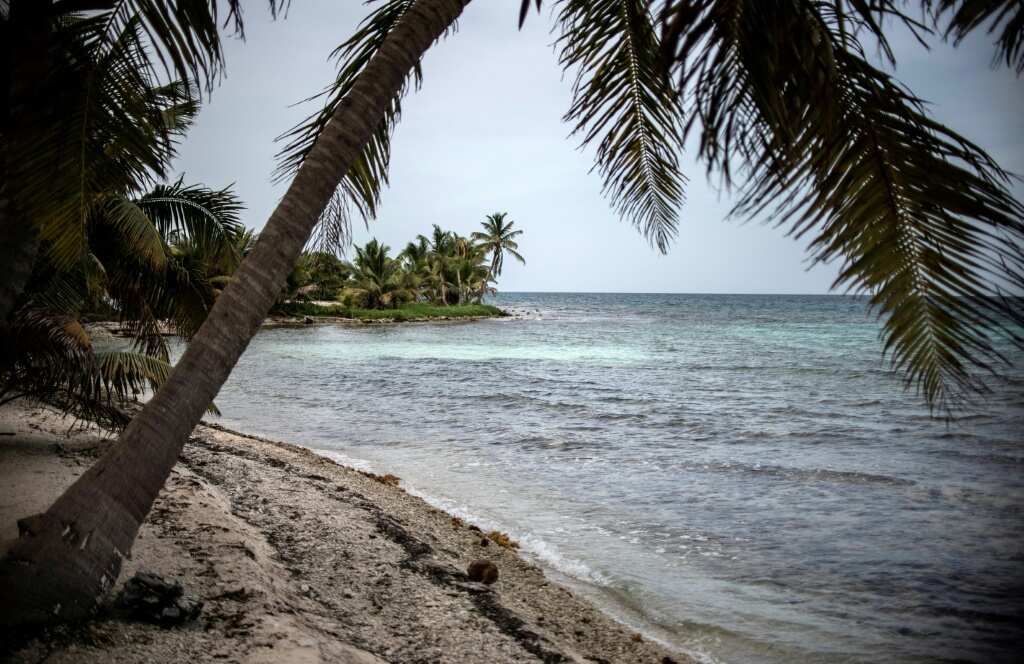
View of the Laughing Bird Caye National Park in the outskirts of Placencia village, in Stann Creek District, Belize.
Photo: Pedro PARDO / AFP/File Source: AFP
When Covid hit Belize, its economy nosedived: closed borders meant fisheries and farmers had no export markets, and tourism centered on the tiny Central American nation’s warm waters and wonders of biodiversity came to a halt.
“We lost approximately 14 percent of GDP,” Prime Minister John Antonio Briceno told AFP in an interview. Nearly a third of the workforce of the country’s 400,000 people were unemployed and there wasn’t enough money “to keep the lights on,” let alone maintain onerous debt repayments.
Then came a lifeline: environmental nonprofit The Nature Conservancy (TNC) offered to lend Belize money to pay off creditors if it promised to put part of the savings into marine protection.
So-called “debt-for-nature-swaps” are being hailed as an innovative financial tool for preserving ecosystems from climate change and overexploitation, even as critics warn their generosity is overstated and they are far from a cure-all.
Finalized in November 2021, a year after Briceno took office, the deal involved TNC buying back a $553 million “superbond” which held the government’s entire commercial debt, negotiating a discount of 45 percent.
This was converted into a $364 million loan “blue bonds” in a sale arranged by Credit Suisse, unlocking $180 million for marine conservation over 20 years.
“For us, it was a win-win, it gave us a breather,” said Briceno. Notably, the buyback reduced the country’s debt-to-GDP ratio by more than 10 percent.
Old idea, bigger scale
Prime Minister of Belize Juan Antonio “Johnny” Briceno meets with reporters during the World Wildlife Fund’s (WWF) High-Level Event “Nature and People: Ambition to Action” in New York.
Photo: Zak BENNETT / AFP/File Source: AFP
Belize’s coastline is home to the largest barrier reef in the northern hemisphere, providing significant habitat for threatened species including manatees, turtles and crocodiles.
But warming oceans from climate change, excessive fishing, and coastal development all pose major challenges.
Under the terms of the deal, Belize agreed to expand protection to 30 percent of its territorial waters, and spend $4.2 million annually on marine conservation.
Since then, TNC signed similar agreements with Barbados and Gabon. Ecuador negotiated the biggest swap of all in May, reducing its debt obligations by about $1.1 billion to benefit the Galapagos Islands under an arrangement overseen by Pew Bertarelli Ocean Legacy Project.
Slav Gatchev, managing director of sustainable debt at TNC, told AFP that although the first debt-for-nature swaps happened in the 1980s, now they operate at a far larger scale.
“A third of the outstanding commercial debt to lower and middle income countries is in some form of distress,” he said, meaning environmental ministry budgets are stretched and it’s hard for governments to invest in nature.
He sees an opportunity to refinance up to $1 trillion of the commercial and bilateral debt, in turn generating $250 billion for climate and nature.
Paper parks?
Andre Standing, a researcher for groups including the Coalition for Fair Fisheries Arrangements, told AFP the Belize deal was only possible because the country was about to default and it was therefore better for creditors to accept a lump sum — rather than the altruistic act it was portrayed as by some.
Moreover, he added, such deals do nothing to address the debt crisis plaguing developing countries.
“That’s true, but it’s not intended to,” Esteban Brenes, who leads conservation finance for the World Wide Fund for Nature (WWF), which is also looking to organize new debt swaps, told AFP.
“We’re going to take a piece of the debt and use some proceeds for something better, but by no means are we going to solve the big problem,” he said.
Another concern has been that countries might agree to lofty commitments to secure concessions but then fall to “paper park syndrome” where protections exist only in theory.
But Gatchev said the commitments are legally binding and governments could incur fees for breaking them.
“Our reputation as the world’s largest conservation organization is on the line here, and we have no incentive to sugarcoat lack of compliance,” he stressed.
Briceno, for his part, said the high-profile deal had increased environmental consciousness among his people, who were now quick to report illegal mangrove dredging, for instance.
The debt restructure was “a very good start,” he continued, but his country needed far more assistance from the Global North.
“Developed countries destroyed their environment to be able to have development: high-rises, big vehicles, nice fancy homes,” said Briceno.
“Now we want the same and you’re telling us ‘we can’t afford you to destroy what we have destroyed’ — then pay us.”
Izzy is an inquisitive, outgoing, and outspoken girl in search of her forever family. She loves to explore the outdoors and nature, which include various community activities, gardening, and collecting small insects for her “bug sanctuary.” She always willing to try new things and new foods. Izzy also enjoys arts and crafts and going to the library. Her biggest strength is her ability to advocate and speak up for herself.
Izzy attends a local public school and receives support through an IEP. She participates in many extracurricular activities which include gymnastics, cheerleading, and the Girl Scouts. Izzy is currently placed in a residential program and has made positive connections with peers in and outside of school.
Izzy would thrive with a caring and committed family of any constellation with a female parental figure with or without other children in the home. Interested families need to have experience in trauma informed care and therapeutic parenting. Interested families should also willing to accept and have access to the support of therapeutic services. They must be dedicated to providing ethnic role models and appropriate information about her culture which includes discussing racism. It is important to Izzy that her maintain contact and visits with her younger brother who is also in foster care.
To learn more about adoption from foster care visit www.mareinc.org . Massachusetts Adoption Resource Exchange (MARE) can give you guidance and information on the adoption process. Reach out today to find out all the ways you can help children and teens in foster care.
Explore the captivating trend of recreating old photos! Witness the unfolding tales of people’s lives through captivating “Then vs Now” pictures. Dive into the most popular submissions from the r/PastAndPresentPics subreddit below. These photos are brimming with cherished memories and genuine emotions, immersing you in the rich narratives they portray.
Scroll down and enjoy yourself. All photos are linked and lead to the sources from which they were taken. Please feel free to explore further works of these photographers on their collections or their personal sites.
#1 Real Friendship
Image source: NazliNazNazli
#2 Me In My Parents Backyard Less Than A Year After We Moved In And Me Almost 30 Years Later When They Sold The House
Image source: Redgreen82
#3 So We Recreated A Photo(Me On Top)
Image source: Emoje775
#4 Truly Man’s Best Friend!
Image source: marrana_brainz
#5 Me And My Siblings Recreated This For My Parents As A Gift For Their 50th Anniversary. 1985-2019
Image source: CatchResponsible1261
#6 Phew! That Was A Long Boat Ride! ?
Image source: Glittering-Tree-7567
#7 Same Drama
Image source: NazliNazNazli
#8 My Wife And I In 1973 And In 2019. I’d Just Turned 16 In The First One, She Was A Month Away From 16. It Was The First Pic Of Us Together, Taken In A Mall Photobooth
Image source: QtheM
#9 We Recreated A Childhood Photo… From Blue’s Clues Birthday Party To 20 Years Later At Thanksgiving!
Image source: madiissuun
#10 Happy Father’s Day
Image source: beerdidtrev
#11 Giving My Boys A Ride / And My Boys Giving Me A Ride
Image source: VisibleRace7849
#12 My Daughter And I Swinging Thru Time
Image source: Flabbergastedly
#13 LEGO
Image source: markshure
#14 Still Friends 20 Years Later
Image source: HSThrowback20years
#15 My Mom And Her Siblings, 1971 And 2023
Image source: ek599
#16 My Sisters And I Recreated A Photo At The Same Beach In Hawaii (1991-2022)
Image source: teenytiny212
#17 My Grandfather With His Mini, And Me With Mine
Image source: XTDVMini
#18 My Parents, Still Tired
Image source: mattybgcg
#19 Throwback Thursday, 1991 -> 2021, Back At The House I Grew Up In (Queens, NY)
Image source: StatandMelo
#20 My Pop And His Mama!
Image source: Jamescovey
#21 Age 16 vs. Age 30
Image source: reddit.com
#22 Me & My Bff, Taken 20 Years Apart
Image source: ilikeyourswatch
#23 Same Mom, Same Me, Same Teddy Bear Some 55 Years Apart
Image source: knirkle
#24 Grandkids In 1994 vs. 2022
Image source: Cheese_Beard_88
#25 At My Desk Hardly Working, 1992-2019
Image source: dittidot
#26 Thanksgiving 2011-2021
Image source: KolaDesi
#27 A Cowboy And His Tree At 4 And 63 Years Old
Image source: SquidLee
#28 My Mom And I Getting “Called To The Bar” As Lawyers 35 Years Apart. 1981 —- 2016
Image source: lannart123
#29 My Granddad And His Wheels, ~1950 & 2020
Image source: ragingremark
#30 My Great-Great Grandfather (Left) 1862, And Me (Right), 2022
Tom Brady and Gisele Bundchen’s divorce was one of the celebrity stories of 2022, however the Brazilian model is now looking to move on with her own life without him.
This has coincided with a stunning return to the modelling scene, with the 43-year-old going tastefully topless in a photoshoot.
The shoot, for Frame’s 2023 winter denim line, sees Gisele without a shirt on, modelling a pair of jeans.
Despite her advancing years, the model’s figure was nothing short of breathtaking, using her hands to cover her breasts.
She has been announced as the face of the Frame line of winter denim, and one of the pictures also showed her lying down topless, making full use of the pose to highlight the nature of the denim jeans.
What else is going on in Gisele’s career?
Having returned to modelling after the breakup of her marriage, Gisele also appeared in a Victoria’s Secret campaign in August, in which she was pictured alongside Naomi Campbell, Candice Swanepoel, Adriana Lima and Emily Ratajkowski.
Gisele Bundchen shows Tom Brady what he’s missing with sexy Carnival dance
Some have argued that this return to the modelling world has coincided with the financial pressures that came with Gisele and Brady being embroiled in the FTX collapse and subsequent scandal.
Reports suggest the pair lost almost $30 million from their combined wealth, which whilst less problematic for Brady, would certainly have an impact on a newly-single Bundchen.
Despite that, Bundchen has kept a positive outlook on things in the months since her split with Brady, making clear she is using nature as a way to reach inner-peace.
“Nature is my best wellness treatment,” Bundchen told People Magazine.
“Just feeling the sun, taking a dip in the ocean, running on the sand and feeling the grass on my feet.
“Just being in nature just gives you energy, it just makes you feel good.”
The revival of instant photography continues to gain momentum as Leica Camera AG introduces the Leica SOFORT 2, the second generation of their instant camera, poised to captivate both nostalgia-seekers and modern photography enthusiasts alike. In a world where speed often trumps reflection, the SOFORT 2 offers a moment of pause and the joy of tangible memories, marrying the world of fleeting digital snapshots with the enduring charm of analogue prints.
Leica’s illustrious heritage in photography and design is evident in the SOFORT 2’s modern, minimalist aesthetic. This elegantly designed camera is available in three stylish colours: black, red, and white, making it a fashionable accessory for any occasion.
One of the standout features of the SOFORT 2 is its ability to merge the worlds of digital and analogue photography seamlessly. Users can now permanently save digital images and curate their best shots before committing them to print. This includes photos from your smartphone and other Leica cameras, stored within the integrated Leica FOTOS App gallery. With a simple pull of the manual printing lever, you can transform these digital memories into Instax Mini format prints on Leica’s exclusive photo paper, available with either a warm-white or golden frame.
The SOFORT 2 not only embodies the Leica brand’s visual language but also extends its user-friendly functionality. Its menu structure and button layout align with those found on other digital Leica cameras, ensuring a smooth transition for those familiar with the brand’s ecosystem.
This versatile instant camera offers a range of creative features to capture moments in unique ways. Selfie enthusiasts will appreciate the dedicated selfie mode with a separate shutter button, while the landscape mode delivers wide-angle character. The macro mode allows for close-ups from as close as 10cm, expanding the possibilities for creative photography. Additionally, the SOFORT 2 offers 10 lens and 10 film effects to further enhance your visual storytelling.
Leica’s commitment to individuality and creativity extends to a range of high-quality accessories for the SOFORT 2. Stylish wooden picture frames beautifully showcase your prints, while wrist straps, carrying straps, bags, and other accessories complement the camera’s personality and enhance your photography experience, whether you’re sharing analogue instant photos or digital moments on social media.
The Leica SOFORT 2 is set to become a cherished companion at family gatherings, events, and travels, helping to create shared experiences and lasting memories. With its blend of digital convenience and analogue nostalgia, it offers something for everyone in today’s fast-paced world.
The Leica SOFORT 2 will be globally available starting from 9th November 2023 at all Leica Stores, the Leica Online Store, and authorized dealers. It comes with a recommended retail price of £350.00, including VAT.
For more information about Leica, visit the Leica website